
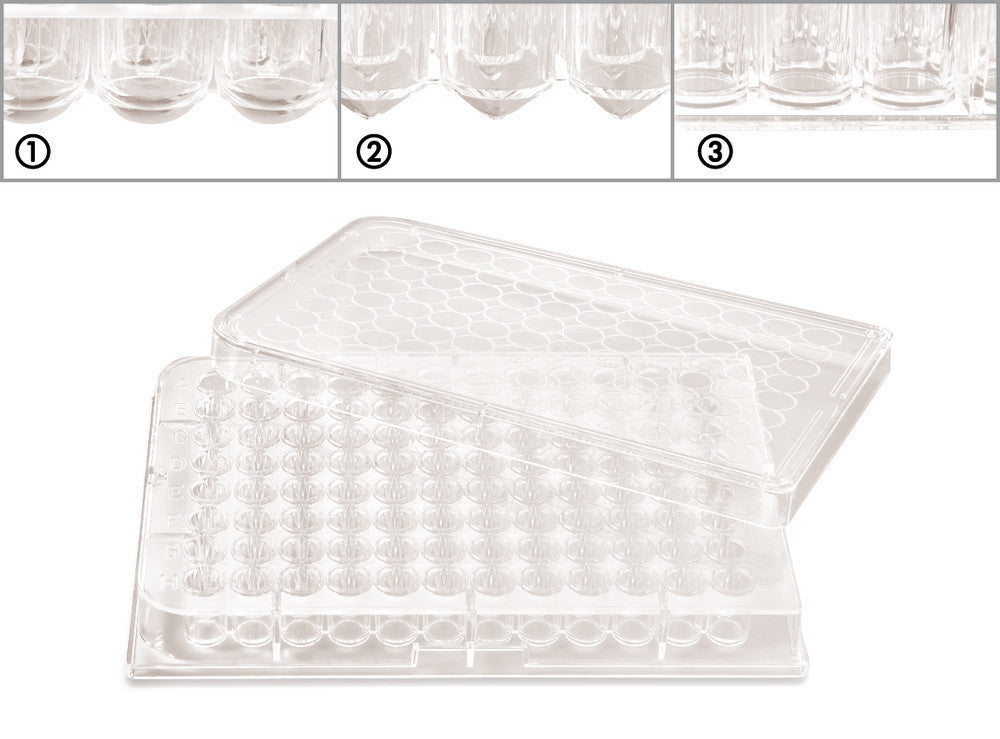


Description
Les couvercles pour plaques de microtest Rotilabo® sont des protections en polystyrène destinées à protéger et à fermer les plaques de microtest et de microtitration correspondantes pendant l'incubation, le transport et le stockage. Ils sont spécifiés pour une utilisation avec les références de plaques 9291.1 à 9263.1, garantissant une compatibilité dimensionnelle au sein de cette gamme de plaques Rotilabo®. Chaque couvercle contribue à réduire l'évaporation, à limiter la contamination et à maintenir les puits couverts lorsque les plaques sont déplacées entre les postes de travail ou les instruments. Fournis en paquets de 100 unités, ces couvercles soutiennent les flux de travail à haut débit dans les laboratoires de microbiologie, de biologie moléculaire et de culture cellulaire. Produits par Boettger, ces accessoires appartiennent à la catégorie du matériel de laboratoire pour plaques multipuits et microtitration. La construction en polystyrène s'associe au matériau de la plaque correspondante pour un usage quotidien jetable. L'ajustement précis à la gamme de plaques indiquée simplifie le stockage des ensembles plaques-couvercles assortis. Utilisez-les partout où des plaques de microtest couvertes améliorent l'intégrité des échantillons sans modifier les formats de plaques ou les routines de manipulation établis.
Cet article appartient à la collection Tampons biologiques (Tris, HEPES, MOPS), dans Solutions tampons et pH.
Caractéristiques principales
- Conditionnement : 100 pièce(s)
- Marque : Rotilabo®
- Type de produit : Couvercle pour plaques de microtest
- Matériau : PS (polystyrène)
- Compatibilité : pour 9291.1 – 9263.1
- Poids : 2,430 kg
Récemment consulté
Vous aimerez peut-être aussi
Browse related categories
Category
Sub-category
Biological buffers (Tris, HEPES, MOPS)
Catalogue
Brand
Questions about Couvercle pour plaques de microtitration Rotilabo®, PS, pour 9291.1 - 9263.1, 100 unité(s)
What is this article?
Couvercle pour plaques de microtitration Rotilabo®, PS, pour 9291.1 - 9263.1, 100 unité(s) is the article on this page. Luminix Health distributes Boettger for laboratory use. It sits in Biological buffers (Tris, HEPES, MOPS), inside Buffers & pH solutions, in Produits chimiques.
Tris, HEPES, MOPS and their relatives hold pH in a range that cells and proteins tolerate, with a pKa near the working pH. The useful range is roughly one unit either side of the pKa. A phosphate buffer and Tris are not interchangeable in a method that names one of them, because the ion itself has effects.
A buffer resists a change in pH when a little acid or base is added. It does that because a weak acid and its conjugate base are both present. A pH buffer used to calibrate a meter has a stated value at a stated temperature. A biological buffer such as Tris or HEPES is chosen because it holds the pH of a living system and does not poison it. Conductivity standards are the sister articles for a conductivity meter. The ions are on PubChem. Electrode calibration practice sits with EURAMET and BELAC.
Which category should I open next?
The category is Buffers & pH solutions. The sub-category is Biological buffers (Tris, HEPES, MOPS). The catalogue is Produits chimiques.
Shelves beside this one are pH buffers & conductivity standards and Buffers (other).
What should I check before I order?
The technical information on this page is the manufacturer's sheet. Read that, not a rewritten specification.
When this page shows a safety data sheet, use that manufacturer file. Hazard text does not belong in the sales description. For a pack size, a grade or a certificate that is not on the page, send a quote request or contact the team.
How does ordering and shipping work?
Luminix Health distributes this article from the heart of Europe. Articles in stock ship within 2–5 business days. Standard delivery is free from €250 excl. VAT. Cold-chain goods and dangerous goods under ADR are never included in that free delivery. The terms are in the Shipping Policy. The full brand index is on shop by brand. Who we are is on about us.
Which other categories should I open?
The seven catalogues are Labware, Lab chemicals, Lab instruments, Lab consumables, Chromatography equipment, Lab safety equipment and Life Science & Microbiology.