


Description
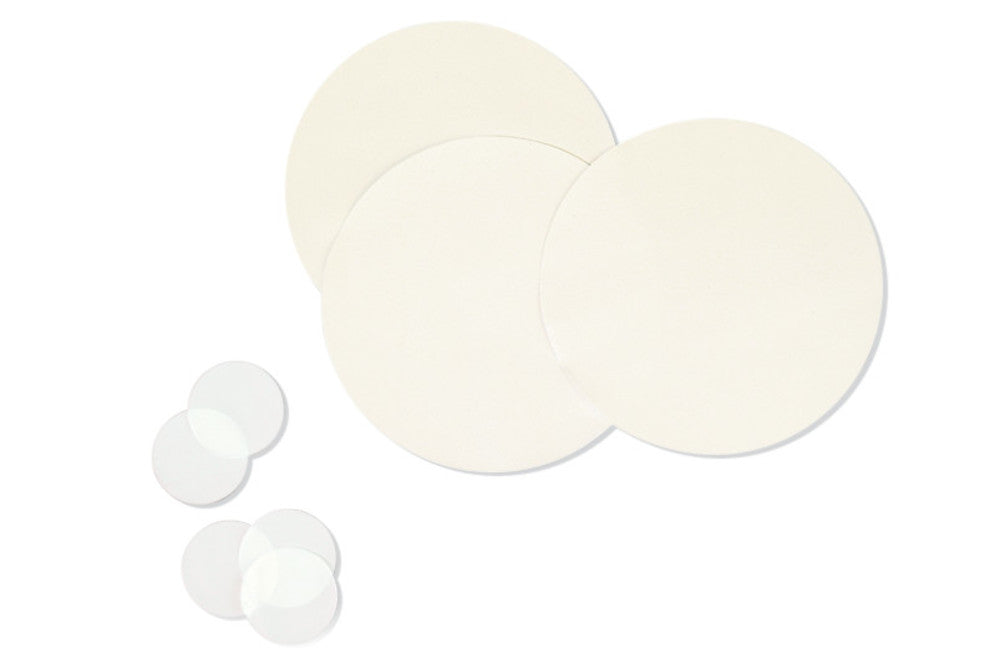
Les filtres à membrane, track-etched polycarbonate, non stériles — 0.2 µm — Ø 25 mm sont des disques à membrane en track-etched polycarbonate pour la filtration et la séparation en laboratoire. Fournis non stériles, ils offrent une taille de pores de 0.2 µm et un diamètre de 25 mm pour l'usage dans des porte-filtres compatibles de 25 mm et des assemblages associés. La construction en track-etched polycarbonate fournit un format de membrane défini pour les applications qui spécifient ce matériau et cette classification de pores. Chaque pack contient 100 pièces, adapté aux filtrations répétées et au stock de routine. Le poids du pack est de 0.06 kg, facilitant un stockage compact à côté de la station de filtration. Ces filtres à membrane du fabricant GVS répondent aux besoins de matériel de laboratoire en filtration et séparation lorsque des membranes en track-etched polycarbonate non stériles à 0.2 µm et d'un diamètre de 25 mm sont requises. Une indication claire du matériau, de la taille de pores et du diamètre prend en charge la sélection correcte par rapport aux protocoles et aux dimensions des porte-filtres sans approximation.
Cet article fait partie de Filtres à membrane, dans Filtration.
Caractéristiques
- Conditionnement: 100 pièces
- Matériau: Track-etched polycarbonate
- Taille des pores: 0.2 µm
- Diamètre: 25 mm
- Stérilité: Non stérile
- Poids: 0.06 kg
Récemment consulté
Vous aimerez peut-être aussi
Browse related categories
Category
Sub-category
Catalogue
Brand
Questions about Filt. à membrane, track-etched polycarbonate, Non stérile, Ø 25 mm, taille de pores 0.2 µm
What is this article?
Filt. à membrane, track-etched polycarbonate, Non stérile, Ø 25 mm, taille de pores 0.2 µm is the article on this page. Luminix Health distributes GVS for laboratory use. It sits in Filtres à membrane, inside Filtration, in Consommables.
A membrane filter is the disc itself, without a syringe housing. Pore size, polymer and diameter are the specification, and the disc has to sit in a holder. Gridded membranes are for counting colonies. A membrane and a filter paper of the same diameter are not interchangeable.
Filtration holds back what is larger than the pores and lets the rest through. Paper is the ordinary laboratory filter. A membrane has a stated pore size and a polymer that must survive the solvent. A syringe filter is that membrane in a housing on a syringe. Glass fibre takes a higher dirt load. Ultrafiltration holds back macromolecules and passes salts. The pore size, the chemical compatibility and the volume are the three choices. Laboratory apparatus around filtration is indexed under ISO laboratory apparatus.
Which category should I open next?
The category is Filtration. The sub-category is Filtres à membrane. The catalogue is Consommables.
Shelves beside this one are Papier filtre, Plaques filtrantes en verre fritté & disques, Filtres seringue, Cartouches filtrantes & capsules, Filtres en fibres de verre & de quartz, Unités de filtration sur flacon & sous vide, Ultrafiltration & concentrateurs, Accessoires de filtration, Cartouches d'extraction and Tubes de dialyse & dispositifs.
What should I check before I order?
The technical information on this page is the manufacturer's sheet. Read that, not a rewritten specification.
When this page shows a safety data sheet, use that manufacturer file. Hazard text does not belong in the sales description. For a pack size, a grade or a certificate that is not on the page, send a quote request or contact the team.
How does ordering and shipping work?
Luminix Health distributes this article from the heart of Europe. Articles in stock ship within 2–5 business days. Standard delivery is free from €250 excl. VAT. Cold-chain goods and dangerous goods under ADR are never included in that free delivery. The terms are in the Shipping Policy. The full brand index is on shop by brand. Who we are is on about us.
Which other categories should I open?
The seven catalogues are Labware, Lab chemicals, Lab instruments, Lab consumables, Chromatography equipment, Lab safety equipment and Life Science & Microbiology.