


Description
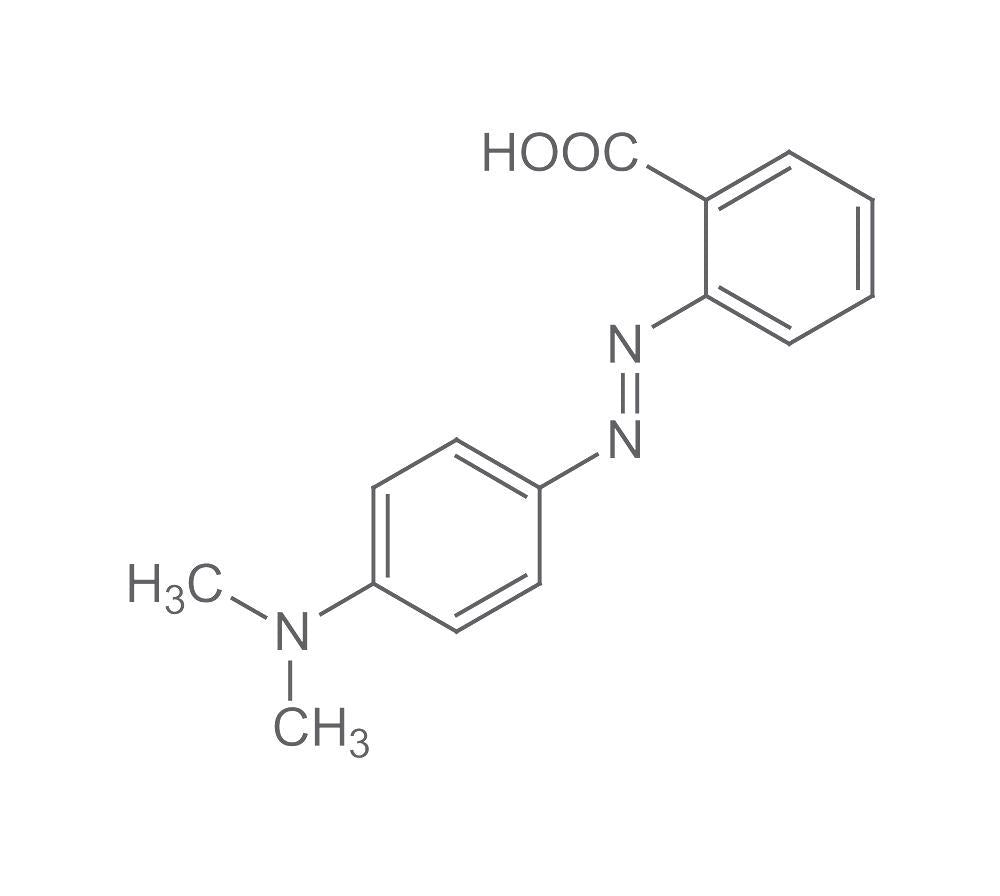
La solution indicatrice Methyl red est une préparation prête à l'emploi à 0.1 % dans de l'éthanol dénaturé pour le titrage et l'indication du pH. Les données physiques comprennent une densité de 0.79 g/cm³, un point d'éclair de 13 °C, un point d'ébullition de 78 °C et le numéro UN 1170, reflétant le système de solvant éthanolique. Ce format appartient aux solutions indicatrices de pH prêtes à l'emploi utilisées en analyse volumétrique lorsqu'un milieu alcoolique de methyl red est spécifié. La matrice d'éthanol dénaturé est familière dans les procédures analytiques classiques et les laboratoires d'enseignement. Les laboratoires qui effectuent des titrages acide–base exigeant du methyl red dans l'éthanol bénéficient de la concentration préajustée de 0.1 % et de la présentation pratique en flacon en verre. La manipulation doit respecter le caractère inflammable indiqué par le point d'éclair et la classification UN, conformément à la pratique habituelle des indicateurs en solvant sur la paillasse analytique.
Cet article fait partie de Indicateurs & solutions indicatrices, dans Étalons analytiques & matériaux de référence.
Caractéristiques
- Conditionnements: 250 ml, 1 l
- Masse volumique: 0.79 g/cm³
- Point d'éclair: 13 °C
- Point d'ébullition: 78 °C
- Concentration: 0.1 % dans l'éthanol, dénaturé
- Fiche technique:

- Fiche de données de sécurité:
Compliance & Safety Information

 Danger
Hazard Statements (H-Phrases)
Precautionary Statements (P-Phrases)
Récemment consulté
Vous aimerez peut-être aussi
Browse related categories
Category
Étalons analytiques & matériaux de référence
Sub-category
Indicateurs & solutions indicatrices
Catalogue
Brand
Questions about Solution indicatrice Methyl red, 0.1 % dans l'éthanol, dénaturé, 250 ml, verre
What is this article?
Solution indicatrice Methyl red, 0.1 % dans l'éthanol, dénaturé, 250 ml, verre is the article on this page. Luminix Health distributes Carl Roth for laboratory use. It sits in Indicateurs & solutions indicatrices, inside Étalons analytiques & matériaux de référence, in Produits chimiques.
An indicator solution changes colour at a stated point, usually a pH interval or a redox potential, so a titration endpoint can be seen. The solvent and the concentration decide how sharp the change is. A solid indicator dye and a ready solution are different articles.
A reference material is the article against which another result is compared. Its value is stated, and the uncertainty of that value is part of the product. An ICP or ion standard is a solution of known concentration. A volumetric standard is for titration. A chromatography standard is the peak you match. The grade names, including pharmacopoeia and ASTM, say which impurities were limited. Identity is checked on PubChem. Names follow IUPAC. Medicinal grades follow the European Pharmacopoeia and USP.
Which category should I open next?
The category is Étalons analytiques & matériaux de référence. The sub-category is Indicateurs & solutions indicatrices. The catalogue is Produits chimiques.
Shelves beside this one are Étalons ICP, AAS & ions, Étalons de chromatographie (GC, HPLC, pesticides), Substances de référence & réactifs (autres), Solutions étalons volumétriques (titrage), Réactifs pour analyse (Ph. Eur., ASTM, DIN) and Étalons de spectroscopie & de propriétés physiques.
What should I check before I order?
The technical information on this page is the manufacturer's sheet. Read that, not a rewritten specification.
When this page shows a safety data sheet, use that manufacturer file. Hazard text does not belong in the sales description. For a pack size, a grade or a certificate that is not on the page, send a quote request or contact the team.
How does ordering and shipping work?
Luminix Health distributes this article from the heart of Europe. Articles in stock ship within 2–5 business days. Standard delivery is free from €250 excl. VAT. Cold-chain goods and dangerous goods under ADR are never included in that free delivery. The terms are in the Shipping Policy. The full brand index is on shop by brand. Who we are is on about us.
Which other categories should I open?
The seven catalogues are Labware, Lab chemicals, Lab instruments, Lab consumables, Chromatography equipment, Lab safety equipment and Life Science & Microbiology.