


Description
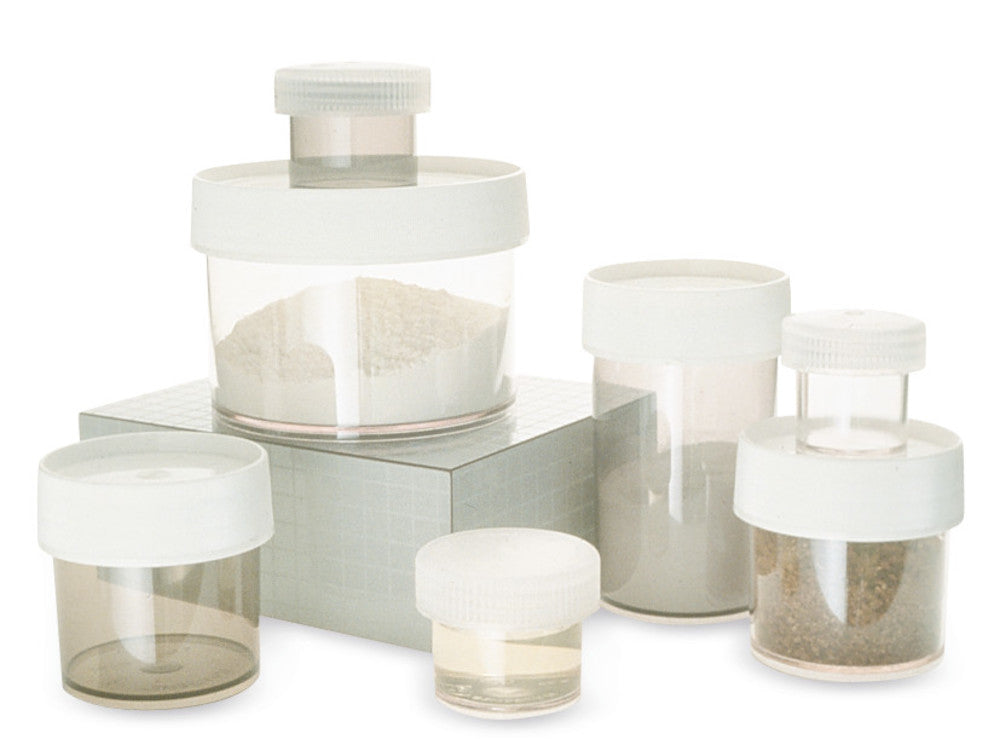
Les flacons à col large en PC sont des récipients de laboratoire en polycarbonate transparent, équipés de bouchons en polypropylène (PP) et proposés avec une capacité de 30 ml. Le format à col large facilite le remplissage, le vidage et le nettoyage lors des opérations courantes de manipulation et de stockage d'échantillons. Chaque paquet contient 4 pièce(s), constituant un ensemble multi-unités pratique pour l'organisation des paillasses et les tâches de laboratoire récurrentes. Le corps en PC transparent permet de vérifier visuellement le contenu sans ouvrir le récipient, tandis que le bouchon en PP complète un assemblage simple et sûr pour une utilisation quotidienne. Ces récipients du fabricant Nalgene font partie des gammes standard de verrerie de laboratoire, flacons et pots utilisés dans les environnements de recherche, d'enseignement et de contrôle qualité. Avec un poids de paquet de 0,102 kg, l'ensemble est facile à stocker et à déplacer dans le laboratoire. La taille de 30 ml convient aux aliquots de petit volume, au maintien intermédiaire et au transfert général de matériaux lorsqu'une ouverture large est préférée aux flacons à col étroit. La construction en polycarbonate combinée à un couvercle en PP offre une option de récipient transparent et robuste pour les flux de travail de laboratoire organisés qui nécessitent des récipients à col large clairs et accessibles.
Cet article appartient à la catégorie Récipients et bocaux pour échantillons, dans Flacons et récipients.
Caractéristiques principales
- Taille du paquet : 4 pièce(s)
- Type de produit : Récipient à col large
- Matériau : Polycarbonate (PC)
- Fermeture : Polypropylène (PP)
- Aspect : Transparent
- Capacité : 30 ml
Récemment consulté
Vous aimerez peut-être aussi
Browse related categories
Category
Sub-category
Catalogue
Brand
Questions about Récipients à col large, PC, transparents, fermeture PP, 30 ml, 4 unité(s)
What is this article?
Récipients à col large, PC, transparents, fermeture PP, 30 ml, 4 unité(s) is the article on this page. Luminix Health distributes Nalgene for laboratory use. It sits in Sample containers & jars, inside Bottles & containers, in Matériel de laboratoire.
A sample container or jar is the vessel the sample travels in, with a closure that survives the trip. The volume and the liner decide whether the sample that arrives is the sample that was taken.
A laboratory bottle is a closed container with a stated volume and a neck that takes a cap, a stopper or a dispenser. Borosilicate glass is the choice when the liquid is a solvent, or when the bottle will be heated or autoclaved. Polyethylene and polypropylene are the choice when the bottle must not shatter, or when hydrofluoric acid would attack glass. A narrow mouth pours. A wide mouth is for powders and for reaching the bottom. Laboratory ware of this kind is indexed under ISO laboratory glassware. Traceable volume sits with the BIPM and NIST Physical Measurement.
Which category should I open next?
The category is Bottles & containers. The sub-category is Sample containers & jars. The catalogue is Matériel de laboratoire.
Shelves beside this one are Laboratory glass bottles, Plastic bottles (narrow & wide mouth), Canisters & jerrycans, Wash bottles and Bottle accessories (pouring rings, dispensers, caps).
What should I check before I order?
The technical information on this page is the manufacturer's sheet. Read that, not a rewritten specification.
When this page shows a safety data sheet, use that manufacturer file. Hazard text does not belong in the sales description. For a pack size, a grade or a certificate that is not on the page, send a quote request or contact the team.
How does ordering and shipping work?
Luminix Health distributes this article from the heart of Europe. Articles in stock ship within 2–5 business days. Standard delivery is free from €250 excl. VAT. Cold-chain goods and dangerous goods under ADR are never included in that free delivery. The terms are in the Shipping Policy. The full brand index is on shop by brand. Who we are is on about us.
Which other categories should I open?
The seven catalogues are Labware, Lab chemicals, Lab instruments, Lab consumables, Chromatography equipment, Lab safety equipment and Life Science & Microbiology.