
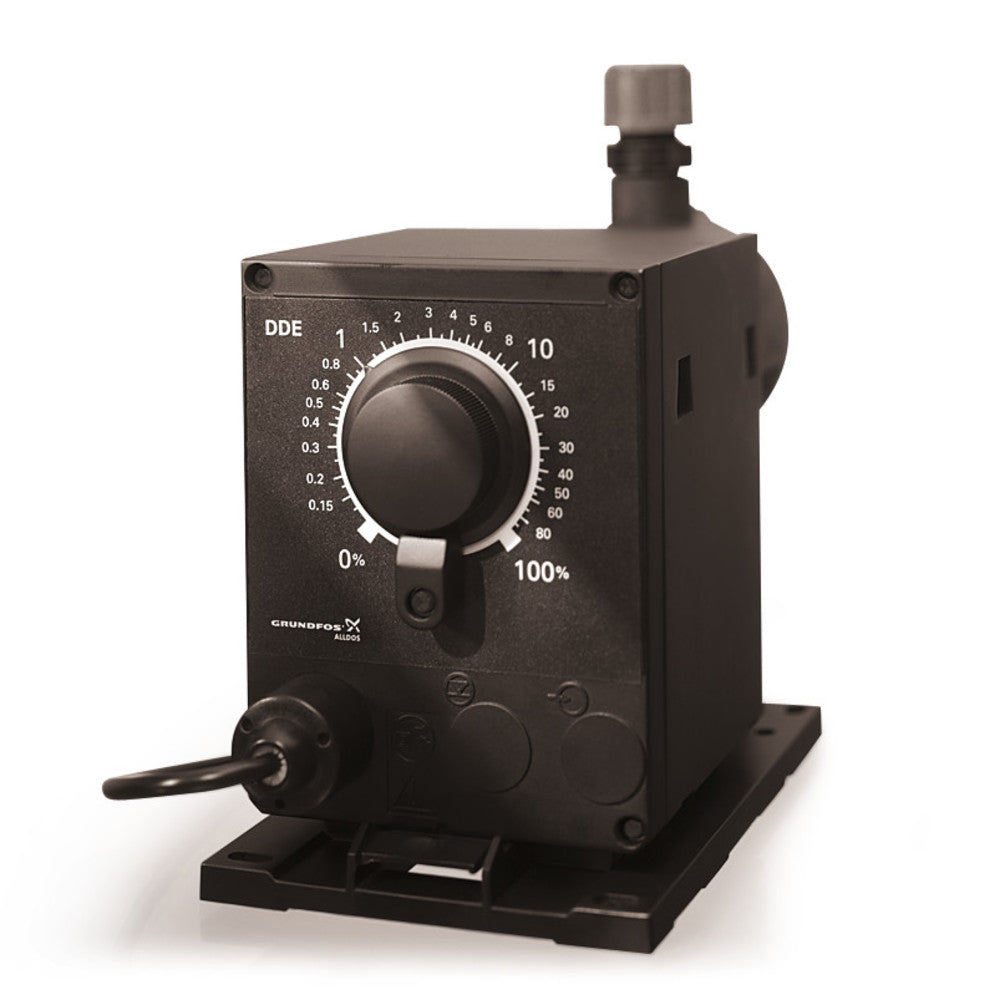


Description
Membrane dosing pump DDE 15-4 is a diaphragm liquid pump intended for laboratory dosing duties that require a higher stated flow rate of 15 l/h. It enables controlled membrane-based transfer of liquids in liquid-handling setups where defined metering capacity is essential. Supplied as one piece and weighing 3,020 kg, the unit is sized for dedicated dosing positions on the bench or within assembled fluid systems. As a diaphragm liquid pump, the DDE 15-4 addresses applications that prefer membrane dosing over peristaltic or centrifugal alternatives. Typical laboratory contexts include reagent addition, sample conditioning lines, and other workflows that specify a 15 l/h membrane dosing class. Clear model labelling as DDE 15-4 supports correct matching to system design, spare-part planning, and multi-pump installations. The pump comes from manufacturer ROTH SELECTION within a laboratory-oriented dosing pump selection. It is practical where operators need a single, readily identifiable 15 l/h membrane dosing unit without multi-pack logistics. Combined with compatible valves and accessories from the same dosing family, it helps build coherent liquid-handling configurations around a defined flow specification.
This article is part of Peristaltic & dosing pumps, in Pumps, vacuum & evaporation.
Key features
- Pack size: 1 pc
- Product type: Membrane dosing pump
- Model: DDE 15-4
- Flow rate: 15 l/h
- Weight: 3,020 kg
- Technical Information Sheet:

Recently viewed
You may also like
Browse related categories
Category
Sub-category
Catalogue
Brand
Questions about Membrane dosing pump DDE 15-4, flow rate 15 l/h, 1 unit(s)
What is this article?
Membrane dosing pump DDE 15-4, flow rate 15 l/h, 1 unit(s) is the article on this page. Luminix Health distributes Carl Roth for laboratory use. It sits in Peristaltic & dosing pumps, inside Pumps, vacuum & evaporation, in Lab instruments.
A peristaltic pump moves liquid by rollers squeezing a tube, so the liquid never touches the mechanism. Flow depends on the tube bore and the speed. A dosing pump aims at a set volume. The tube is the consumable, and the chemical has to be one that tube survives.
A vacuum pump lowers the pressure above a liquid so it boils at a lower temperature. That is the point of a rotary evaporator: solvent leaves a sample without cooking it. A diaphragm pump or a rotary-vane pump is chosen by the vacuum it reaches and by whether solvent vapour will destroy it. A peristaltic pump moves liquid by squeezing a tube, so the liquid touches only the tube. A barrel pump transfers a larger volume from a drum. The glassware on the evaporator is indexed under ISO laboratory glassware. Solvent identity is on PubChem.
Which category should I open next?
The category is Pumps, vacuum & evaporation. The sub-category is Peristaltic & dosing pumps. The catalogue is Lab instruments.
Shelves beside this one are Vacuum pumps, Rotary evaporators, Vacuum & pump accessories, Drum, barrel & transfer pumps and Pumps (other) & accessories.
What should I check before I order?
The technical information on this page is the manufacturer's sheet. Read that, not a rewritten specification.
When this page shows a safety data sheet, use that manufacturer file. Hazard text does not belong in the sales description. For a pack size, a grade or a certificate that is not on the page, send a quote request or contact the team.
How does ordering and shipping work?
Luminix Health distributes this article from the heart of Europe. Articles in stock ship within 2–5 business days. Standard delivery is free from €250 excl. VAT. Cold-chain goods and dangerous goods under ADR are never included in that free delivery. The terms are in the Shipping Policy. The full brand index is on shop by brand. Who we are is on about us.
Which other categories should I open?
The seven catalogues are Labware, Lab chemicals, Lab instruments, Lab consumables, Chromatography equipment, Lab safety equipment and Life Science & Microbiology.