


Description
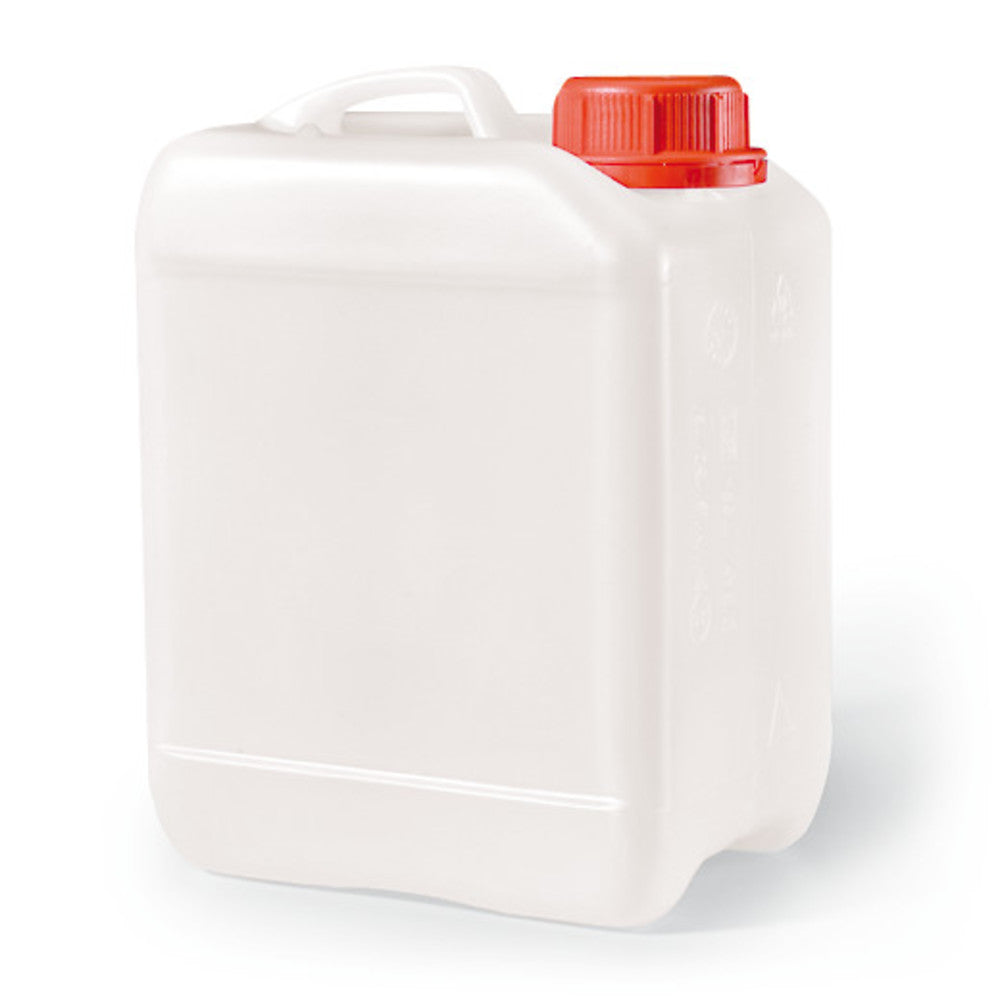
HDPE canister with a 2,5 l working volume provides a practical intermediate size for laboratory liquid storage and transfer. Built from high-density polyethylene, this canister belongs to the standard range of containers, bottles and carboys used for reagents, process solutions and bulk laboratory liquids. It is supplied with UN approval 3H1/Y1.6/150 and license number 11799, indicating suitability under the corresponding packaging instruction for approved transport and handling scenarios. Available as one piece from manufacturer ROTH SELECTION, the vessel supports everyday labware organisation where a slightly larger fill volume than 2 l is preferred without moving to heavy drums. Empty weight is 0,120 kg, so the canister remains easy to lift, fill and position on benches or shelves. Choose this 2,5 l HDPE model when you need a durable, UN-coded laboratory canister for routine storage, dispensing and internal logistics of compatible liquids in research, QC and teaching laboratories.
This article is part of Canisters & jerrycans, in Bottles & containers.
Key features
- Pack size: 1 pc
- Product type: Canister
- Material: HDPE
- Capacity: 2,5 l
- UN approval: 3H1/Y1.6/150
- License no.: 11799
Recently viewed
You may also like
Browse related categories
Category
Sub-category
Catalogue
Brand
Questions about Canister, HDPE, 2.5 l, 1 unit(s)
What is this article?
Canister, HDPE, 2.5 l, 1 unit(s) is the article on this page. Luminix Health distributes Carl Roth for laboratory use. It sits in Canisters & jerrycans, inside Bottles & containers, in Labware.
A canister or jerrycan holds litres, not millilitres, and it is shaped to be carried and to pour. The material has to survive the liquid for the whole time the can sits in the store.
A laboratory bottle is a closed container with a stated volume and a neck that takes a cap, a stopper or a dispenser. Borosilicate glass is the choice when the liquid is a solvent, or when the bottle will be heated or autoclaved. Polyethylene and polypropylene are the choice when the bottle must not shatter, or when hydrofluoric acid would attack glass. A narrow mouth pours. A wide mouth is for powders and for reaching the bottom. Laboratory ware of this kind is indexed under ISO laboratory glassware. Traceable volume sits with the BIPM and NIST Physical Measurement.
Which category should I open next?
The category is Bottles & containers. The sub-category is Canisters & jerrycans. The catalogue is Labware.
Shelves beside this one are Laboratory glass bottles, Plastic bottles (narrow & wide mouth), Sample containers & jars, Wash bottles and Bottle accessories (pouring rings, dispensers, caps).
What should I check before I order?
The technical information on this page is the manufacturer's sheet. Read that, not a rewritten specification.
When this page shows a safety data sheet, use that manufacturer file. Hazard text does not belong in the sales description. For a pack size, a grade or a certificate that is not on the page, send a quote request or contact the team.
How does ordering and shipping work?
Luminix Health distributes this article from the heart of Europe. Articles in stock ship within 2–5 business days. Standard delivery is free from €250 excl. VAT. Cold-chain goods and dangerous goods under ADR are never included in that free delivery. The terms are in the Shipping Policy. The full brand index is on shop by brand. Who we are is on about us.
Which other categories should I open?
The seven catalogues are Labware, Lab chemicals, Lab instruments, Lab consumables, Chromatography equipment, Lab safety equipment and Life Science & Microbiology.