


Description
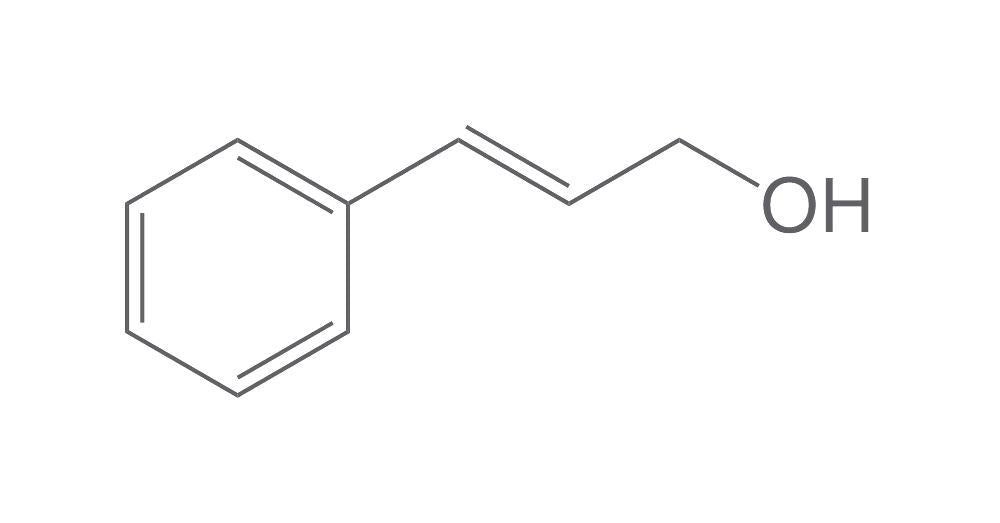
Cinnamyl alcohol is an aromatic allylic alcohol offered at a minimum purity of 98 % for synthesis. Identified by CAS number 104-54-1 and empirical formula C₉H₁₀O, it has a molar mass of 134,18 g/mol and a density of 1,044 g/cm³. The substance boils at 258 °C and shows a flash point of 126 °C, supporting predictable thermal behaviour in organic laboratory work. This grade is intended for preparative routes to cinnamyl esters, ethers, and related fragrance or fine-chemical intermediates where a defined assay is required. Packed as 100 g in glass from manufacturer Carl ROTH, the material suits bench-scale synthesis, method development, and teaching laboratories. EG number 203-212-3 places the compound under standard European inventory identification. Chemists can use it in multi-step sequences that call for a reliable cinnamyl building block without unnecessary formulation additives. Clear physical constants help with solvent choice, drying, and reaction planning. The glass pack supports clean storage and straightforward dispensing on the open bench or in a fume cupboard.
This article is part of Analytical grade solvents (p.a.), in Solvents.
Key features
- Assay (GLC): ≥98 %
- CAS number: 104-54-1
- Pack size: 100 g glass
- EG nr.: 203-212-3
- Purity: min. 98 %
- Molar mass: 134,18 g/mol
- Technical Information Sheet:

- Safety Data Sheet:
Compliance & Safety Information
 Warning
Hazard Statements (H-Phrases)
Precautionary Statements (P-Phrases)
Recently viewed
You may also like
Questions about Cinnamyl alcohol, min. 98 %, for synthesis, 100 g, glass
What is this article?
Cinnamyl alcohol, min. 98 %, for synthesis, 100 g, glass is the article on this page. Luminix Health distributes Carl Roth for laboratory use. It sits in Analytical grade solvents (p.a.), inside Solvents, in Lab chemicals.
An analytical-grade solvent, often marked p.a., has impurity limits tight enough for classical analysis and for preparing reagents. It is not automatically low enough in UV absorbance for HPLC, and it is not dry enough for a water-sensitive reaction. The grade is the purchase.
A solvent dissolves. The grade says which impurities are low enough for the method. Analytical grade is the ordinary pure solvent. HPLC and LC-MS grades limit the absorbance and the ions that would become peaks or background. A dry solvent has had water removed. A deuterated solvent is for NMR, where the hydrogen signal would otherwise drown the sample. Technical grade is for cleaning and for synthesis that does not need a chromatogram. Identity is on PubChem. Names follow IUPAC. Hazards follow ECHA, the CLP Regulation and REACH.
Which category should I open next?
The category is Solvents. The sub-category is Analytical grade solvents (p.a.). The catalogue is Lab chemicals.
Shelves beside this one are HPLC & LC-MS grade solvents, Dry & deuterated solvents (NMR, synthesis), Technical & synthesis grade solvents and Green & alternative solvents.
What should I check before I order?
When this page shows a safety data sheet, use that manufacturer file. Hazard text does not belong in the sales description. For a pack size, a grade or a certificate that is not on the page, send a quote request or contact the team.
How does ordering and shipping work?
Luminix Health distributes this article from the heart of Europe. Articles in stock ship within 2–5 business days. Standard delivery is free from €250 excl. VAT. Cold-chain goods and dangerous goods under ADR are never included in that free delivery. The terms are in the Shipping Policy. The full brand index is on shop by brand. Who we are is on about us.
Which other categories should I open?
The seven catalogues are Labware, Lab chemicals, Lab instruments, Lab consumables, Chromatography equipment, Lab safety equipment and Life Science & Microbiology.