
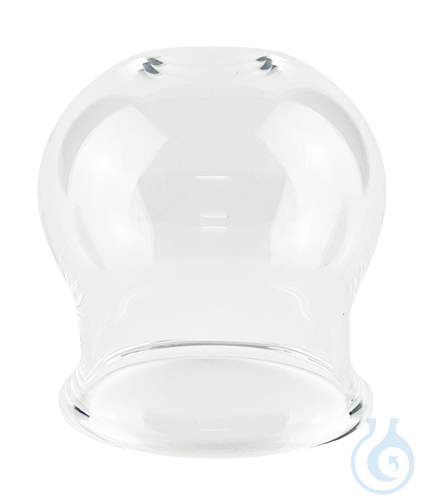



Description
Cupping glasses, mouth-blown, CE without olive approx. 6,5 cm Ø constitute specialised glass vessels for cupping work in laboratory and medical settings. Produced by traditional mouth-blowing, they present a smooth finish and a design that deliberately omits the olive, resulting in a simple cup form. The approximate diameter of 6,5 cm offers a larger working surface suited to varied procedural requirements. Each item is supplied as 1 pc for convenient single-unit deployment. These CE-marked cupping glasses from manufacturer Hecht comply with relevant European directives for professional use. Mouth-blown construction ensures uniform glass quality and optical clarity appreciated in controlled environments. The absence of an olive attachment streamlines both application and cleaning steps after use. With their practical 6,5 cm approximate size, the glasses support consistent technique across research, demonstration or clinical routines. They belong to the laboratory material category and fit readily into existing instrument collections. The single-piece presentation facilitates accurate inventory tracking and selective replenishment. Overall, the combination of mouth-blown craftsmanship, CE conformity and clear dimensional specification makes these cupping glasses a dependable choice for specialised glassware needs.
This article is part of Hose connectors, adapters & fittings, in Tubing, hoses & fittings.
Key features
- Pack size: 1 pc
- Product type: Cupping glasses
- Manufacturing: Mouth-blown
- Certification: CE
- Design: Without olive
- Diameter: approx. 6,5 cm Ø
Recently viewed
You may also like
Questions about Cupping glasses, hand blown, CE without olive ca. 6,5 cm Ø
What is this article?
Cupping glasses, hand blown, CE without olive ca. 6,5 cm Ø is the article on this page. Luminix Health distributes Hecht for laboratory use. It sits in Hose connectors, adapters & fittings, inside Tubing, hoses & fittings, in Labware.
A hose connector or adapter joins two lines, or steps one bore down to another. The barb diameter has to match the tube, and the thread has to match the stopcock or the bottle. Most leaks are a mismatch here, not a hole in the tube.
Tubing is how a liquid or a gas moves between two vessels without being poured. Silicone stays flexible and survives repeated autoclaving. PTFE resists almost every solvent and is stiff. PVC is the ordinary flexible line for water and for mild aqueous work. The fitting, not the tube, is what usually leaks: the barb, the thread and the stopcock have to match the tube bore. Glass and plastic apparatus around these lines is indexed under ISO laboratory ware.
Which category should I open next?
The category is Tubing, hoses & fittings. The sub-category is Hose connectors, adapters & fittings. The catalogue is Labware.
Shelves beside this one are PVC, PTFE & other tubing, Stopcocks & valves, Silicone tubing and Tubing accessories.
What should I check before I order?
When this page shows a safety data sheet, use that manufacturer file. Hazard text does not belong in the sales description. For a pack size, a grade or a certificate that is not on the page, send a quote request or contact the team.
How does ordering and shipping work?
Luminix Health distributes this article from the heart of Europe. Articles in stock ship within 2–5 business days. Standard delivery is free from €250 excl. VAT. Cold-chain goods and dangerous goods under ADR are never included in that free delivery. The terms are in the Shipping Policy. The full brand index is on shop by brand. Who we are is on about us.
Which other categories should I open?
The seven catalogues are Labware, Lab chemicals, Lab instruments, Lab consumables, Chromatography equipment, Lab safety equipment and Life Science & Microbiology.