



Description
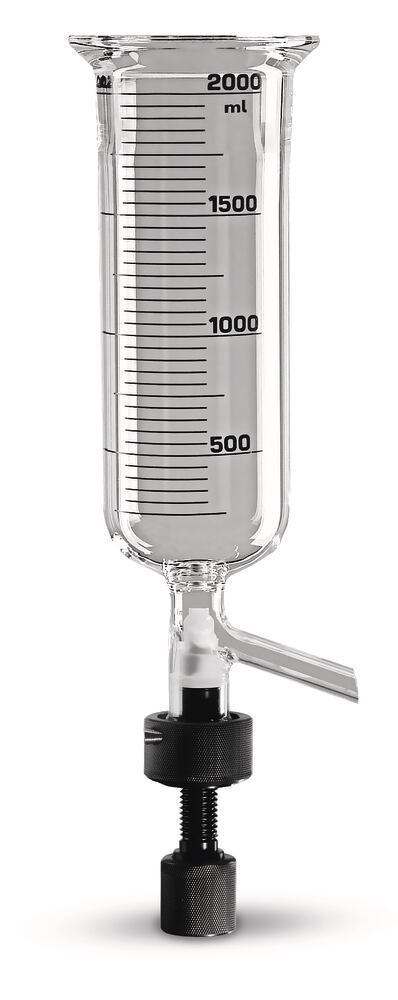
Flat flange reaction vial DN100, 2,0 l is a cylindrical laboratory glass vessel intended for reaction, distillation and extraction assemblies that use a flat flange interface. The body is graduated to support straightforward volume orientation during preparation and process work, and it is fitted with a drain valve so contents can be emptied in a controlled way without dismantling the full setup. With a nominal capacity of 2,0 l and a DN100 flat flange, the vial is suited to modular glass systems in which lids, condensers or other components are mounted on a standardised flange. The cylindrical form offers a practical working geometry for bench-scale synthesis, solvent handling and multi-step laboratory procedures. Each unit is supplied as 1 pc and has a stated weight of 0,820 kg, making handling and installation predictable in routine lab organisation. This flat flange reaction vial from manufacturer Lenz belongs to the flat flange vessel category used in laboratory glass, distillation and extraction workflows. Graduations and the integrated drain valve help streamline charging, monitoring and discharge steps within existing DN100 apparatus trains.
This article is part of Microcentrifuge & reaction tubes, in Microplates, PCR & reaction tubes.
Key features
- Pack size: 1 pc
- Nominal volume: 2,0 l
- Flange size: DN100
- Shape: Cylindrical
- Graduation: Graduated
- Drain valve: With drain valve
Recently viewed
You may also like
Browse related categories
Category
Microplates, PCR & reaction tubes
Sub-category
Microcentrifuge & reaction tubes
Catalogue
Brand
Questions about Flat flange reaction vial, DN100, 2.0 l,, cylindrical, graduated, w drain valve.
What is this article?
Flat flange reaction vial, DN100, 2.0 l,, cylindrical, graduated, w drain valve. is the article on this page. Luminix Health distributes Lenz for laboratory use. It sits in Microcentrifuge & reaction tubes, inside Microplates, PCR & reaction tubes, in Lab consumables.
A microcentrifuge tube, the familiar 1.5 mL or 2 mL flip-cap tube, holds a small reaction or a spin-down. The cap style, the centrifugal-force rating and whether the tube is low-binding are the specification. A PCR tube is thinner and is a different article.
A microplate is an array of wells so the same step can be done many times. A deep-well plate holds more volume. A PCR plate or a strip of tubes is thin-walled so the temperature of a cycler reaches the liquid quickly. A seal keeps the well from evaporating. The well number, the working volume and whether the plate is skirted for a robot are the choices. Diagnostic test systems are listed under ISO in vitro diagnostic systems. Methods are on PubMed.
Which category should I open next?
The category is Microplates, PCR & reaction tubes. The sub-category is Microcentrifuge & reaction tubes. The catalogue is Lab consumables.
Shelves beside this one are PCR plates, tubes & strips, Microplates, Plate seals & sealing films and Deep-well plates.
What should I check before I order?
The technical information on this page is the manufacturer's sheet. Read that, not a rewritten specification.
When this page shows a safety data sheet, use that manufacturer file. Hazard text does not belong in the sales description. For a pack size, a grade or a certificate that is not on the page, send a quote request or contact the team.
How does ordering and shipping work?
Luminix Health distributes this article from the heart of Europe. Articles in stock ship within 2–5 business days. Standard delivery is free from €250 excl. VAT. Cold-chain goods and dangerous goods under ADR are never included in that free delivery. The terms are in the Shipping Policy. The full brand index is on shop by brand. Who we are is on about us.
Which other categories should I open?
The seven catalogues are Labware, Lab chemicals, Lab instruments, Lab consumables, Chromatography equipment, Lab safety equipment and Life Science & Microbiology.