


Description
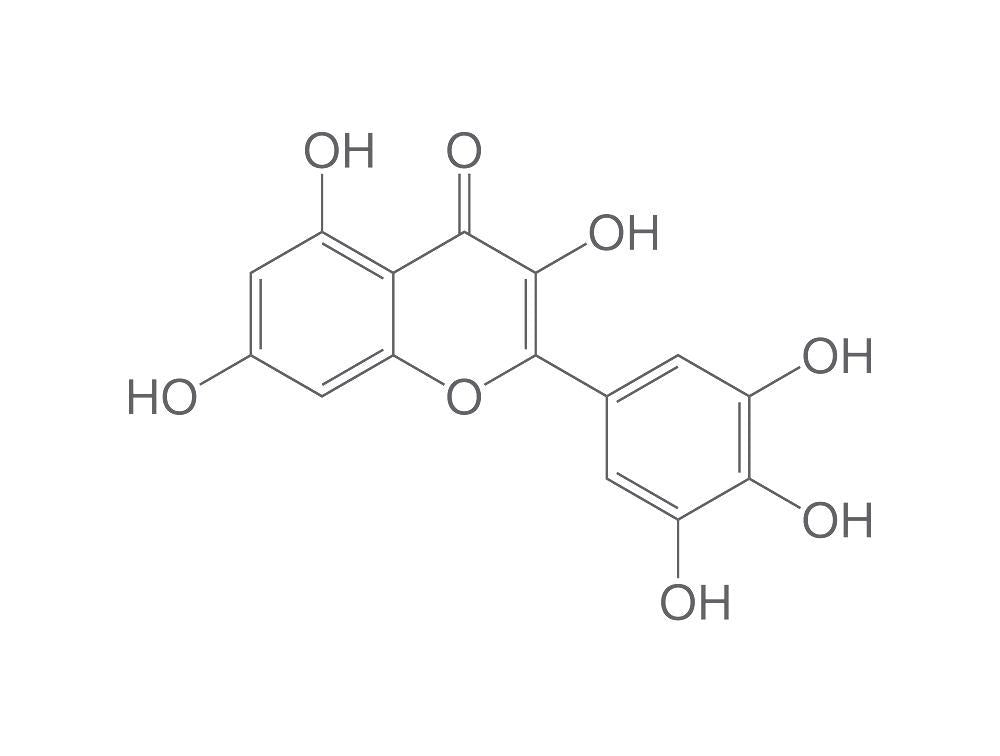
Myricetin is a flavonoid reference material offered as ROTICHROM® CHR grade with a minimum assay of 95 %, CAS number 529-44-2 and empirical formula C₁₅H₁₀O₈. Its molar mass is 318,24 g/mol, consistent with the fully hydroxylated flavone structure widely discussed in natural-product chemistry. Analytical laboratories employ myricetin as a chromatographic reference and research compound where defined purity supports calibration, method development, peak identification and comparative studies of polyphenols. The product is packed as 25 mg in glass, a small-quantity format that suits reference use, spike experiments and limited experimental series while limiting waste. Available from manufacturer Carl ROTH within the ROTICHROM® CHR portfolio, this material supports work in natural-product analysis, antioxidant research and phytochemical characterisation. Weigh and dissolve the solid according to validated procedures, taking normal laboratory precautions for fine organic powders. Clear documentation of CAS number, empirical formula, minimum purity and pack presentation allows purchasing and quality teams to match the item to monographs, SOPs and inventory systems with confidence.
This article is part of Inorganic salts, in Inorganic chemicals.
Key features
- Appearance: yellow to green powder
- Assay (HPLC): ≥97 %
- CAS number: 529-44-2
- Pack size: 25 mg glass
- EG nr.: 208-463-2
- Empirical formula: C₁₅H₁₀O₈
- Molar mass: 318,24 g/mol
- Technical Information Sheet:

- Safety Data Sheet:
Recently viewed
You may also like
Browse related categories
Category
Sub-category
Catalogue
Brand
Questions about Myricetin, ROTICHROM® CHR, 25 mg, glass
What is this article?
Myricetin, ROTICHROM® CHR, 25 mg, glass is the article on this page. Luminix Health distributes Carl Roth for laboratory use. It sits in Inorganic salts, inside Inorganic chemicals, in Lab chemicals.
An inorganic salt is an ionic solid, a chloride, a sulfate, a nitrate, a phosphate. The degree of hydration changes the mass that contains one mole of the ion. Analytical grade limits the foreign ions. A hydrate and the anhydrous salt are not interchangeable by weight.
An inorganic chemical is a salt, an acid or base in solid form, a metal, an oxide, or an element. The waters of hydration are part of the formula: a hydrate and an anhydrous salt are different masses for the same ion. Trace metals matter when the salt will be used in analysis. Nanomaterials add particle size to the specification. Look the substance up on PubChem. Hazard classes are on ECHA, under the CLP Regulation and REACH. Transport of the dangerous ones is explained by the UNECE.
Which category should I open next?
The category is Inorganic chemicals. The sub-category is Inorganic salts. The catalogue is Lab chemicals.
Shelves beside this one are Metals, elements & oxides and Nanomaterials & quantum dots.
What should I check before I order?
When this page shows a safety data sheet, use that manufacturer file. Hazard text does not belong in the sales description. For a pack size, a grade or a certificate that is not on the page, send a quote request or contact the team.
How does ordering and shipping work?
Luminix Health distributes this article from the heart of Europe. Articles in stock ship within 2–5 business days. Standard delivery is free from €250 excl. VAT. Cold-chain goods and dangerous goods under ADR are never included in that free delivery. The terms are in the Shipping Policy. The full brand index is on shop by brand. Who we are is on about us.
Which other categories should I open?
The seven catalogues are Labware, Lab chemicals, Lab instruments, Lab consumables, Chromatography equipment, Lab safety equipment and Life Science & Microbiology.