


Description
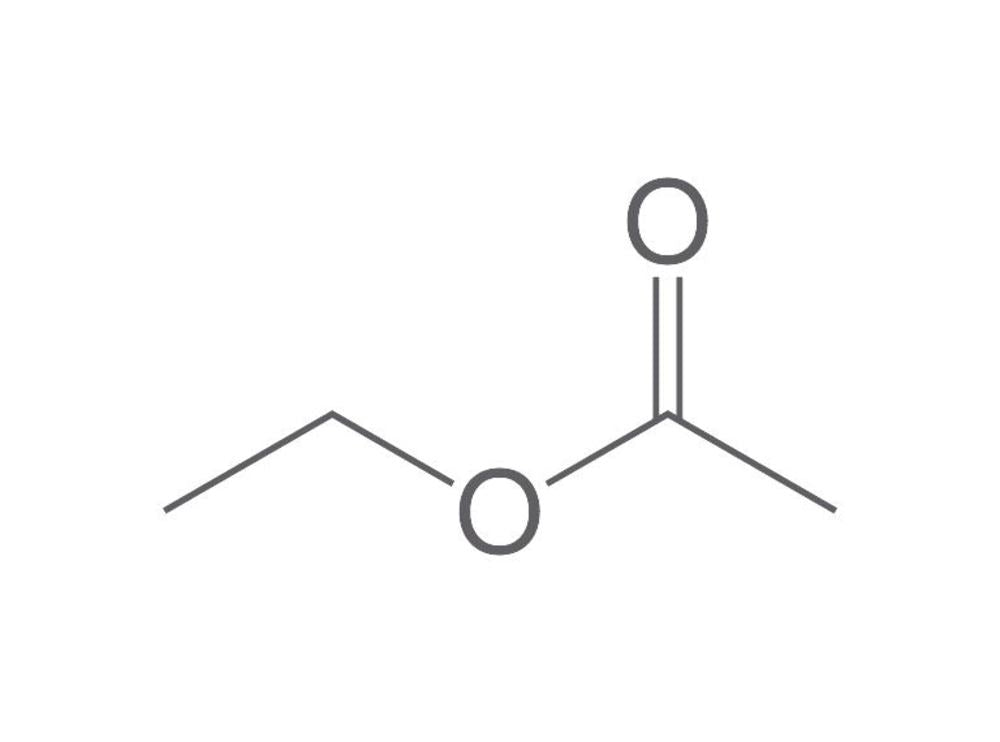
L'ester éthylique d'acide acétique (acétate d'éthyle) est un solvant de qualité destiné aux applications d'impression 3D. Identifié par le numéro CAS 141-78-6 et la formule brute C₄H₈O₂, il possède une masse molaire de 88,11 g/mol et une densité de 0,9003 g/cm³. Le point d'ébullition est de 77,1 °C et le point d'éclair est de −4 °C, ce qui reflète son caractère volatil dans le cadre d'une utilisation en laboratoire et en atelier. Avec le numéro EG 205-500-4 et le numéro UN 1173, cet ester est positionné parmi les accessoires d'impression 3D conventionnels en tant que solvant de traitement pour le nettoyage, la finition ou les étapes de flux de travail connexes. Les données physiques du fabricant Carl ROTH facilitent la manipulation et la planification des processus lorsqu'un solvant organique défini est requis. Il convient aux environnements d'impression à l'échelle du banc d'essai et en petites séries qui nécessitent un volume prêt à l'emploi sans grands contenants. Une identification claire via le numéro CAS, la formule et les valeurs de point d'ébullition/d'éclair aide les laboratoires et les installations d'impression à adapter le solvant aux exigences du matériel et de l'équipement.
Cet article appartient aux catégories Agitateurs, basculeurs et rotateurs, dans Agitation, secouage et mélange.
Caractéristiques principales
- Numéro CAS : 141-78-6
- Conditionnements : 1 l, 5 l
- N° EG : 205-500-4
- Formule brute : C₄H₈O₂
- Masse molaire : 88,11 g/mol
- Densité : 0,9003 g/cm³
- Fiche technique :

- Fiche de données de sécurité :
Compliance & Safety Information

 Danger
Hazard Statements (H-Phrases)
Precautionary Statements (P-Phrases)
Récemment consulté
Vous aimerez peut-être aussi
Browse related categories
Category
Sub-category
Catalogue
Brand
Questions about Acétate d'éthyle, pour impression 3D, 1 l, plastique
What is this article?
Acétate d'éthyle, pour impression 3D, 1 l, plastique is the article on this page. Luminix Health distributes Carl Roth for laboratory use. It sits in Shakers, rockers & rotators, inside Stirring, shaking & mixing, in Instruments de précision.
A shaker, rocker or rotator moves a rack, a plate or a bottle so the contents keep moving without a stirrer bar. Orbital, reciprocating and rocking motions are different. The platform, the load and the speed range are the specification.
Stirring keeps a mixture uniform or helps a solid dissolve. A magnetic stirrer spins a bar inside a closed vessel. An overhead stirrer drives a shaft when the liquid is viscous or the volume is large. A vortex mixer agitates a tube. A shaker moves a whole rack or a plate. The shape of the impeller and the speed decide whether the liquid turns over or merely spins. The vessels being stirred are indexed under ISO laboratory glassware.
Which category should I open next?
The category is Stirring, shaking & mixing. The sub-category is Shakers, rockers & rotators. The catalogue is Instruments de précision.
Shelves beside this one are Magnetic stirring bars, Stirring shafts, propellers & impellers, Magnetic stirrers, Stirring & mixing accessories, Homogenisers & dispersers, Overhead stirrers and Vortex mixers.
What should I check before I order?
When this page shows a safety data sheet, use that manufacturer file. Hazard text does not belong in the sales description. For a pack size, a grade or a certificate that is not on the page, send a quote request or contact the team.
How does ordering and shipping work?
Luminix Health distributes this article from the heart of Europe. Articles in stock ship within 2–5 business days. Standard delivery is free from €250 excl. VAT. Cold-chain goods and dangerous goods under ADR are never included in that free delivery. The terms are in the Shipping Policy. The full brand index is on shop by brand. Who we are is on about us.
Which other categories should I open?
The seven catalogues are Labware, Lab chemicals, Lab instruments, Lab consumables, Chromatography equipment, Lab safety equipment and Life Science & Microbiology.