


Description
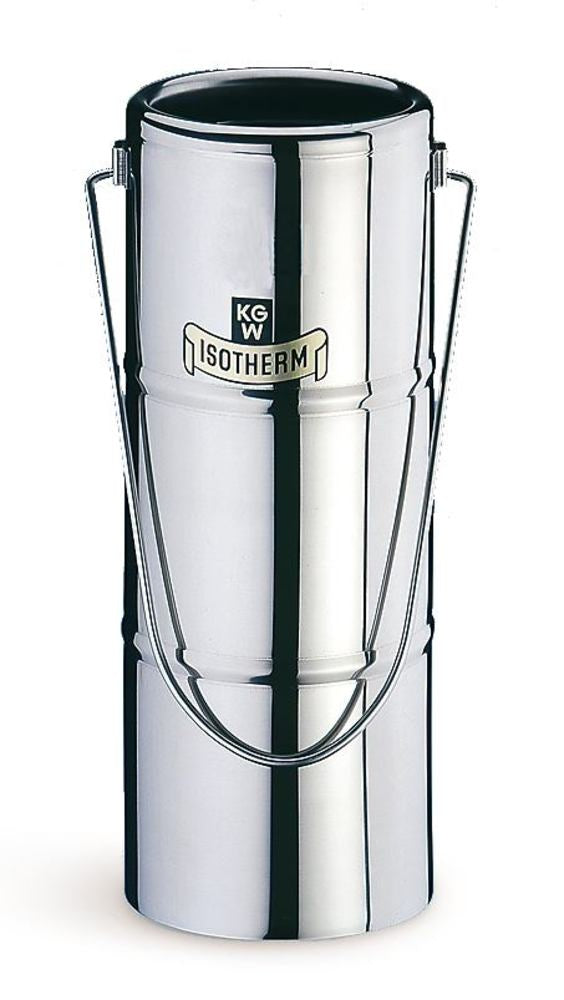
Le récipient Dewar, 500 ml, cylindrique, est un récipient de refroidissement de laboratoire fabriqué en acier chrome-nickel avec un diamètre intérieur de 65 mm. La conception cylindrique offre un volume de travail pratique pour contenir des liquides cryogéniques ou des fluides réfrigérés lors de la préparation d'échantillons, du stockage temporaire et de la manipulation sensible à la température. Avec une capacité de 500 ml, il convient aux travaux à l'échelle du laboratoire en chimie, biologie et science des matériaux, où une isolation thermique fiable est requise pour des tâches de refroidissement à court ou moyen terme. La construction robuste en acier chrome-nickel du fabricant KGW offre une durabilité mécanique pour une utilisation quotidienne en laboratoire. Fourni à l'unité, ce récipient Dewar s'intègre dans des configurations de cuves de refroidissement aux côtés d'autres équipements de contrôle de la température. Les laboratoires choisissent le diamètre intérieur de 65 mm et la forme cylindrique lorsqu'un Dewar métallique compact et autonome est nécessaire pour les bains froids, les pièges cryogéniques ou le maintien intermédiaire de fluides à basse température sans la fragilité du verre. Il prend en charge les flux de travail courants de cryogénie et de fluides réfrigérés dans les environnements de recherche et d'analyse.
Cet article appartient aux catégories Boîtes cryogéniques, portoirs & stockage en congélateur, dans Cryogénie & stockage au froid.
Caractéristiques principales
- Taille du conditionnement : 1 unité(s)
- Capacité : 500 ml
- Forme : Cylindrique
- Matériau : Acier chrome-nickel
- Diamètre intérieur : 65 mm
- Poids : 0,560 kg
Récemment consulté
Vous aimerez peut-être aussi
Questions about Récipient Dewar, 500 ml, cylindrique, acier au chrome-nickel, Ø intérieur 65 mm
What is this article?
Récipient Dewar, 500 ml, cylindrique, acier au chrome-nickel, Ø intérieur 65 mm is the article on this page. Luminix Health distributes KGW for laboratory use. It sits in Cryo boxes, racks & freezer storage, inside Cryogenics & cold storage, in Consommables.
A cryo box or a freezer rack is how vials are found again at −80 °C or in the vapour phase of nitrogen. The grid, 9×9 or 10×10, has to match the vials. A cardboard box and a polycarbonate box differ in whether they survive liquid nitrogen. The map of the box is part of the sample.
Cold storage slows chemistry and keeps cells, proteins and nucleic acids from falling apart. A cryogenic vial is made to survive liquid-nitrogen temperatures and to be sealed against the liquid. A box and a rack are how those vials are found again. The article is not part of free standard delivery when it must stay cold: cold-chain goods are never included in that free delivery. Biosafety of the material inside is summarised by the WHO laboratory biosafety topic. Reference lines are held by ATCC.
Which category should I open next?
The category is Cryogenics & cold storage. The sub-category is Cryo boxes, racks & freezer storage. The catalogue is Consommables.
Shelves beside this one are Cryogenic vials & tubes and Cryo labels & markers.
What should I check before I order?
The technical information on this page is the manufacturer's sheet. Read that, not a rewritten specification.
When this page shows a safety data sheet, use that manufacturer file. Hazard text does not belong in the sales description. For a pack size, a grade or a certificate that is not on the page, send a quote request or contact the team.
How does ordering and shipping work?
Luminix Health distributes this article from the heart of Europe. Articles in stock ship within 2–5 business days. Standard delivery is free from €250 excl. VAT. Cold-chain goods and dangerous goods under ADR are never included in that free delivery. The terms are in the Shipping Policy. The full brand index is on shop by brand. Who we are is on about us.
Which other categories should I open?
The seven catalogues are Labware, Lab chemicals, Lab instruments, Lab consumables, Chromatography equipment, Lab safety equipment and Life Science & Microbiology.