
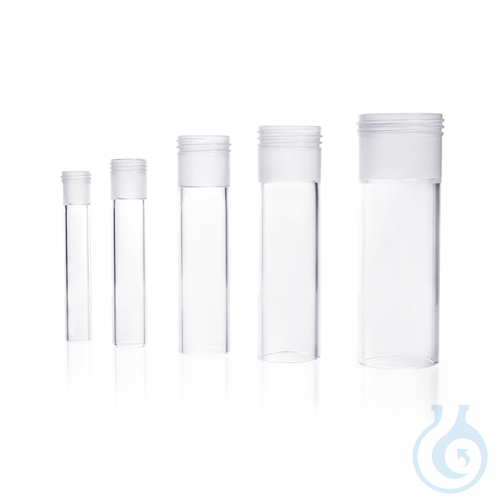



Description
Les manchons filetés massifs DURAN® NS 24/29 sont des composants de verrerie de laboratoire conçus pour créer des raccordements filetés sûrs sur des rodages normalisés standard. Ces manchons massifs correspondent aux dimensions du rodage NS 24/29 et permettent un assemblage fiable d'appareils modulaires utilisés en synthèse, en distillation et en manipulation chimique générale. La construction massive assure la stabilité mécanique lors du montage et du démontage répétés des systèmes en verre. Fourni en une seule pièce, le manchon s'intègre directement dans les configurations de verrerie de laboratoire existantes. Produit par le fabricant Duran/DWK Life Sciences, le composant conserve la constance dimensionnelle attendue de la gamme DURAN®. Il convient aux laboratoires de recherche, d'analyse et d'enseignement qui exigent des interfaces de rodage précises sans matériel de serrage supplémentaire. La conception filetée simplifie la fixation d'adaptateurs ou d'accessoires tout en préservant l'alignement du rodage. Ce produit facilite la configuration efficace d'assemblages en verre en plusieurs parties et contribue à des flux de travail expérimentaux reproductibles impliquant des raccordements NS standard.
Cet article fait partie de Raccords pour tuyaux, adaptateurs & raccords, dans Tubes, tuyaux et raccords.
Caractéristiques
- Conditionnement: 1 pièce
- Marque: DURAN®
- Type de produit: Manchon fileté massif
- Taille du joint: NS 24/29
- Construction: Massif
- Pays d'origine: Inde
Récemment consulté
Vous aimerez peut-être aussi
Browse related categories
Category
Sub-category
Raccords pour tuyaux, adaptateurs & raccords
Catalogue
Brand
Questions about DURAN® douilles filetées, renforcées, NS 24/29
What is this article?
DURAN® douilles filetées, renforcées, NS 24/29 is the article on this page. Luminix Health distributes DWK Life Sciences for laboratory use. It sits in Raccords pour tuyaux, adaptateurs & raccords, inside Tubes, tuyaux et raccords, in Matériel de laboratoire.
A hose connector or adapter joins two lines, or steps one bore down to another. The barb diameter has to match the tube, and the thread has to match the stopcock or the bottle. Most leaks are a mismatch here, not a hole in the tube.
Tubing is how a liquid or a gas moves between two vessels without being poured. Silicone stays flexible and survives repeated autoclaving. PTFE resists almost every solvent and is stiff. PVC is the ordinary flexible line for water and for mild aqueous work. The fitting, not the tube, is what usually leaks: the barb, the thread and the stopcock have to match the tube bore. Glass and plastic apparatus around these lines is indexed under ISO laboratory ware.
Which category should I open next?
The category is Tubes, tuyaux et raccords. The sub-category is Raccords pour tuyaux, adaptateurs & raccords. The catalogue is Matériel de laboratoire.
Shelves beside this one are Tuyaux PVC, PTFE & autres, Robinets & vannes, Tuyaux en silicone and Accessoires pour tuyaux.
What should I check before I order?
When this page shows a safety data sheet, use that manufacturer file. Hazard text does not belong in the sales description. For a pack size, a grade or a certificate that is not on the page, send a quote request or contact the team.
How does ordering and shipping work?
Luminix Health distributes this article from the heart of Europe. Articles in stock ship within 2–5 business days. Standard delivery is free from €250 excl. VAT. Cold-chain goods and dangerous goods under ADR are never included in that free delivery. The terms are in the Shipping Policy. The full brand index is on shop by brand. Who we are is on about us.
Which other categories should I open?
The seven catalogues are Labware, Lab chemicals, Lab instruments, Lab consumables, Chromatography equipment, Lab safety equipment and Life Science & Microbiology.