



Description
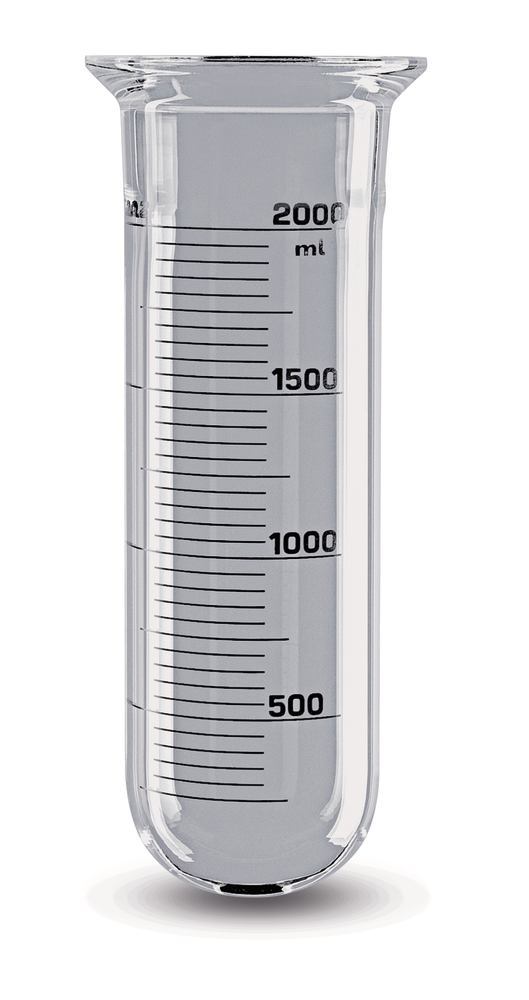
Réacteur cylindrique gradué à fond rond, récipient en verre de laboratoire destiné à la distillation, à l'extraction et aux travaux réactionnels connexes. Il associe un corps cylindrique gradué à un fond rond et une bride plate DN100, pour une capacité nominale de 2,0 l. Sa conception correspond à la catégorie des récipients à bride plate utilisés comme composants en verre dans les montages de distillation et d'extraction en laboratoire. Conditionnement de 1 unité, avec un poids indiqué de 1,020 kg par unité. Les graduations sur la paroi cylindrique permettent une lecture approximative du volume lors du chargement et des étapes du processus, tandis que le profil à fond rond est caractéristique des réacteurs utilisés dans la verrerie de laboratoire préparatoire. Ce modèle du fabricant Lenz est spécifié pour les environnements de laboratoire professionnels nécessitant une interface à bride DN100 et une capacité de 2,0 l. Il convient aux installations en verre modulaires où les réacteurs cylindriques gradués à fond rond font partie de la chaîne de travail. La désignation claire de la bride et l'étiquetage de la capacité facilitent l'adaptation du récipient aux systèmes à bride plate DN100 existants.
Cet article fait partie de la catégorie Microtubes de centrifugation et de réaction, dans Microplaques, PCR et tubes de réaction.
Caractéristiques principales
- Conditionnement : 1 unité
- Conception : Cylindrique, gradué, fond rond
- Taille de la bride : DN100
- Capacité : 2,0 l
- Poids : 1,020 kg
Récemment consulté
Vous aimerez peut-être aussi
Browse related categories
Category
Microplates, PCR & reaction tubes
Sub-category
Microcentrifuge & reaction tubes
Catalogue
Brand
Questions about Réacteur cylindrique, gradué, fond rond, DN100, 2,0 l, 1 unité(s)
What is this article?
Réacteur cylindrique, gradué, fond rond, DN100, 2,0 l, 1 unité(s) is the article on this page. Luminix Health distributes Lenz for laboratory use. It sits in Microcentrifuge & reaction tubes, inside Microplates, PCR & reaction tubes, in Consommables.
A microcentrifuge tube, the familiar 1.5 mL or 2 mL flip-cap tube, holds a small reaction or a spin-down. The cap style, the centrifugal-force rating and whether the tube is low-binding are the specification. A PCR tube is thinner and is a different article.
A microplate is an array of wells so the same step can be done many times. A deep-well plate holds more volume. A PCR plate or a strip of tubes is thin-walled so the temperature of a cycler reaches the liquid quickly. A seal keeps the well from evaporating. The well number, the working volume and whether the plate is skirted for a robot are the choices. Diagnostic test systems are listed under ISO in vitro diagnostic systems. Methods are on PubMed.
Which category should I open next?
The category is Microplates, PCR & reaction tubes. The sub-category is Microcentrifuge & reaction tubes. The catalogue is Consommables.
Shelves beside this one are PCR plates, tubes & strips, Microplates, Plate seals & sealing films and Deep-well plates.
What should I check before I order?
The technical information on this page is the manufacturer's sheet. Read that, not a rewritten specification.
When this page shows a safety data sheet, use that manufacturer file. Hazard text does not belong in the sales description. For a pack size, a grade or a certificate that is not on the page, send a quote request or contact the team.
How does ordering and shipping work?
Luminix Health distributes this article from the heart of Europe. Articles in stock ship within 2–5 business days. Standard delivery is free from €250 excl. VAT. Cold-chain goods and dangerous goods under ADR are never included in that free delivery. The terms are in the Shipping Policy. The full brand index is on shop by brand. Who we are is on about us.
Which other categories should I open?
The seven catalogues are Labware, Lab chemicals, Lab instruments, Lab consumables, Chromatography equipment, Lab safety equipment and Life Science & Microbiology.