


Description
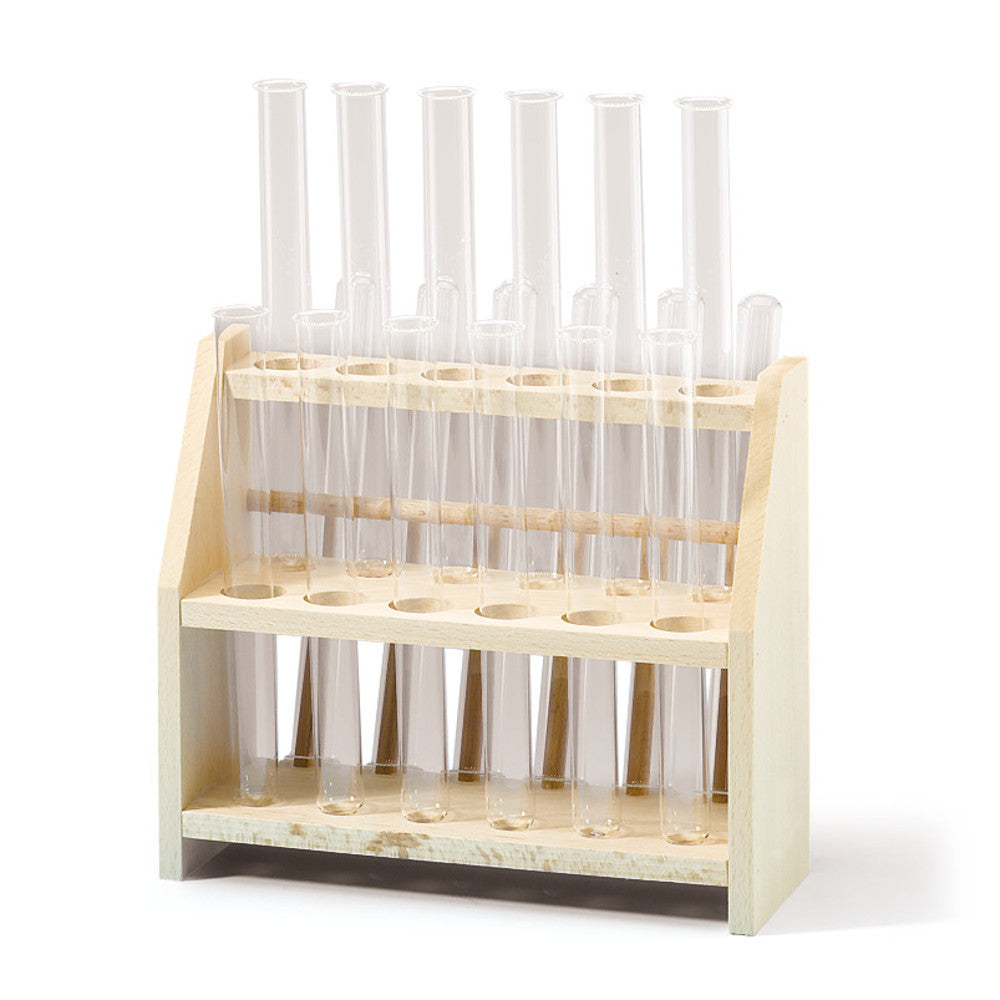
Le portoir pour tubes à essai en bois, 2 niveaux, est un support d'échantillons de laboratoire à double étage conçu pour augmenter la capacité de tubes tout en conservant un encombrement réduit sur la paillasse. Ce portoir en bois comporte douze trous pour des tubes en verre de Ø 18 mm répartis sur deux niveaux et est fourni sans tiges d'égouttage pour une disposition de stockage simple. La conception à deux niveaux permet de maintenir davantage de tubes à la verticale dans un cadre en bois stable, favorisant un stockage organisé des échantillons pendant la préparation, l'analyse ou les exercices pédagogiques. Livré en une seule pièce avec un poids de 0,210 kg, le portoir est facile à placer et à déplacer au gré de l'évolution des flux de travail. Il appartient à la gamme ROTH SELECTION et convient aux laboratoires qui ont besoin d'une plus grande capacité pour des tubes en verre standard de Ø 18 mm sans tiges de séchage supplémentaires. Douze positions réparties sur deux niveaux améliorent la visibilité et l'accès par rapport aux supports à niveau unique de largeur similaire. Idéal pour l'organisation générale de la verrerie de laboratoire, les supports d'échantillons et la manipulation courante de tubes multiples dans la recherche, le contrôle qualité et les environnements éducatifs.
Cet article appartient à Plateaux, cuvettes et bacs, dans Coupelles, creusets et porcelaine.
Caractéristiques principales
- Conditionnement : 1 unité
- Matériau : Bois
- Conception : 2 niveaux
- Nombre de trous : 12
- Diamètre des tubes : Ø 18 mm
- Tiges d'égouttage : Sans
Récemment consulté
Vous aimerez peut-être aussi
Browse related categories
Category
Sub-category
Catalogue
Brand
Questions about Portoir à tubes à essai, bois, 2 niveaux, 12 trous, verre Ø18 mm, sans tiges d'égouttage
What is this article?
Portoir à tubes à essai, bois, 2 niveaux, 12 trous, verre Ø18 mm, sans tiges d'égouttage is the article on this page. Luminix Health distributes Carl Roth for laboratory use. It sits in Trays, bowls & tubs, inside Dishes, crucibles & porcelain, in Matériel de laboratoire.
A laboratory tray, bowl or tub is an open vessel for holding, staining, drying or carrying many small items at once. Polypropylene trays resist a knock and many aqueous liquids. Porcelain takes heat. The useful numbers are the bottom size and the depth, because that is the working area.
A dish is an open vessel for drying, evaporating or holding a solid. Porcelain and glazed ceramic take a higher temperature than borosilicate glass, which is why a crucible, not a beaker, goes into a furnace. A watch glass covers, or holds a small amount for drying. A mortar is for grinding. The temperature and the chemical, not the shape alone, choose the material. Laboratory ware of this family is listed under ISO laboratory ware.
Which category should I open next?
The category is Dishes, crucibles & porcelain. The sub-category is Trays, bowls & tubs. The catalogue is Matériel de laboratoire.
Shelves beside this one are Crucibles, Mortars & pestles, Watch glasses & crystallising dishes, Evaporating dishes and Dishes (other).
What should I check before I order?
The technical information on this page is the manufacturer's sheet. Read that, not a rewritten specification.
When this page shows a safety data sheet, use that manufacturer file. Hazard text does not belong in the sales description. For a pack size, a grade or a certificate that is not on the page, send a quote request or contact the team.
How does ordering and shipping work?
Luminix Health distributes this article from the heart of Europe. Articles in stock ship within 2–5 business days. Standard delivery is free from €250 excl. VAT. Cold-chain goods and dangerous goods under ADR are never included in that free delivery. The terms are in the Shipping Policy. The full brand index is on shop by brand. Who we are is on about us.
Which other categories should I open?
The seven catalogues are Labware, Lab chemicals, Lab instruments, Lab consumables, Chromatography equipment, Lab safety equipment and Life Science & Microbiology.