


Description
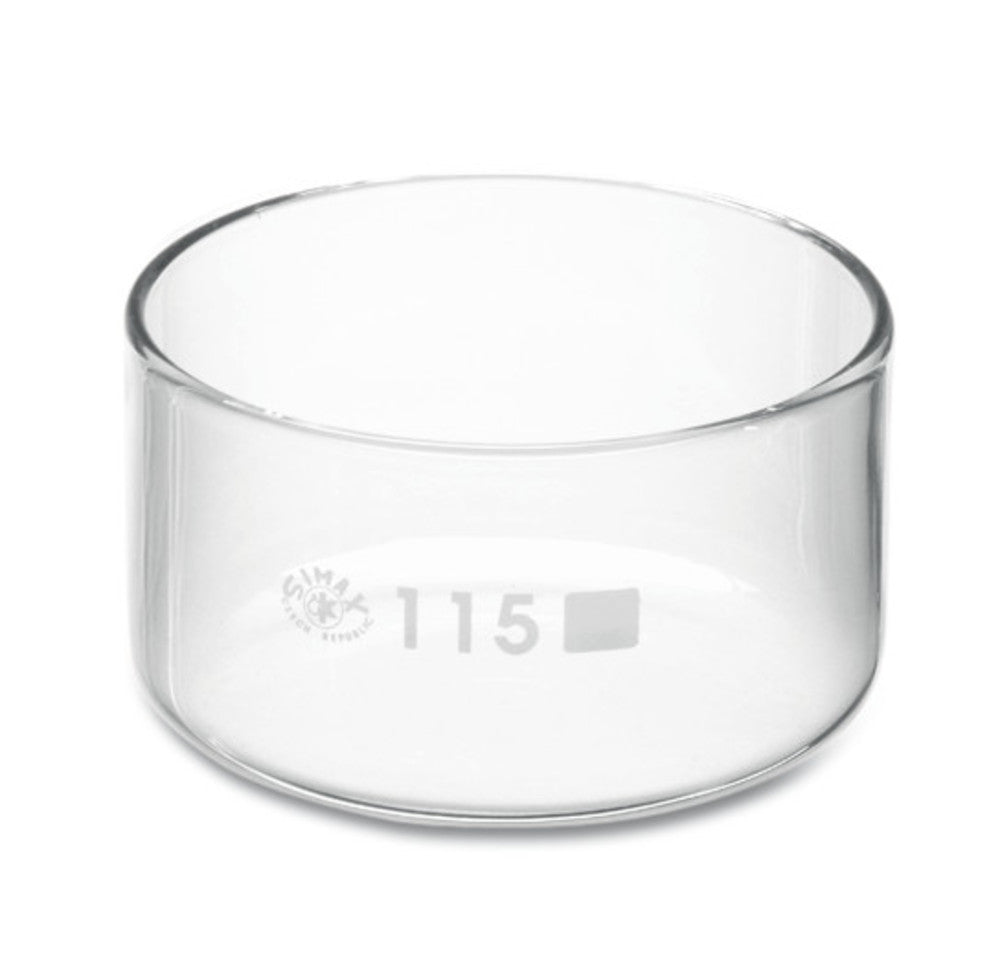
Les coupelles de cristallisation Rotilabo® sans bec sont des récipients de laboratoire produits en verre borosilicaté d'une capacité de 40 ml. Destinée à la cristallisation à petite et moyenne échelle et à la manipulation associée de solutions, la conception sans bec prend en charge l'évaporation, l'observation des cristaux et un travail d'échantillon simple sur la paillasse. Le verre borosilicaté offre la résistance chimique et la stabilité thermique typiques de la verrerie de laboratoire pour les coupelles de cristallisation, les capsules d'évaporation et les récipients similaires. Chaque paquet contient 10 pièces et pèse 0.3 kg, ce qui rend l'ensemble pratique pour des expériences parallèles et un usage de laboratoire de routine. Ces coupelles Rotilabo® du fabricant ROTH SELECTION répondent aux exigences quotidiennes en verre de laboratoire, récipients et consommables. Le format ouvert de 40 ml convient à la recristallisation, à la concentration de solvant et à la préparation générale de chimie humide lorsqu'une coupelle de cristallisation compacte en verre borosilicaté sans bec est souhaitée. Elles s'inscrivent dans les flux de travail de laboratoire standard qui demandent plusieurs récipients de cristallisation de taille moyenne-petite d'une qualité constante.
Cet article fait partie de Verres de montre & coupelles de cristallisation, dans Coupelles, creusets & porcelaine.
Caractéristiques
- Conditionnement: 10 pièces
- Marque: Rotilabo®
- Type de produit: Coupelle de cristallisation
- Matériau: Verre borosilicaté
- Capacité: 40 ml
- Bec: Sans bec
Récemment consulté
Vous aimerez peut-être aussi
Browse related categories
Category
Coupelles, creusets & porcelaine
Sub-category
Verres de montre & coupelles de cristallisation
Catalogue
Brand
Questions about Coupelles de cristallisation Rotilabo®, sans bec, verre borosilicaté, 40 ml
What is this article?
Coupelles de cristallisation Rotilabo®, sans bec, verre borosilicaté, 40 ml is the article on this page. Luminix Health distributes Carl Roth for laboratory use. It sits in Verres de montre & coupelles de cristallisation, inside Coupelles, creusets & porcelaine, in Matériel de laboratoire.
A watch glass is a shallow curved cover or a dish for drying a few grams. A crystallising dish is the flatter, wider dish a solution is left in while a solid comes out. Neither is volumetric. Diameter is the specification.
A dish is an open vessel for drying, evaporating or holding a solid. Porcelain and glazed ceramic take a higher temperature than borosilicate glass, which is why a crucible, not a beaker, goes into a furnace. A watch glass covers, or holds a small amount for drying. A mortar is for grinding. The temperature and the chemical, not the shape alone, choose the material. Laboratory ware of this family is listed under ISO laboratory ware.
Which category should I open next?
The category is Coupelles, creusets & porcelaine. The sub-category is Verres de montre & coupelles de cristallisation. The catalogue is Matériel de laboratoire.
Shelves beside this one are Creusets, Plateaux, bols & bacs, Mortiers & pilons, Capsules à évaporation and Coupelles (autres).
What should I check before I order?
The technical information on this page is the manufacturer's sheet. Read that, not a rewritten specification.
When this page shows a safety data sheet, use that manufacturer file. Hazard text does not belong in the sales description. For a pack size, a grade or a certificate that is not on the page, send a quote request or contact the team.
How does ordering and shipping work?
Luminix Health distributes this article from the heart of Europe. Articles in stock ship within 2–5 business days. Standard delivery is free from €250 excl. VAT. Cold-chain goods and dangerous goods under ADR are never included in that free delivery. The terms are in the Shipping Policy. The full brand index is on shop by brand. Who we are is on about us.
Which other categories should I open?
The seven catalogues are Labware, Lab chemicals, Lab instruments, Lab consumables, Chromatography equipment, Lab safety equipment and Life Science & Microbiology.