
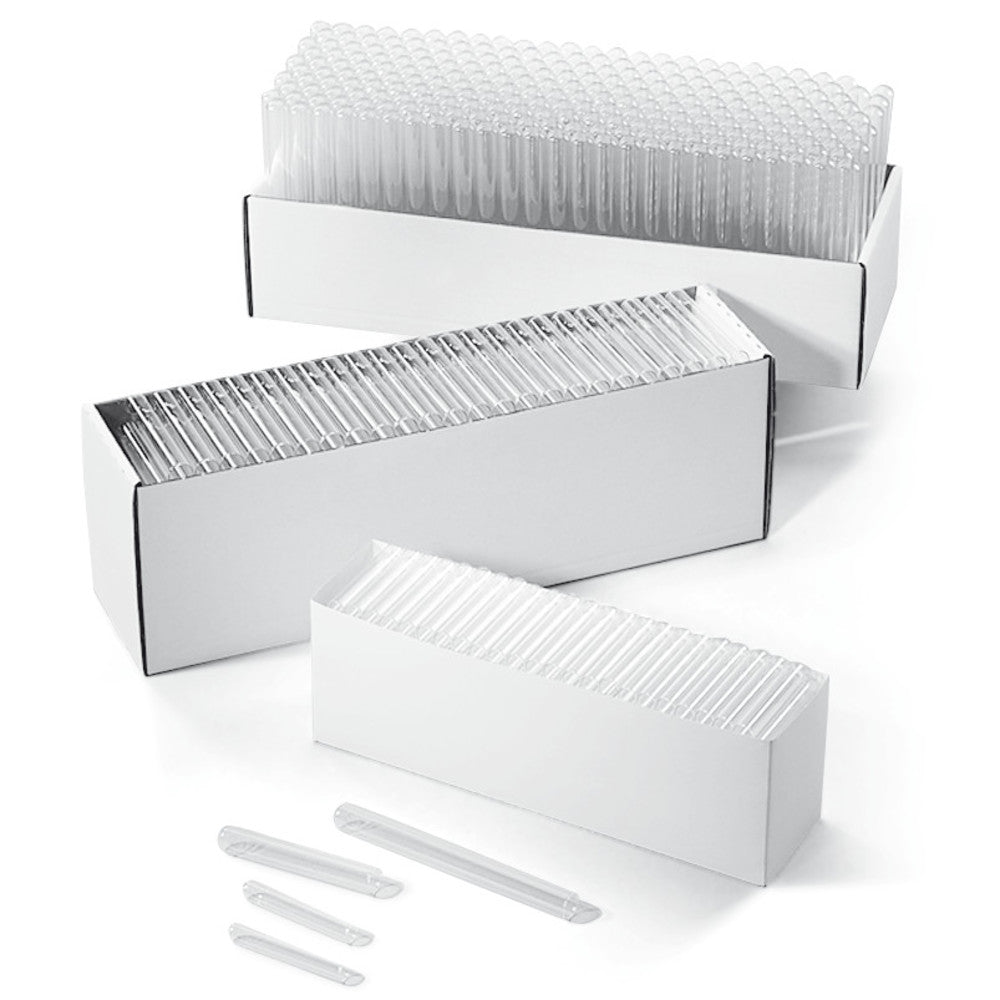


Description
Les tubes à essai Rotilabo® à bord droit sont des tubes de laboratoire à paroi épaisse fabriqués en verre borosilicaté 3.3, d'une capacité de 17 ml. Ils font partie de la verrerie de laboratoire standard pour la manipulation quotidienne des échantillons. La construction en verre borosilicaté 3.3 à paroi épaisse offre un format de verre fiable pour les tâches courantes, tandis que le bord droit facilite une prise en main sûre et une utilisation pratique sur la paillasse. Disponibles en paquets de 100 pièces auprès du fabricant ROTH SELECTION, ce conditionnement est pratique pour les environnements multi-utilisateurs et les laboratoires qui renouvellent fréquemment leurs tubes à essai en verre. Le poids du paquet est de 1,510 kg. Ces tubes Rotilabo® s'intègrent dans les flux de travail courants, notamment la préparation d'échantillons, les observations qualitatives et la manipulation générale de liquides, aux côtés d'autres récipients en verre et consommables de laboratoire. La taille de 17 ml constitue un choix pratique lorsqu'un volume de travail légèrement supérieur est nécessaire au sein de la gamme de tubes à essai Rotilabo® à paroi épaisse et bord droit.
Cet article appartient à la catégorie Tubes à essai, dans Tubes et flacons.
Caractéristiques principales
- Conditionnement : 100 pièce(s)
- Marque : Rotilabo®
- Type de bord : Bord droit
- Matériau : Verre borosilicaté 3.3
- Construction : Paroi épaisse
- Capacité : 17 ml
Récemment consulté
Vous aimerez peut-être aussi
Browse related categories
Category
Sub-category
Catalogue
Brand
Questions about Tubes à essai Rotilabo®, bord ourlé, verre borosilicaté 3.3, parois épaisses, 17 ml
What is this article?
Tubes à essai Rotilabo®, bord ourlé, verre borosilicaté 3.3, parois épaisses, 17 ml is the article on this page. Luminix Health distributes Carl Roth for laboratory use. It sits in Test tubes, inside Tubes & vials, in Matériel de laboratoire.
A test tube is the open cylindrical vessel for a small liquid, in borosilicate glass or in plastic. Rimmed and rimless mouths differ. The size is diameter by length. It is not graduated for a result, and a glass tube that will be centrifuged has a force limit.
A tube holds a small sample upright. A test tube is the open glass or plastic cylinder. A centrifuge tube is conical so a pellet forms at the tip, and it is rated for a centrifugal force the rotor will actually reach. A vial is a small closed bottle, often for a sample that will sit in an instrument. NMR tubes are a special case: the glass has to be uniform or the spectrum is the tube, not the sample. Laboratory ware is listed under ISO laboratory glassware.
Which category should I open next?
The category is Tubes & vials. The sub-category is Test tubes. The catalogue is Matériel de laboratoire.
Shelves beside this one are Centrifuge tubes (conical), Sample vials & NMR tubes and Tube & vial accessories.
What should I check before I order?
The technical information on this page is the manufacturer's sheet. Read that, not a rewritten specification.
When this page shows a safety data sheet, use that manufacturer file. Hazard text does not belong in the sales description. For a pack size, a grade or a certificate that is not on the page, send a quote request or contact the team.
How does ordering and shipping work?
Luminix Health distributes this article from the heart of Europe. Articles in stock ship within 2–5 business days. Standard delivery is free from €250 excl. VAT. Cold-chain goods and dangerous goods under ADR are never included in that free delivery. The terms are in the Shipping Policy. The full brand index is on shop by brand. Who we are is on about us.
Which other categories should I open?
The seven catalogues are Labware, Lab chemicals, Lab instruments, Lab consumables, Chromatography equipment, Lab safety equipment and Life Science & Microbiology.