



Description
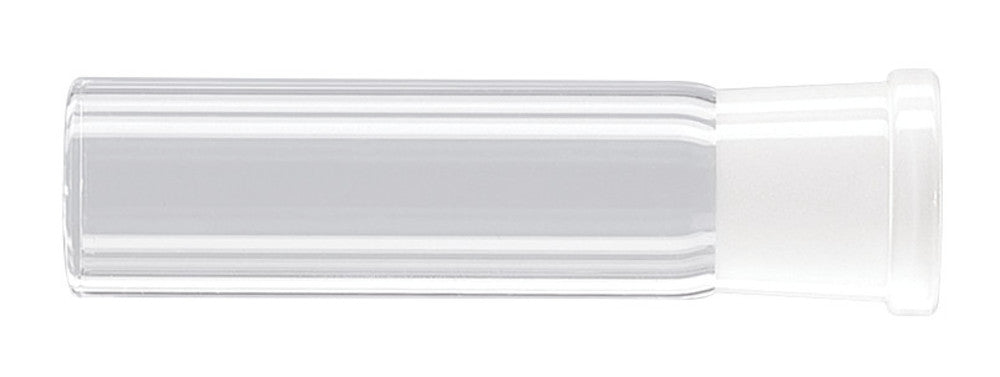
Tubes avec rodage normalisé 29/32 sont des tubes en verre de laboratoire équipés de douilles comportant un rodage en verre normalisé de taille 29/32 et d'une longueur de 130 mm. Produits en DURAN®, ils servent d'éléments de connexion interchangeables dans des systèmes en verre modulaires pour la distillation, l'extraction et l'assemblage courant de laboratoire. Le rodage normalisé 29/32 permet un ajustement serré et reproductible avec des cônes correspondants et d'autre verrerie à rodage, favorisant des dispositions d'appareillage stables et une reconfiguration simple. Ces composants sont destinés aux laboratoires qui s'appuient sur les tailles de rodage européennes courantes lors de la construction ou de l'entretien de montages en verre à plusieurs pièces. Fournis en emballages de 10 pièces du fabricant Lenz, les tubes aident à garder facilement disponibles les formats de rodage fréquemment utilisés pour l'enseignement, la recherche et le travail de routine. Le poids de l'emballage est de 0.55 kg, ce qui rend l'ensemble facile à stocker avec d'autre verrerie DURAN®. Ils conviennent bien partout où une connexion à douille selon la norme 29/32 est requise sans adaptateurs intermédiaires.
Cet article fait partie de Verrerie à rodage (autre), dans Verrerie de distillation & d'extraction.
Caractéristiques
- Conditionnement: 10 pièces
- Taille du joint: 29/32
- Longueur: 130 mm
- Matériau: DURAN®
- Type: Douille avec rodage en verre
- Poids: 0.55 kg
Récemment consulté
Vous aimerez peut-être aussi
Browse related categories
Category
Verrerie de distillation & d'extraction
Sub-category
Catalogue
Brand
Questions about Tubes avec rodage normalisé, douilles avec rodage en verre, 29/32, 130 mm
What is this article?
Tubes avec rodage normalisé, douilles avec rodage en verre, 29/32, 130 mm is the article on this page. Luminix Health distributes Lenz for laboratory use. It sits in Verrerie à rodage (autre), inside Verrerie de distillation & d'extraction, in Matériel de laboratoire.
This is ground-joint glassware that is not a head, a condenser or a Soxhlet: receivers, blank joints, odd adapters. A ground joint is named by the wide end and the length, such as 29/32. Mismatched joints do not seal, even with grease.
Distillation separates liquids by boiling point. A condenser turns the vapour back into liquid: Liebig, coil and cold-finger shapes differ in how much cooling surface they offer. A still head and a column sit between the flask and the condenser. A Soxhlet extractor washes a solid again and again with the same solvent. Ground joints have a standard size, and the joint, not the flask, is what has to match. The pieces are indexed under ISO laboratory glassware.
Which category should I open next?
The category is Verrerie de distillation & d'extraction. The sub-category is Verrerie à rodage (autre). The catalogue is Matériel de laboratoire.
Shelves beside this one are Têtes de distillation, adaptateurs & colonnes, Condenseurs and Appareils Soxhlet & d'extraction.
What should I check before I order?
The technical information on this page is the manufacturer's sheet. Read that, not a rewritten specification.
When this page shows a safety data sheet, use that manufacturer file. Hazard text does not belong in the sales description. For a pack size, a grade or a certificate that is not on the page, send a quote request or contact the team.
How does ordering and shipping work?
Luminix Health distributes this article from the heart of Europe. Articles in stock ship within 2–5 business days. Standard delivery is free from €250 excl. VAT. Cold-chain goods and dangerous goods under ADR are never included in that free delivery. The terms are in the Shipping Policy. The full brand index is on shop by brand. Who we are is on about us.
Which other categories should I open?
The seven catalogues are Labware, Lab chemicals, Lab instruments, Lab consumables, Chromatography equipment, Lab safety equipment and Life Science & Microbiology.