



Description
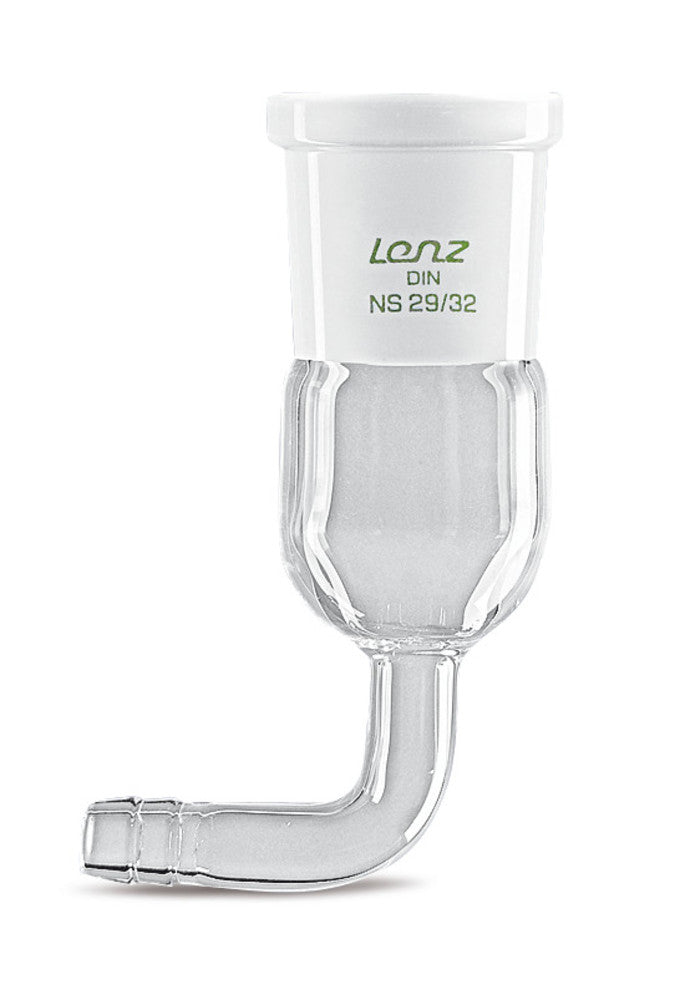
L’adaptateur réducteur, olive de tubulure coudée, avec manchon 14/23 est un composant compact en verre de laboratoire pour relier sous un angle un appareillage à joint rodé à une tubulure souple. Le manchon 14/23 s’adapte aux joints NS plus petits courants, tandis que l’olive de tubulure coudée dirige le trajet du tuyau hors de l’axe du joint—utile dans les assemblages de distillation et d’extraction encombrés ou lorsqu’une sortie droite interférerait avec la verrerie voisine. Proposé en 1 pièce et pesant 0.013 kg, il est pratique à stocker et à utiliser pour affiner des montages de verre modulaires. Cet adaptateur réducteur du fabricant Lenz est destiné aux composants en verre à joints rodés utilisés en distillation, en extraction et dans le travail de laboratoire apparenté. La géométrie coudée de l’olive aide à acheminer la tubulure proprement autour des supports, des pinces ou des récipients adjacents sans forcer l’ensemble de l’appareillage hors d’alignement. Choisissez cette unité lorsqu’une transition réductrice de joint vers olive avec une prise de tuyau dirigée et non linéaire est requise sur les systèmes NS 14/23. Un dimensionnement simple favorise un appariement constant avec le matériel de laboratoire à joint correspondant.
Cet article fait partie de Raccords pour tuyaux, adaptateurs & raccords, dans Tubes, tuyaux et raccords.
Caractéristiques
- Conditionnement: 1 pièce
- Type de produit: Adaptateur réducteur
- Olive pour tuyau: Coudé
- Manchon de rodage: 14/23
- Poids: 0.013 kg
- Domaine d'application: Distillation et extraction
Récemment consulté
Vous aimerez peut-être aussi
Browse related categories
Category
Sub-category
Raccords pour tuyaux, adaptateurs & raccords
Catalogue
Brand
Questions about Adaptateur réducteur, olive de tubulure coudée, avec manchon 14/23, 1 unité
What is this article?
Adaptateur réducteur, olive de tubulure coudée, avec manchon 14/23, 1 unité is the article on this page. Luminix Health distributes Lenz for laboratory use. It sits in Raccords pour tuyaux, adaptateurs & raccords, inside Tubes, tuyaux et raccords, in Matériel de laboratoire.
A hose connector or adapter joins two lines, or steps one bore down to another. The barb diameter has to match the tube, and the thread has to match the stopcock or the bottle. Most leaks are a mismatch here, not a hole in the tube.
Tubing is how a liquid or a gas moves between two vessels without being poured. Silicone stays flexible and survives repeated autoclaving. PTFE resists almost every solvent and is stiff. PVC is the ordinary flexible line for water and for mild aqueous work. The fitting, not the tube, is what usually leaks: the barb, the thread and the stopcock have to match the tube bore. Glass and plastic apparatus around these lines is indexed under ISO laboratory ware.
Which category should I open next?
The category is Tubes, tuyaux et raccords. The sub-category is Raccords pour tuyaux, adaptateurs & raccords. The catalogue is Matériel de laboratoire.
Shelves beside this one are Tuyaux PVC, PTFE & autres, Robinets & vannes, Tuyaux en silicone and Accessoires pour tuyaux.
What should I check before I order?
The technical information on this page is the manufacturer's sheet. Read that, not a rewritten specification.
When this page shows a safety data sheet, use that manufacturer file. Hazard text does not belong in the sales description. For a pack size, a grade or a certificate that is not on the page, send a quote request or contact the team.
How does ordering and shipping work?
Luminix Health distributes this article from the heart of Europe. Articles in stock ship within 2–5 business days. Standard delivery is free from €250 excl. VAT. Cold-chain goods and dangerous goods under ADR are never included in that free delivery. The terms are in the Shipping Policy. The full brand index is on shop by brand. Who we are is on about us.
Which other categories should I open?
The seven catalogues are Labware, Lab chemicals, Lab instruments, Lab consumables, Chromatography equipment, Lab safety equipment and Life Science & Microbiology.