


Beschrijving
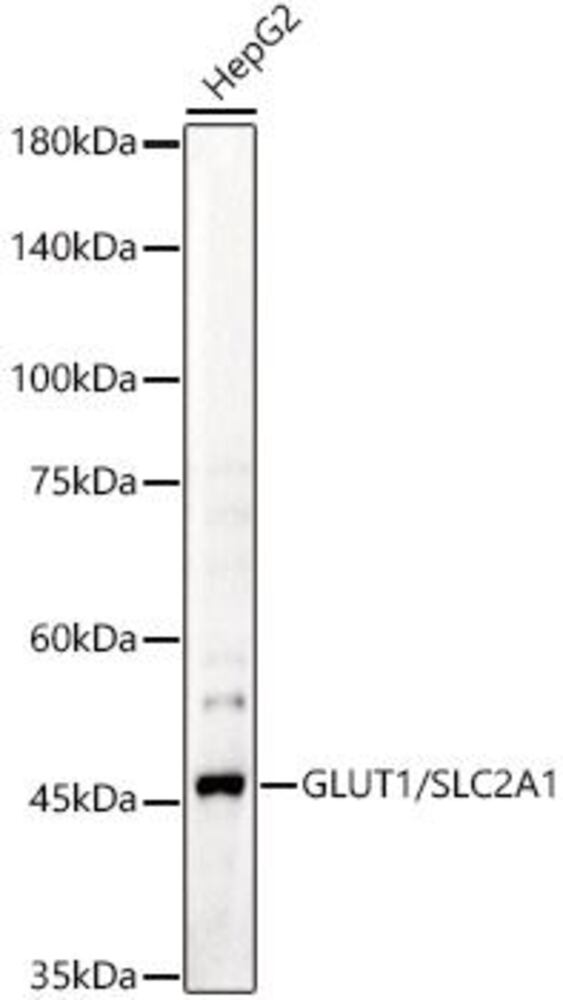
Anti-Glucose Transporter GLUT1 Antibody is een onderzoekantilichaam voor immunodetectie in blotting en gerelateerde eiwitanalyseworkflows. De bereiding wordt geleverd in een eenheid van 100 µl die past bij titratie, assayopzet en herhaalde experimentele runs in laboratoria voor moleculaire en celbiologie. Met een dichtheid van 1 g/cm³ en een nettogewicht van 0.006 kg is het reagens eenvoudig te hanteren aan de werkbank tijdens Western blot, ELISA en andere blokkerings- of immunodetectiestappen. Het is gericht tegen de glucosetransporter GLUT1 en ondersteunt studies waarin specifieke detectie van dit membraaneiwit vereist is, waaronder werk aan glucosetransport, metabole pathways en eiwitexpressie. Het compacte verpakkingsvolume helpt materiaal te sparen en blijft praktisch voor routinematige laboratoriumschema's. Aangeboden door fabrikant antibodies.com, integreert het antilichaam in gevestigde immunoblotting- en immunoassayprotocollen die in life-science-onderzoek worden gebruikt. Categorieën die toepassingen, blotting, Western blot en ELISA, en blokkering en immunodetectie omvatten, weerspiegelen de beoogde plaats in standaard detectiestrategieën zonder verder te gaan dan het vermelde onderzoeksgebruik.
Dit artikel maakt deel uit van Koolhydraten & suikers, in Biochemicaliën & reagentia.
Kenmerken
- Verpakkingsgrootte: 100 µl
- Dichtheid: 1 g/cm³
- Bewaartemperatuur: +4 °C
- Gewicht: 0.006 kg
- Toepassingen: Western blot & ELISA
- Technisch datablad:

- Veiligheidsinformatieblad:
Recent bekeken
Misschien vind je dit ook leuk
Browse related categories
Category
Sub-category
Catalogue
Brand
Questions about Anti-Glucose Transporter GLUT1 Antibody, 100 µl
What is this article?
Anti-Glucose Transporter GLUT1 Antibody, 100 µl is the article on this page. Luminix Health distributes antibodies.com for laboratory use. It sits in Koolhydraten & suikers, inside Biochemicaliën & reagentia, in Microbiologische media.
A carbohydrate reagent is a sugar or a derivative, specified by identity, anomer where it matters, and purity. Hydrate and anhydrous forms change the mass. A culture-grade sugar and an analytical standard of the same name are different bottles.
A biochemical is a molecule of life, sold as a reagent: an amino acid, a sugar, a nucleotide, a lipid, an enzyme, an antibiotic. The difference from a bulk chemical is that the use is a biological one, and the impurities that matter are the ones that change that use. An enzyme is specified by activity, not only by mass. An antibiotic is specified by potency. Papers are on PubMed. Structures are on PubChem. Strains and lines that consume these reagents are at ATCC.
Which category should I open next?
The category is Biochemicaliën & reagentia. The sub-category is Koolhydraten & suikers. The catalogue is Microbiologische media.
Shelves beside this one are Aminozuren & peptiden, Co-enzymen, nucleotiden & vitaminen, Biochemicaliën (overig), Enzymen & substraten, Antibiotica & antimycotica, Lipiden, steroïden & vetzuren and Detergenten & oppervlakteactieve stoffen.
What should I check before I order?
The technical information on this page is the manufacturer's sheet. Read that, not a rewritten specification.
When this page shows a safety data sheet, use that manufacturer file. Hazard text does not belong in the sales description. For a pack size, a grade or a certificate that is not on the page, send a quote request or contact the team.
How does ordering and shipping work?
Luminix Health distributes this article from the heart of Europe. Articles in stock ship within 2–5 business days. Standard delivery is free from €250 excl. VAT. Cold-chain goods and dangerous goods under ADR are never included in that free delivery. The terms are in the Shipping Policy. The full brand index is on shop by brand. Who we are is on about us.
Which other categories should I open?
The seven catalogues are Labware, Lab chemicals, Lab instruments, Lab consumables, Chromatography equipment, Lab safety equipment and Life Science & Microbiology.