
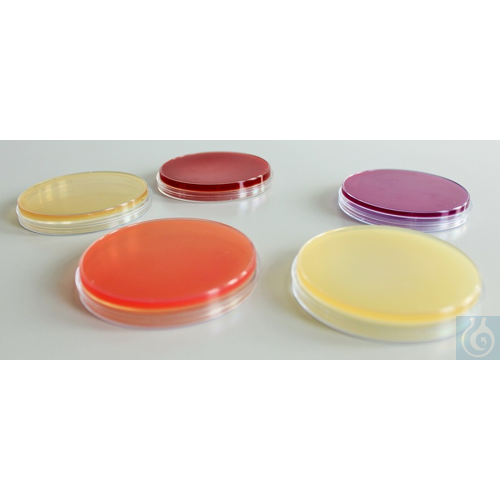


Beschrijving
Schaedler Agar is een microbiologisch kweekmedium, aangeboden in een grote verpakking van 5000 g voor laboratoriumbereiding van media. Dit agarproduct dient klinische, diagnostische en onderzoeksomgevingen in de microbiologie die gestandaardiseerde kweekmedia in hogere volumes nodig hebben. Van fabrikant Dinkelberg levert de presentatie van 5000 g laboratoria een economische bulkhoeveelheid voor het bereiden van platen, buizen of andere kweekformaten volgens interne protocollen. De grotere verpakkingsgrootte is bijzonder geschikt voor mediakeukens met hoge doorvoer en faciliteiten die Schaedler Agar frequent bereiden en de bestelfrequentie willen verlagen. Met land van herkomst Hongarije sluit het materiaal aan op gevestigde laboratoriuminkoop en kwaliteitssystemen. Duidelijke productidentificatie ondersteunt voorraadbeheer, chargetraceerbaarheid en georganiseerde opslag in gereguleerde omgevingen. Dit formaat van 5000 g beantwoordt aan de behoeften van ziekenhuis-, industriële en academische laboratoria die een betrouwbare bulkvoorraad Schaedler Agar zoeken voor continue productie van kweekmedia. Het maakt deel uit van de categorie laboratoriummaterialen die worden gebruikt overal waar consistente agarbasismedia vereist zijn voor routinematige bacteriologische werkstromen.
Dit artikel maakt deel uit van Gedehydrateerde kweekmedia (agar- & bouillonbases), in Kweekmedia & microbiologie. Zie ook Petrischalen.
Kenmerken
- Verpakkingsgrootte: 5000 g
- Producttype: Microbiologisch kweekmedium
- Medium: Schaedler Agar
- Land van oorsprong: Hongarije
- Beoogd gebruik: Laboratoriummediabereiding
Recent bekeken
Misschien vind je dit ook leuk
Browse related categories
Category
Sub-category
Gedehydrateerde kweekmedia (agar- & bouillonbases)
Catalogue
Brand
Questions about Schaedler Agar, 5000g
What is this article?
Schaedler Agar, 5000g is the article on this page. Luminix Health distributes Dinkelberg for laboratory use. It sits in Gedehydrateerde kweekmedia (agar- & bouillonbases), inside Kweekmedia & microbiologie, in Microbiologische media.
A dehydrated medium is a powder the laboratory dissolves, sterilises and pours. The formulation name, the supplements it still needs, and the grams per litre are the specification. Two powders with similar names, one selective and one not, grow different organisms.
A culture medium is the food and the solid or liquid home of a microorganism. Dehydrated media are powders the laboratory dissolves and sterilises. Ready-to-use plates and tubes are already that. A Petri dish is the plate. Selective media let one kind of organism grow and hold another back. The formulation and the supplements, not the colour of the agar, are the specification. Reference strains are at ATCC. Methods are on PubMed. Biosafety practice is the WHO laboratory biosafety topic.
Which category should I open next?
The category is Kweekmedia & microbiologie. The sub-category is Gedehydrateerde kweekmedia (agar- & bouillonbases). The catalogue is Microbiologische media.
Shelves beside this one are Petrischalen, Gebruiksklare kweekmedia (platen, buizen, flessen), Microbiologie (overig), Entogen, uitstrijkers & naalden and Microbiële identificatie, hygiënebewaking & sneltests.
What should I check before I order?
When this page shows a safety data sheet, use that manufacturer file. Hazard text does not belong in the sales description. For a pack size, a grade or a certificate that is not on the page, send a quote request or contact the team.
How does ordering and shipping work?
Luminix Health distributes this article from the heart of Europe. Articles in stock ship within 2–5 business days. Standard delivery is free from €250 excl. VAT. Cold-chain goods and dangerous goods under ADR are never included in that free delivery. The terms are in the Shipping Policy. The full brand index is on shop by brand. Who we are is on about us.
Which other categories should I open?
The seven catalogues are Labware, Lab chemicals, Lab instruments, Lab consumables, Chromatography equipment, Lab safety equipment and Life Science & Microbiology.