


Beschrijving
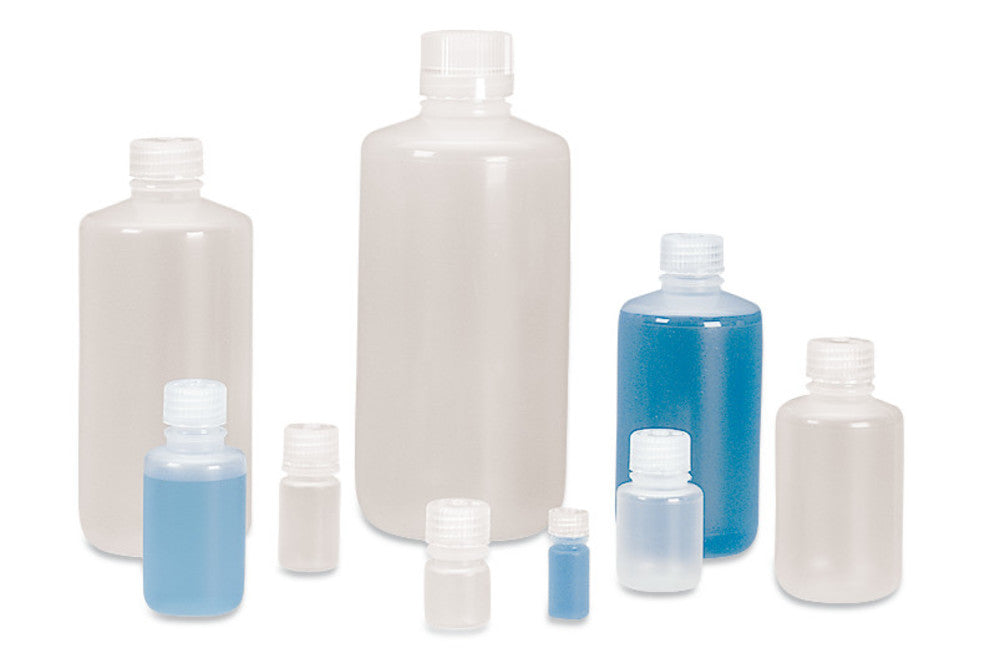
Flessen met smalle hals in polypropylene (PP) zijn praktische laboratoriumcontainers voor het opslaan van monsters, media en reagentia waar een verkleinde opening gecontroleerde hantering ondersteunt. Elke fles biedt een capaciteit van 250 ml die geschikt is voor routinematig werk aan de werkbank, aliquotteren en kort- tot middellangetermijnbewaring van waterige oplossingen en veel gangbare laboratoriumvloeistoffen. De polypropylene constructie biedt een robuust, lichtgewicht vaatformat dat past in dagelijkse labmateriaalworkflows onder plastic flessen en verwante containers. Een verpakking van 12 stuks, met een totaalgewicht van 0.476 kg, maakt het eenvoudig om meerdere werkstations uit te rusten of voorraad aan te houden voor onderwijs-, onderzoeks- en kwaliteitscontroleomgevingen. Deze flessen met smalle hals van fabrikant Nalgene zijn bedoeld voor algemeen laboratoriumgebruik binnen toepassingen voor containers, flessen en bussen. De geometrie met smalle hals helpt spatten en verdamping te beperken tijdens schenk- en overdrachtstappen vergeleken met wijdmondige ontwerpen, terwijl zij eenvoudig te hanteren blijven onder standaard laboratoriumomstandigheden. Gebruikt u ze overal waar duurzame PP-flessen met een volume van 250 ml vereist zijn voor georganiseerd beheer van monsters en reagentia.
Dit artikel maakt deel uit van Plastic flessen (nauwe & wijde hals), in Flessen & verpakkingen.
Kenmerken
- Verpakkingsgrootte: 12 stuks
- Producttype: Flessen met smalle hals
- Materiaal: PP
- Inhoud: 250 ml
- Gewicht: 0.476 kg
Recent bekeken
Misschien vind je dit ook leuk
Questions about Flessen met smalle hals, PP, 250 ml, 12 stuks
What is this article?
Flessen met smalle hals, PP, 250 ml, 12 stuks is the article on this page. Luminix Health distributes Nalgene for laboratory use. It sits in Plastic flessen (nauwe & wijde hals), inside Flessen & verpakkingen, in Labmateriaal.
A plastic bottle is polyethylene, polypropylene or a fluoropolymer, narrow-mouth for pouring or wide-mouth for powders. It is the choice when the bottle must not shatter, and it is the wrong choice for solvents that swell the plastic.
A laboratory bottle is a closed container with a stated volume and a neck that takes a cap, a stopper or a dispenser. Borosilicate glass is the choice when the liquid is a solvent, or when the bottle will be heated or autoclaved. Polyethylene and polypropylene are the choice when the bottle must not shatter, or when hydrofluoric acid would attack glass. A narrow mouth pours. A wide mouth is for powders and for reaching the bottom. Laboratory ware of this kind is indexed under ISO laboratory glassware. Traceable volume sits with the BIPM and NIST Physical Measurement.
Which category should I open next?
The category is Flessen & verpakkingen. The sub-category is Plastic flessen (nauwe & wijde hals). The catalogue is Labmateriaal.
Shelves beside this one are Laboratoriumglasflessen, Monstercontainers & potten, Bidons & jerrycans, Spuitflessen and Flesaccessoires (schenkringen, dispensers, doppen).
What should I check before I order?
The technical information on this page is the manufacturer's sheet. Read that, not a rewritten specification.
When this page shows a safety data sheet, use that manufacturer file. Hazard text does not belong in the sales description. For a pack size, a grade or a certificate that is not on the page, send a quote request or contact the team.
How does ordering and shipping work?
Luminix Health distributes this article from the heart of Europe. Articles in stock ship within 2–5 business days. Standard delivery is free from €250 excl. VAT. Cold-chain goods and dangerous goods under ADR are never included in that free delivery. The terms are in the Shipping Policy. The full brand index is on shop by brand. Who we are is on about us.
Which other categories should I open?
The seven catalogues are Labware, Lab chemicals, Lab instruments, Lab consumables, Chromatography equipment, Lab safety equipment and Life Science & Microbiology.