


Beschrijving
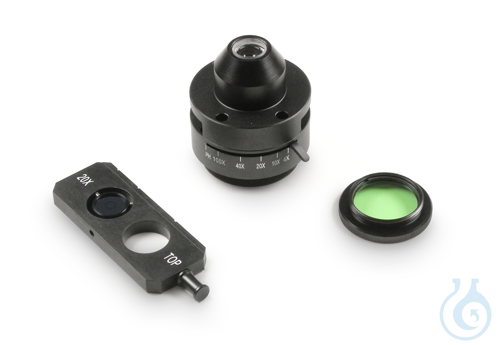
Fasecontrastunit KERN OBB-A1395 is een specifiek microscopieaccessoire dat een PH-condensor combineert met een PH-schuif voor 20×-vergroting, bedoeld voor fasecontrastwerk op de serie OBN-1. Het biedt de optische elementen die nodig zijn om fasecontrastverlichting tot stand te brengen die is afgestemd op het traject van het 20×-objectief. Aangeboden als 1 stuk met een nettogewicht van 0.3 kg en een brutogewicht van 0.8 kg, is de compacte verpakking geschikt voor installatie en opslag in het laboratorium. De unit behoort tot de microscopieaccessoires en ondersteunt contrastverbetering voor transparante of ongekleurde preparaten op compatibele OBN-1-instrumenten. Van fabrikant Kern koppelt de configuratie OBB-A1395 de condensor en de 20× PH-schuif specifiek voor het assortiment fasecontrastunits OBN-1. Het verpakkingsvolume is 0.001428 m³, met afmetingen van 0.07 m hoogte, 0.17 m breedte en 0.12 m diepte. Laboratoria die de fasecontrastcapaciteit op microscopen van de serie OBN-1 uitrusten of uitbreiden, kunnen deze condensor–schuifset integreren overal waar 20×-fasecontrastobservatie binnen die serie vereist is.
Dit artikel maakt deel uit van Microscoopobjectieven, oculairs & optiek, in Microscopie & histologie.
Kenmerken
- Verpakkingsgrootte: 1 stuk
- Type: Fasecontrastunit
- Componenten: PH-condensor en PH-schuif 20×
- Vergroting: 20×
- Compatibele serie: OBN-1
- EAN: 4045761176218
- Technisch datablad:

Recent bekeken
Misschien vind je dit ook leuk
Browse related categories
Category
Sub-category
Microscoopobjectieven, oculairs & optiek
Catalogue
Brand
Questions about Fasecontrastunit KERN OBB-A1395
What is this article?
Fasecontrastunit KERN OBB-A1395 is the article on this page. Luminix Health distributes Kern for laboratory use. It sits in Microscoopobjectieven, oculairs & optiek, inside Microscopie & histologie, in Instrumenten.
An objective makes the resolution. Magnification and numerical aperture are the two numbers, and the tube length or the infinity correction has to match the microscope. An eyepiece mostly enlarges the image the objective already resolved. A mismatched objective does not become sharper by zooming.
A light microscope forms an image with glass lenses and transmitted or reflected light. A stereo microscope is the lower-magnification instrument for dissecting and for looking at a surface. Fluorescence needs a light source and filters matched to the dye. Histology is the preparation that makes a tissue readable: fixation, a cassette, a section, a stain. The objective's magnification and numerical aperture decide the resolution. The slide and the cover glass decide whether the section sits in the focal plane. Stains and dyes as substances are identified on PubChem. Papers on the methods are on PubMed.
Which category should I open next?
The category is Microscopie & histologie. The sub-category is Microscoopobjectieven, oculairs & optiek. The catalogue is Instrumenten.
Shelves beside this one are Objectglaasjes & dekglaasjes, Histologiecassettes & mallen, Telkamers & hemocytometers, Stereomicroscopen, Licht- & fluorescentiemicroscopen, Histologiereagentia & verbruiksartikelen, Microscopieaccessoires, Koudlichtbronnen & verlichting and Digitale & USB-microscopen.
What should I check before I order?
When this page shows a safety data sheet, use that manufacturer file. Hazard text does not belong in the sales description. For a pack size, a grade or a certificate that is not on the page, send a quote request or contact the team.
How does ordering and shipping work?
Luminix Health distributes this article from the heart of Europe. Articles in stock ship within 2–5 business days. Standard delivery is free from €250 excl. VAT. Cold-chain goods and dangerous goods under ADR are never included in that free delivery. The terms are in the Shipping Policy. The full brand index is on shop by brand. Who we are is on about us.
Which other categories should I open?
The seven catalogues are Labware, Lab chemicals, Lab instruments, Lab consumables, Chromatography equipment, Lab safety equipment and Life Science & Microbiology.