


Beschrijving
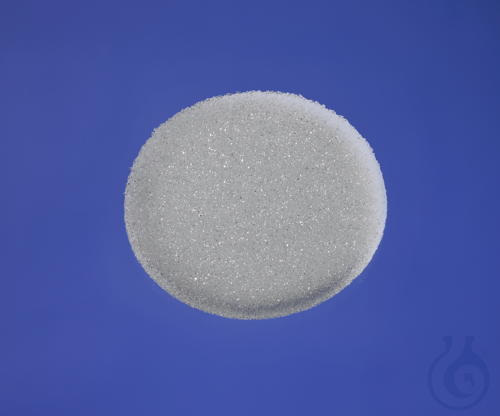
Kwartsglazen filterplaat, biplanair, 90 mm, Por. 4, dikte 6 mm ± 0.2 mm is een VitraPOR® filterplaat gemaakt van amorf kwartsglas. De schijf meet 90 mm in diameter, biedt porositeitsklasse 4 en heeft een dikte van 6 mm ± 0.2 mm. Platen van serie Q hebben een biplanaire geometrie met beide oppervlakken geslepen, wat een stabiele zitting in laboratoriumfiltratie-assemblages ondersteunt. Dit amorfe kwartsglazen medium is bedoeld voor filtratietaken die een formaat van 90 mm en porositeit 4 specificeren. Slijpen aan beide zijden levert uniforme contactvlakken op aan elke zijde van de plaat. Verkrijgbaar als een enkel stuk van fabrikant ROBU - Stereon, is het geschikt voor analytische opstellingen die kwartsglazen filterplaten met gecontroleerde dikte nodig hebben. De combinatie van VitraPOR® amorf kwartsglas, gedefinieerde porositeit en biplanaire afwerking van serie Q beantwoordt aan gangbare laboratoriumvereisten voor filterschijven van 90 mm. De verpakkingsgrootte is één stuk voor individueel gebruik of systeemconfiguratie.
Dit artikel maakt deel uit van Gesinterde glasfilterplaten & -schijven, in Filtratie.
Kenmerken
- Verpakkingsgrootte: 1 stuk
- Merk: VitraPOR®
- Materiaal: Amorphous quartz glass
- Diameter: 90 mm
- Porositeit: 4
- Dikte: 6 mm ± 0.2 mm
Recent bekeken
Misschien vind je dit ook leuk
Browse related categories
Category
Sub-category
Gesinterde glasfilterplaten & -schijven
Catalogue
Brand
Questions about Kwartsglazen filterschijf, biplan, 90 mm, Por. 4 Dikte 6 mm ± 0.2 mm
What is this article?
Kwartsglazen filterschijf, biplan, 90 mm, Por. 4 Dikte 6 mm ± 0.2 mm is the article on this page. Luminix Health distributes ROBU - Stereon for laboratory use. It sits in Gesinterde glasfilterplaten & -schijven, inside Filtratie, in Verbruiksartikelen.
A sintered glass filter is a disc of fused glass particles with a porosity grade, often 0 to 5, from coarse to fine. It is cleaned and reused. The porosity number, not a micrometre guess, is the specification. Hydrofluoric acid and strong alkali attack the glass.
Filtration holds back what is larger than the pores and lets the rest through. Paper is the ordinary laboratory filter. A membrane has a stated pore size and a polymer that must survive the solvent. A syringe filter is that membrane in a housing on a syringe. Glass fibre takes a higher dirt load. Ultrafiltration holds back macromolecules and passes salts. The pore size, the chemical compatibility and the volume are the three choices. Laboratory apparatus around filtration is indexed under ISO laboratory apparatus.
Which category should I open next?
The category is Filtratie. The sub-category is Gesinterde glasfilterplaten & -schijven. The catalogue is Verbruiksartikelen.
Shelves beside this one are Filterpapier, Spuitfilters, Filterpatronen & capsules, Membraanfilters, Glas- & kwartsvezelfilters, Flesopzet- & vacuümfiltratie-eenheden, Ultrafiltratie & concentratoren, Filtratieaccessoires, Extractiehulzen and Dialyseslangen & apparaten.
What should I check before I order?
When this page shows a safety data sheet, use that manufacturer file. Hazard text does not belong in the sales description. For a pack size, a grade or a certificate that is not on the page, send a quote request or contact the team.
How does ordering and shipping work?
Luminix Health distributes this article from the heart of Europe. Articles in stock ship within 2–5 business days. Standard delivery is free from €250 excl. VAT. Cold-chain goods and dangerous goods under ADR are never included in that free delivery. The terms are in the Shipping Policy. The full brand index is on shop by brand. Who we are is on about us.
Which other categories should I open?
The seven catalogues are Labware, Lab chemicals, Lab instruments, Lab consumables, Chromatography equipment, Lab safety equipment and Life Science & Microbiology.