
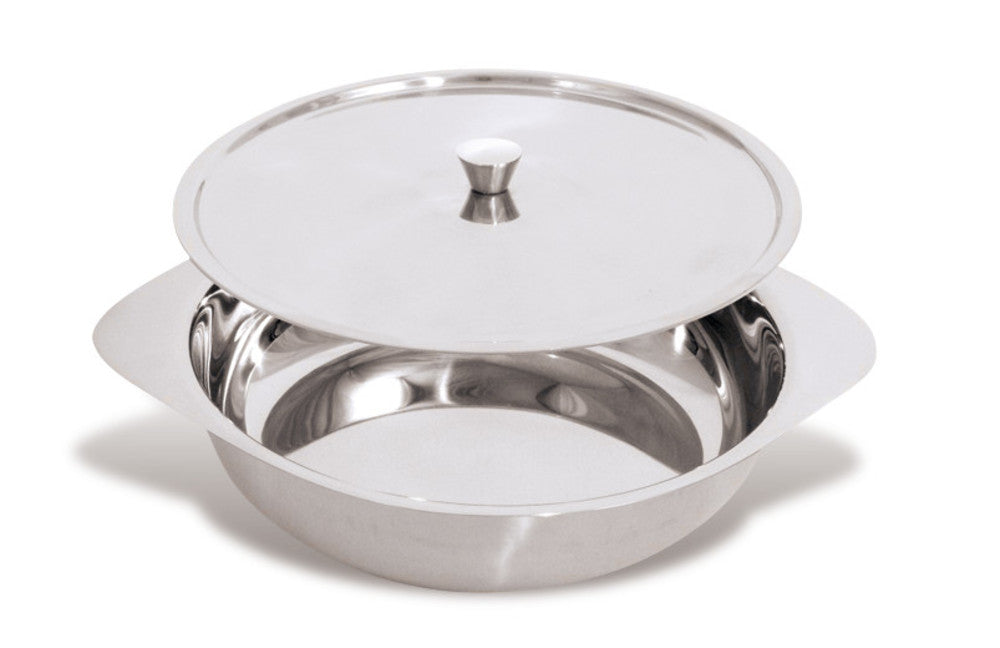


Beschrijving
Rotilabo®-monsterkommen zijn laboratoriummonstervaten van roestvrij staal 18/10, hier aangeboden in een inhoud van 1.4 l voor routinematige hantering, bewaring en overbrenging van monsters in het laboratorium. De corrosiebestendige constructie van staal 18/10 ondersteunt herhaald gebruik met waterige en veel gangbare laboratoriummedia en blijft gemakkelijk te reinigen tussen workflows. Elke eenheid wordt geleverd als één stuk en weegt 0.343 kg, wat een stabiele, duurzame kom oplevert die geschikt is voor monstervoorbereiding op de tafel, tijdelijke opslag en algemene vattaken binnen toepassingen met monsterschotels. Deze Rotilabo®-kommen staan in het assortiment Labmateriaal voor schotels, indampschalen en verwante monsterhouders, waar robuuste metalen vaten de voorkeur hebben boven glas of kunststof vanwege mechanische sterkte en thermische tolerantie in alledaagse procedures. Vervaardigd in de lijn ROTH SELECTION richt het ontwerp zich op praktisch laboratoriumnut zonder onnodige complexiteit. Gebruikt u ze overal waar een monsterkom van roestvrij staal met een bepaald volume vereist is voor consistent, herhaalbaar tafelwerk in onderzoeks-, kwaliteitscontrole- en onderwijsomgevingen.
Dit artikel maakt deel uit van Dienbladen, schalen & kuipen, in Schalen, smeltkroezen & porselein.
Kenmerken
- Verpakkingsgrootte: 1 stuk
- Producttype: Monsterkom
- Merk: Rotilabo®
- Materiaal: Roestvrij staal 18/10
- Inhoud: 1.4 l
- Gewicht: 0.343 kg
Recent bekeken
Misschien vind je dit ook leuk
Questions about Rotilabo®-monsterkommen, roestvrij staal 18/10, 1.4 l, 1 eenheid
What is this article?
Rotilabo®-monsterkommen, roestvrij staal 18/10, 1.4 l, 1 eenheid is the article on this page. Luminix Health distributes Carl Roth for laboratory use. It sits in Dienbladen, schalen & kuipen, inside Schalen, smeltkroezen & porselein, in Labmateriaal.
A laboratory tray, bowl or tub is an open vessel for holding, staining, drying or carrying many small items at once. Polypropylene trays resist a knock and many aqueous liquids. Porcelain takes heat. The useful numbers are the bottom size and the depth, because that is the working area.
A dish is an open vessel for drying, evaporating or holding a solid. Porcelain and glazed ceramic take a higher temperature than borosilicate glass, which is why a crucible, not a beaker, goes into a furnace. A watch glass covers, or holds a small amount for drying. A mortar is for grinding. The temperature and the chemical, not the shape alone, choose the material. Laboratory ware of this family is listed under ISO laboratory ware.
Which category should I open next?
The category is Schalen, smeltkroezen & porselein. The sub-category is Dienbladen, schalen & kuipen. The catalogue is Labmateriaal.
Shelves beside this one are Kroezen, Vijzels & stampers, Horlogeglazen & kristalliseerschalen, Indampschalen and Schalen (overig).
What should I check before I order?
The technical information on this page is the manufacturer's sheet. Read that, not a rewritten specification.
When this page shows a safety data sheet, use that manufacturer file. Hazard text does not belong in the sales description. For a pack size, a grade or a certificate that is not on the page, send a quote request or contact the team.
How does ordering and shipping work?
Luminix Health distributes this article from the heart of Europe. Articles in stock ship within 2–5 business days. Standard delivery is free from €250 excl. VAT. Cold-chain goods and dangerous goods under ADR are never included in that free delivery. The terms are in the Shipping Policy. The full brand index is on shop by brand. Who we are is on about us.
Which other categories should I open?
The seven catalogues are Labware, Lab chemicals, Lab instruments, Lab consumables, Chromatography equipment, Lab safety equipment and Life Science & Microbiology.