



Beschreibung
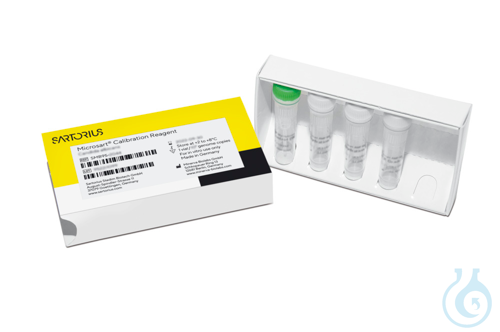
Microsart® Calibration Reagent Candida tropicalis is a genomic DNA standard formulated for laboratory calibration involving this fungal species. Each vial contains 10⁶ genome copies of Candida tropicalis, supplying a defined copy-number material for molecular and microbiological applications. The product is packed as 1 pc, with a net weight of 0,023 kg and gross weight of 0,023 kg, supporting efficient handling and refrigerated storage in busy lab environments. Microsart® Calibration Reagents from manufacturer Sartorius are genomic DNA standards assigned to individual fungal species, allowing laboratories to generate calibration curves, verify detection systems, and run quantitative or qualitative workflows specific to Candida tropicalis. Typical uses include assay development, method validation, and routine quality-control checks wherever reliable yeast DNA references are required. The reagent is part of the Microsart® calibration portfolio and is intended for professional laboratory use only. Country of origin is Germany. The compact single-piece presentation fits readily into existing Microsart®-compatible or general molecular testing protocols that call for a Candida tropicalis genomic standard.
This article is part of Ready-to-use culture media (plates, tubes, bottles), in Culture media & microbiology.
Key features
- Pack size: 1 pc
- Storage temperature: 2–8 °C
- Product type: Genomic DNA standard
- Target organism: Candida tropicalis
- Genome copies: 10⁶ per vial
Recent bekeken
Misschien vind je dit ook leuk
Browse related categories
Category
Sub-category
Ready-to-use culture media (plates, tubes, bottles)
Catalogue
Brand
Questions about Microsart Cal. Reagent C. tropicalis
What is this article?
Microsart Cal. Reagent C. tropicalis is the article on this page. Luminix Health distributes Sartorius for laboratory use. It sits in Ready-to-use culture media (plates, tubes, bottles), inside Culture media & microbiology, in Mikrobiologie.
A ready-to-use plate, tube or bottle is the medium already prepared and sterile. It saves the autoclave and it expires. The fill volume, the supplements and the storage temperature are the specification. A plate that has dried out or grown a colony of its own is finished.
A culture medium is the food and the solid or liquid home of a microorganism. Dehydrated media are powders the laboratory dissolves and sterilises. Ready-to-use plates and tubes are already that. A Petri dish is the plate. Selective media let one kind of organism grow and hold another back. The formulation and the supplements, not the colour of the agar, are the specification. Reference strains are at ATCC. Methods are on PubMed. Biosafety practice is the WHO laboratory biosafety topic.
Which category should I open next?
The category is Culture media & microbiology. The sub-category is Ready-to-use culture media (plates, tubes, bottles). The catalogue is Mikrobiologie.
Shelves beside this one are Dehydrated culture media (agar & broth bases), Petri dishes, Microbiology (other), Inoculation loops, spreaders & needles and Microbial identification, hygiene monitoring & rapid tests.
What should I check before I order?
When this page shows a safety data sheet, use that manufacturer file. Hazard text does not belong in the sales description. For a pack size, a grade or a certificate that is not on the page, send a quote request or contact the team.
How does ordering and shipping work?
Luminix Health distributes this article from the heart of Europe. Articles in stock ship within 2–5 business days. Standard delivery is free from €250 excl. VAT. Cold-chain goods and dangerous goods under ADR are never included in that free delivery. The terms are in the Shipping Policy. The full brand index is on shop by brand. Who we are is on about us.
Which other categories should I open?
The seven catalogues are Labware, Lab chemicals, Lab instruments, Lab consumables, Chromatography equipment, Lab safety equipment and Life Science & Microbiology.