


Description
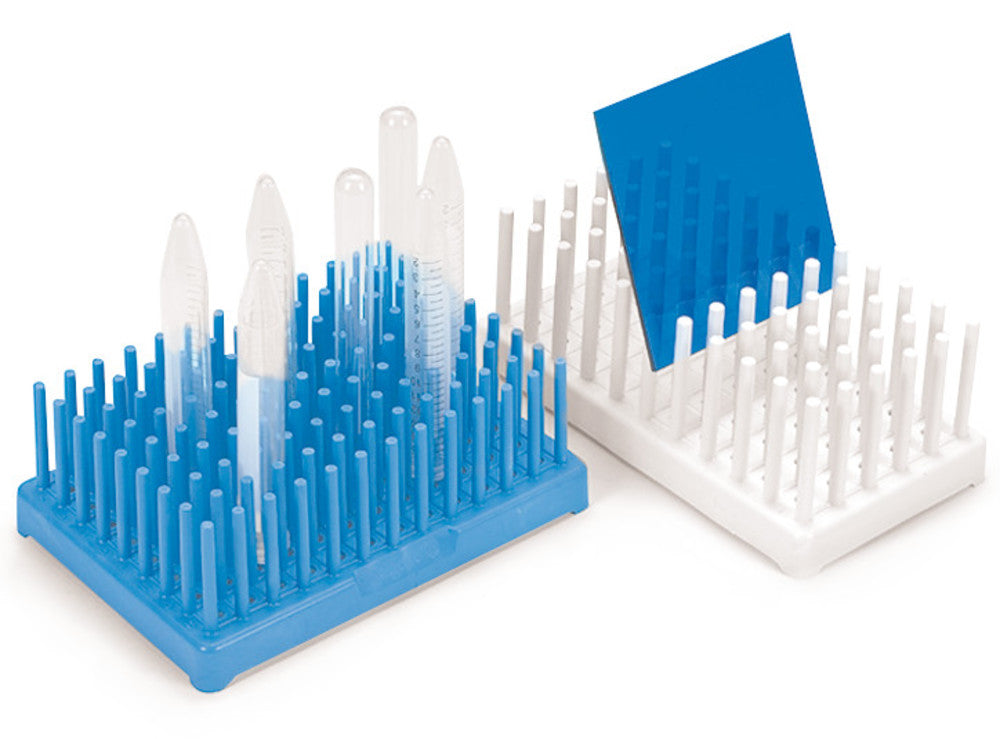
Test tube and draining rack, PP is a white polypropylene rack intended for tubes of 10–13 mm diameter, arranged in an 8×12 slot layout for high-capacity organisation and draining. The dual-purpose design supports upright storage of clean or in-use tubes as well as controlled draining after washing, making it useful beside sinks, in wash-up areas and on general laboratory benches. Manufactured from durable PP in a clear white finish, the rack aids visual contrast with tube contents and labels while withstanding routine wet-lab handling. Supplied as a pack of 8 pc(s) with a total weight of 1,780 kg, the set equips multiple workstations or provides spare capacity for peak washing cycles. This Nalgene test tube and draining rack fits laboratories that process numerous narrow tubes and need reliable slot spacing for drying and temporary holding. The 8×12 configuration maximises tube density without sacrificing accessibility, supporting efficient sample vessel logistics from cleaning through reuse in analytical and teaching environments.
This article is part of Trays, bowls & tubs, in Dishes, crucibles & porcelain.
Key features
- Pack size: 8 pc(s)
- Material: PP
- Colour: white
- Tube diameter: 10–13 mm
- Slots: 8×12
- Weight: 1,780 kg
Recently viewed
You may also like
Browse related categories
Category
Sub-category
Catalogue
Brand
Questions about Test tube and draining rack, PP, For 10-13 mm, white, slots 8x12, 8 pc.
What is this article?
Test tube and draining rack, PP, For 10-13 mm, white, slots 8x12, 8 pc. is the article on this page. Luminix Health distributes Nalgene for laboratory use. It sits in Trays, bowls & tubs, inside Dishes, crucibles & porcelain, in Labware.
A laboratory tray, bowl or tub is an open vessel for holding, staining, drying or carrying many small items at once. Polypropylene trays resist a knock and many aqueous liquids. Porcelain takes heat. The useful numbers are the bottom size and the depth, because that is the working area.
A dish is an open vessel for drying, evaporating or holding a solid. Porcelain and glazed ceramic take a higher temperature than borosilicate glass, which is why a crucible, not a beaker, goes into a furnace. A watch glass covers, or holds a small amount for drying. A mortar is for grinding. The temperature and the chemical, not the shape alone, choose the material. Laboratory ware of this family is listed under ISO laboratory ware.
Which category should I open next?
The category is Dishes, crucibles & porcelain. The sub-category is Trays, bowls & tubs. The catalogue is Labware.
Shelves beside this one are Crucibles, Mortars & pestles, Watch glasses & crystallising dishes, Evaporating dishes and Dishes (other).
What should I check before I order?
The technical information on this page is the manufacturer's sheet. Read that, not a rewritten specification.
When this page shows a safety data sheet, use that manufacturer file. Hazard text does not belong in the sales description. For a pack size, a grade or a certificate that is not on the page, send a quote request or contact the team.
How does ordering and shipping work?
Luminix Health distributes this article from the heart of Europe. Articles in stock ship within 2–5 business days. Standard delivery is free from €250 excl. VAT. Cold-chain goods and dangerous goods under ADR are never included in that free delivery. The terms are in the Shipping Policy. The full brand index is on shop by brand. Who we are is on about us.
Which other categories should I open?
The seven catalogues are Labware, Lab chemicals, Lab instruments, Lab consumables, Chromatography equipment, Lab safety equipment and Life Science & Microbiology.