


Description
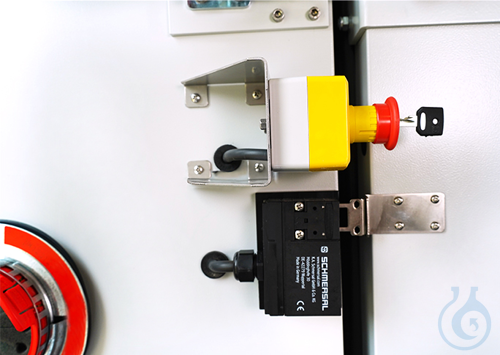
Electromechanical door lock provides controlled access for laboratory chambers and related equipment by means of a PIN code entered via the controller. Instead of a purely mechanical key, authorised users open the door through the regulator interface, supporting secure operation in shared or regulated laboratory environments. The lock is supplied as 1 pc, with a net weight of 0,5 kg and a gross weight of 1 kg, and is designed as an accessory for compatible units where restricted door access is required. This electromechanical solution from manufacturer Binder integrates PIN-code release over the controller so that opening rights can be managed without distributing physical keys. Such access control helps protect running experiments, sensitive samples, and validated process conditions from unauthorised entry. The compact accessory format simplifies installation on suitable chamber doors while keeping the user interaction at the familiar controller panel. Laboratories seeking an electromechanical door lock with PIN-code opening via the regulator can use this unit to strengthen equipment security and align day-to-day handling with internal access policies and quality procedures.
This article is part of Safety cabinet accessories & equipment packages, in Safety cabinets & hazardous storage.
Key features
- Pack size: 1 pc
- Product type: Electromechanical door lock
- Opening method: PIN code via controller
- Function: Controlled door access
Recently viewed
You may also like
Browse related categories
Category
Safety cabinets & hazardous storage
Sub-category
Safety cabinet accessories & equipment packages
Catalogue
Brand
Questions about Door lock, electromechanical
What is this article?
Door lock, electromechanical is the article on this page. Luminix Health distributes Binder for laboratory use. It sits in Safety cabinet accessories & equipment packages, inside Safety cabinets & hazardous storage, in Lab safety equipment.
Cabinet accessories are the shelves, the sumps, the earthing leads and the vent kits a safety cabinet is completed with. A shelf from a different cabinet width does not fit. A vent kit is what connects the cabinet to an exhaust, and it is not optional when the cabinet was specified that way.
A safety cabinet keeps a dangerous liquid in a box that is meant to resist fire or to contain a spill for a stated time. The cabinet is chosen by what is stored: flammables, corrosives, or both, in the volume that will actually be in the room. A spill tray is the smaller version of the same idea. A fume cupboard is different: it is airflow that carries vapour away from the face. The rule for equipment worn or used to protect people is the PPE Regulation. Workplace practice is discussed by EU-OSHA on dangerous substances. Chemical classes are on ECHA CLP.
Which category should I open next?
The category is Safety cabinets & hazardous storage. The sub-category is Safety cabinet accessories & equipment packages. The catalogue is Lab safety equipment.
Shelves beside this one are Safety cabinets for flammables & chemicals, Spill trays, sumps & drum storage, Laboratory furniture & workbenches and Fume cupboards & extraction.
What should I check before I order?
When this page shows a safety data sheet, use that manufacturer file. Hazard text does not belong in the sales description. For a pack size, a grade or a certificate that is not on the page, send a quote request or contact the team.
How does ordering and shipping work?
Luminix Health distributes this article from the heart of Europe. Articles in stock ship within 2–5 business days. Standard delivery is free from €250 excl. VAT. Cold-chain goods and dangerous goods under ADR are never included in that free delivery. The terms are in the Shipping Policy. The full brand index is on shop by brand. Who we are is on about us.
Which other categories should I open?
The seven catalogues are Labware, Lab chemicals, Lab instruments, Lab consumables, Chromatography equipment, Lab safety equipment and Life Science & Microbiology.