


Description
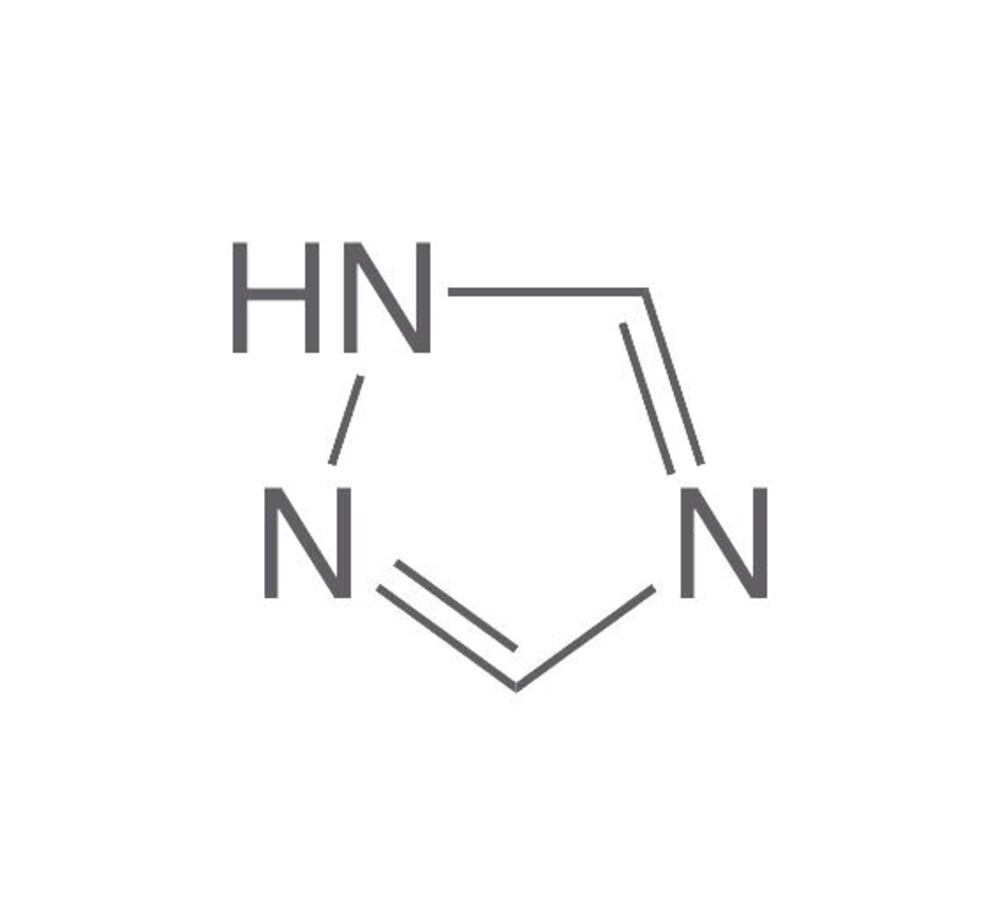
1,2,4-Triazole is a heterocyclic reference compound supplied as ROTICHROM® Pestilyse® HPLC material for demanding chromatographic work. With CAS number 288-88-0, empirical formula C₂H₃N₃ and a molar mass of 69,07 g/mol, it offers a clearly defined chemical identity for calibration and residue studies. The solid has a density of 1,39 g/cm³ and a boiling point of 260 °C, supporting method development where thermal behaviour and purity matter. This 250 mg glass pack is intended for environmental analysis, pesticide-related HPLC workflows and gas-chromatography applications that require reliable standards. Prepared in the ROTICHROM® Pestilyse® HPLC quality line from manufacturer Carl ROTH, the material suits laboratories performing trace-level determinations and confirmatory analyses. Compact packaging helps conserve material while maintaining convenient handling for routine and research use in chromatography suites focused on environmental and agrochemical targets.
This article is part of Chromatography standards (GC, HPLC, pesticides), in Analytical standards & reference materials.
Key features
- Assay: ≥99,5 %
- CAS number: 288-88-0
- Pack size: 250 mg glass
- EG nr.: 206-022-9
- Molar mass: 69,07 g/mol
- Density: 1,39 g/cm³
- Storage temperature: +2 to +8 °C
- Safety Data Sheet:

Compliance & Safety Information

 Danger
Hazard Statements (H-Phrases)
Recently viewed
You may also like
Browse related categories
Category
Analytical standards & reference materials
Sub-category
Chromatography standards (GC, HPLC, pesticides)
Catalogue
Brand
Questions about 1,2,4-Triazole, ROTICHROM® Pestilyse® HPLC, 250 mg, glass
What is this article?
1,2,4-Triazole, ROTICHROM® Pestilyse® HPLC, 250 mg, glass is the article on this page. Luminix Health distributes Carl Roth for laboratory use. It sits in Chromatography standards (GC, HPLC, pesticides), inside Analytical standards & reference materials, in Lab chemicals.
A chromatography standard is the substance, or the mix, injected so a peak can be named and quantified. Pesticide mixes, residual-solvent mixes and single-compound standards are different articles. The concentration and the solvent are the specification. The solvent has to be one the method may contain.
A reference material is the article against which another result is compared. Its value is stated, and the uncertainty of that value is part of the product. An ICP or ion standard is a solution of known concentration. A volumetric standard is for titration. A chromatography standard is the peak you match. The grade names, including pharmacopoeia and ASTM, say which impurities were limited. Identity is checked on PubChem. Names follow IUPAC. Medicinal grades follow the European Pharmacopoeia and USP.
Which category should I open next?
The category is Analytical standards & reference materials. The sub-category is Chromatography standards (GC, HPLC, pesticides). The catalogue is Lab chemicals.
Shelves beside this one are ICP, AAS & ion standards, Reference substances & reagents (other), Volumetric standard solutions (titration), Reagents for analysis (Ph. Eur., ASTM, DIN), Spectroscopy & physical property standards and Indicators & indicator solutions.
What should I check before I order?
The technical information on this page is the manufacturer's sheet. Read that, not a rewritten specification.
When this page shows a safety data sheet, use that manufacturer file. Hazard text does not belong in the sales description. For a pack size, a grade or a certificate that is not on the page, send a quote request or contact the team.
How does ordering and shipping work?
Luminix Health distributes this article from the heart of Europe. Delivery across Europe, two to five days when in stock. Standard delivery is free from €250 excl. VAT. Cold-chain goods and dangerous goods under ADR are never included in that free delivery. The terms are in the Shipping Policy. The full brand index is on shop by brand. Who we are is on about us.
Which other categories should I open?
The seven catalogues are Labware, Lab chemicals, Lab instruments, Lab consumables, Chromatography equipment, Lab safety equipment and Life Science & Microbiology.