
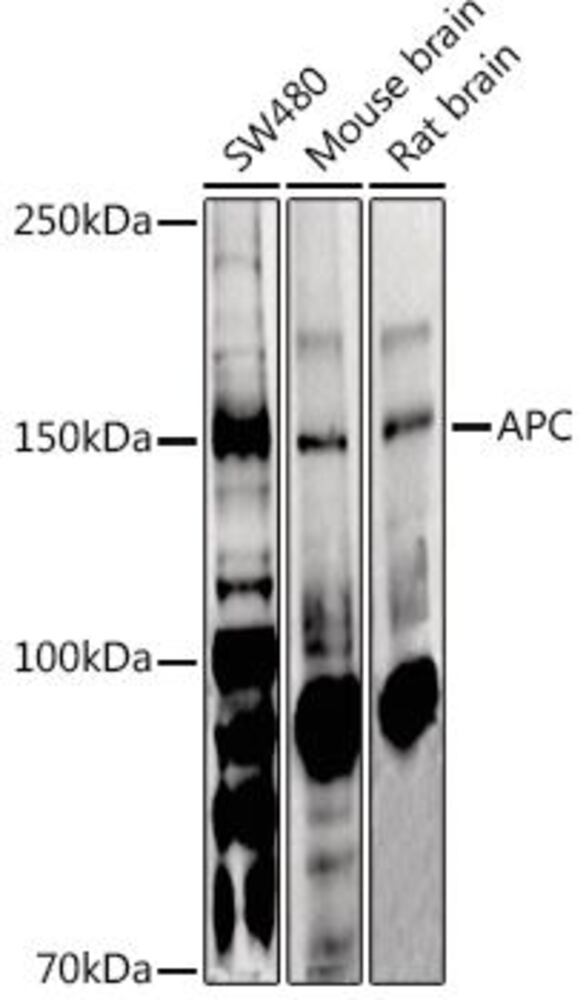


Description
Anti-APC Antibody is a laboratory antibody reagent intended for blotting and immunodetection work in research settings. It is offered in a convenient 100 µl unit quantity and is suited to workflows that include Western blot and ELISA, as well as broader blocking and immunodetection steps within application-focused protocols. The preparation has a stated density of 1 g/cm³, supporting straightforward handling and aliquot planning at the bench. With a net weight of 0,006 kg, the compact pack is practical for method development, screening, and routine detection assays where controlled reagent volumes matter. This Anti-APC Antibody from manufacturer antibodies.com fits laboratories that organise reagents by target and application rather than by bulk commodity chemicals. It supports structured immunodetection sequences in which consistent pack size and clear physical data help maintain reproducible sample preparation. Use it where APC-directed detection is required alongside standard blotting and ELISA formats. The product aligns with common laboratory procurement needs for antibodies used in Western-blot and ELISA-oriented categories, giving teams a defined unit quantity for inventory and experimental design without unnecessary bulk.
This article is part of Primary antibodies, in Antibodies & ELISA kits.
Key features
- Pack size: 100 µl
- Density: 1 g/cm³
- Storage temperature: +4 °C
- Product type: Antibody
- Target: APC
- Weight: 0,006 kg
- Technical Information Sheet:

- Safety Data Sheet:
Compliance & Safety Information

 Warning
Hazard Statements (H-Phrases)
Recently viewed
You may also like
Browse related categories
Category
Sub-category
Catalogue
Brand
Questions about Anti-APC Antibody, 100 µl
What is this article?
Anti-APC Antibody, 100 µl is the article on this page. Luminix Health distributes antibodies.com for laboratory use. It sits in Primary antibodies, inside Antibodies & ELISA kits, in Microbiology lab supplies.
A primary antibody binds the target. Host species, clonality, clone name if monoclonal, the antigen, and the applications it was shown in, such as Western blot or immunohistochemistry, are the specification. A pretty band in the wrong application is not a promise.
An antibody binds one target. A primary antibody binds the molecule of interest. A secondary antibody binds the primary and usually carries the signal, an enzyme or a dye. An ELISA kit is that binding arranged in a well so the amount of target becomes a colour. The host species, the clone, the antigen and the stated application are the specification. A name alone is not. The literature is on PubMed. Sequences of the targets are on NCBI Nucleotide. Reference material is catalogued by ATCC.
Which category should I open next?
The category is Antibodies & ELISA kits. The sub-category is Primary antibodies. The catalogue is Microbiology lab supplies.
Shelves beside this one are ELISA kits, Recombinant proteins & cytokines and Secondary antibodies.
What should I check before I order?
The technical information on this page is the manufacturer's sheet. Read that, not a rewritten specification.
When this page shows a safety data sheet, use that manufacturer file. Hazard text does not belong in the sales description. For a pack size, a grade or a certificate that is not on the page, send a quote request or contact the team.
How does ordering and shipping work?
Luminix Health distributes this article from the heart of Europe. Articles in stock ship within 2–5 business days. Standard delivery is free from €250 excl. VAT. Cold-chain goods and dangerous goods under ADR are never included in that free delivery. The terms are in the Shipping Policy. The full brand index is on shop by brand. Who we are is on about us.
Which other categories should I open?
The seven catalogues are Labware, Lab chemicals, Lab instruments, Lab consumables, Chromatography equipment, Lab safety equipment and Life Science & Microbiology.