
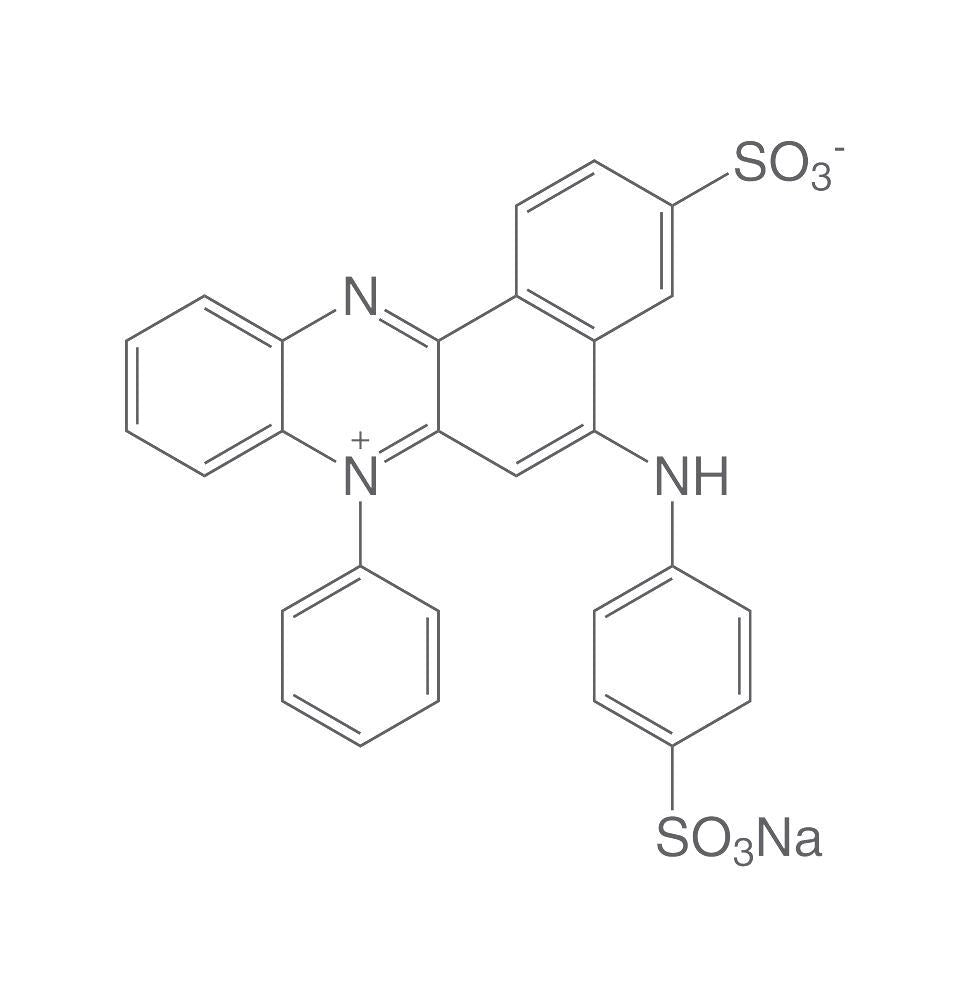


Description
Azocarmine G (C.I. 50085) is an extra pure dye intended for biological and laboratory staining applications. It is registered under CAS number 25641-18-3, with empirical formula C₂₈H₁₈N₃NaO₆S₂ and a molar mass of 579,58 g/mol. The material is This grade from manufacturer Carl ROTH is listed among dyes for biological applications and supports reproducible preparation of staining solutions where Colour Index 50085 is specified. Azocarmine G is valued in microscopy workflows that call for intense red colouration and controlled dye chemistry. The extra pure designation aids consistency between batches when developing or repeating staining procedures. Handle the powder with standard laboratory precautions, dissolve according to validated recipes, and store the closed glass container under ordinary laboratory conditions. Safety documentation is provided to guide risk assessment, personal protective equipment and waste handling for this fine chemical.
This article is part of Microscopy stains & staining solutions, in Dyes, stains & indicators.
Key features
- Appearance: brown, red or purple powder
- Maximum absorption: 510-523 nm
- CAS number: 25641-18-3
- Pack sizes: 1 g, 5 g, 10 g
- Empirical formula: C₂₈H₁₈N₃NaO₆S₂
- Molar mass: 579,58 g/mol
- Grade: extra pure
- Technical Information Sheet:

- Safety Data Sheet:
Recently viewed
You may also like
Browse related categories
Category
Sub-category
Microscopy stains & staining solutions
Catalogue
Brand
Questions about Azocarmine G (C.I. 50085), extra pure, 1 g, glass
What is this article?
Azocarmine G (C.I. 50085), extra pure, 1 g, glass is the article on this page. Luminix Health distributes Carl Roth for laboratory use. It sits in Microscopy stains & staining solutions, inside Dyes, stains & indicators, in Lab chemicals.
A microscopy stain binds a structure so it can be seen: haematoxylin on nuclei, eosin on cytoplasm, Gram reagents on a bacterial wall. A ready solution and a dry dye to be dissolved are different articles. The method names the stain. A substitute dye is a different method.
A dye or a stain binds, or changes colour, so that something invisible becomes visible. An indicator changes at a pH or a redox point. A fluorescent dye absorbs one wavelength and emits another, which is how a microscope or a plate reader picks it out. The excitation and emission, or the transition interval, are the specification. The colour name on the label is not. Structures are on PubChem under IUPAC names. Methods are in the PubMed literature.
Which category should I open next?
The category is Dyes, stains & indicators. The sub-category is Microscopy stains & staining solutions. The catalogue is Lab chemicals.
Shelves beside this one are Fluorescent dyes & labels and Dyes & pigments.
What should I check before I order?
The technical information on this page is the manufacturer's sheet. Read that, not a rewritten specification.
When this page shows a safety data sheet, use that manufacturer file. Hazard text does not belong in the sales description. For a pack size, a grade or a certificate that is not on the page, send a quote request or contact the team.
How does ordering and shipping work?
Luminix Health distributes this article from the heart of Europe. Articles in stock ship within 2–5 business days. Standard delivery is free from €250 excl. VAT. Cold-chain goods and dangerous goods under ADR are never included in that free delivery. The terms are in the Shipping Policy. The full brand index is on shop by brand. Who we are is on about us.
Which other categories should I open?
The seven catalogues are Labware, Lab chemicals, Lab instruments, Lab consumables, Chromatography equipment, Lab safety equipment and Life Science & Microbiology.