
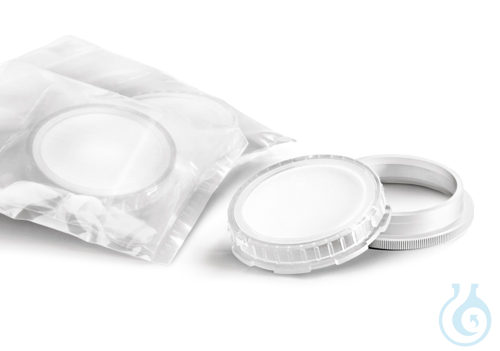



Description
Gelatin filter 3,0 µm, 80 mm is a sterile membrane intended for the collection of airborne microbes and viruses together with MD8 air samplers using the gelatin filter method. Individually sterile packaged membranes guarantee reliable and accurate results for quantitative air monitoring. The 3,0 µm pore size and 80 mm diameter provide efficient capture of bacteria, fungi and viral particles while remaining compatible with standard sampling heads. After sampling the water-soluble gelatin matrix dissolves easily, allowing direct transfer of collected organisms into culture media. Supplied in a pack of 50 pieces from manufacturer Sartorius, these filters support routine hygiene control, clean-room validation and pharmaceutical environmental monitoring. Consistent performance and low background contamination make them suitable for both research and regulated laboratory settings. Originating from Germany, the product offers a ready-to-use consumable for reproducible airborne germ determinations.
This article is part of Microbial identification, hygiene monitoring & rapid tests, in Culture media & microbiology.
Key features
- Pack size: 50 pc(s)
- Storage temperature: Room Temperature
- Pore size: 3,0 µm
- Diameter: 80 mm
- Filter type: Gelatin membrane
- Packaging: Individually sterile packaged
Recently viewed
You may also like
Browse related categories
Category
Sub-category
Microbial identification, hygiene monitoring & rapid tests
Catalogue
Brand
Questions about GELATIN FILTER 3.0um, 80mm, STERIL PK/50
What is this article?
GELATIN FILTER 3.0um, 80mm, STERIL PK/50 is the article on this page. Luminix Health distributes Sartorius for laboratory use. It sits in Microbial identification, hygiene monitoring & rapid tests, inside Culture media & microbiology, in Microbiology lab supplies.
These kits name an organism or detect a residue on a surface faster than a full culture. A swab, a lateral-flow strip or a chromogenic reaction are the forms. The organisms or the residues the kit claims, and the ones it misses, are in the pack insert. A negative is only as good as that list.
A culture medium is the food and the solid or liquid home of a microorganism. Dehydrated media are powders the laboratory dissolves and sterilises. Ready-to-use plates and tubes are already that. A Petri dish is the plate. Selective media let one kind of organism grow and hold another back. The formulation and the supplements, not the colour of the agar, are the specification. Reference strains are at ATCC. Methods are on PubMed. Biosafety practice is the WHO laboratory biosafety topic.
Which category should I open next?
The category is Culture media & microbiology. The sub-category is Microbial identification, hygiene monitoring & rapid tests. The catalogue is Microbiology lab supplies.
Shelves beside this one are Dehydrated culture media (agar & broth bases), Petri dishes, Ready-to-use culture media (plates, tubes, bottles), Microbiology (other) and Inoculation loops, spreaders & needles.
What should I check before I order?
When this page shows a safety data sheet, use that manufacturer file. Hazard text does not belong in the sales description. For a pack size, a grade or a certificate that is not on the page, send a quote request or contact the team.
How does ordering and shipping work?
Luminix Health distributes this article from the heart of Europe. Delivery across the EU, two to five days if in stock. Standard delivery is free from €250 excl. VAT. Cold-chain goods and dangerous goods under ADR are never included in that free delivery. The terms are in the Shipping Policy. The full brand index is on shop by brand. Who we are is on about us.
Which other categories should I open?
The seven catalogues are Labware, Lab chemicals, Lab instruments, Lab consumables, Chromatography equipment, Lab safety equipment and Life Science & Microbiology.

