


Description
Methyl 9-Oxononanoate is a keto-functional fatty acid methyl ester offered at a minimum purity of 90 % for chemical and biochemical laboratory use. Identified by CAS number 1931-63-1 and empirical formula C₁₀H₁₈O₃, it has a molar mass of 186,25 g/mol and a density of 0,958 g/cm³. Additional physical data include a flash point of 101,8 °C and a boiling point of 249,4 °C, supporting informed handling and process planning. Methyl 9-Oxononanoate from manufacturer Carl ROTH is positioned among specialty biochemicals and organic building blocks where a defined oxo-ester structure is required. The combination of CAS identity, molecular formula, molar mass, density, and thermal properties helps researchers specify the material clearly in protocols, inventory systems, and experimental documentation.
This article is part of Nanomaterials & quantum dots, in Inorganic chemicals.
Key features
- Assay: ≥ 90 %
- Colour: reported
- Form: reported
- CAS number: 1931-63-1
- Pack sizes: 25 mg, 50 mg, 100 mg
- Purity: min. 90 %
- Empirical formula: C₁₀H₁₈O₃
- Molar mass: 186,25 g/mol
- Density: 0,958 g/cm³
- Storage temperature: +2 to +8 °C
- Technical Information Sheet:

- Safety Data Sheet:
Compliance & Safety Information
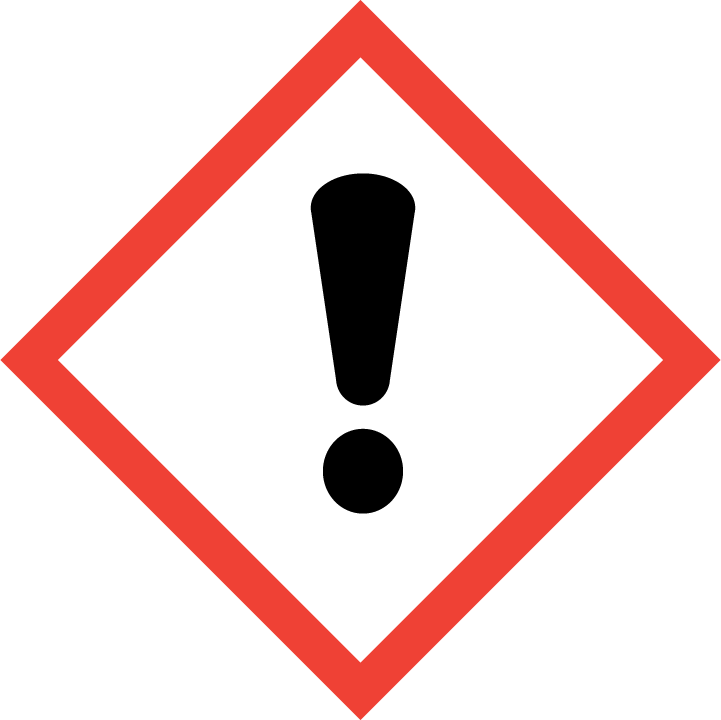 Warning
Hazard Statements (H-Phrases)
Recently viewed
You may also like
Browse related categories
Category
Sub-category
Catalogue
Brand
Questions about Methyl 9-Oxononanoate, min. 90 %, 25 mg
What is this article?
Methyl 9-Oxononanoate, min. 90 %, 25 mg is the article on this page. Luminix Health distributes Carl Roth for laboratory use. It sits in Nanomaterials & quantum dots, inside Inorganic chemicals, in Lab chemicals.
A nanomaterial is defined by a particle size that changes how it behaves. A quantum dot's optical emission depends on that size. The stated diameter, the surface coating and the concentration are the specification. The bulk powder of the same composition is not this product.
An inorganic chemical is a salt, an acid or base in solid form, a metal, an oxide, or an element. The waters of hydration are part of the formula: a hydrate and an anhydrous salt are different masses for the same ion. Trace metals matter when the salt will be used in analysis. Nanomaterials add particle size to the specification. Look the substance up on PubChem. Hazard classes are on ECHA, under the CLP Regulation and REACH. Transport of the dangerous ones is explained by the UNECE.
Which category should I open next?
The category is Inorganic chemicals. The sub-category is Nanomaterials & quantum dots. The catalogue is Lab chemicals.
Shelves beside this one are Inorganic salts and Metals, elements & oxides.
What should I check before I order?
When this page shows a safety data sheet, use that manufacturer file. Hazard text does not belong in the sales description. For a pack size, a grade or a certificate that is not on the page, send a quote request or contact the team.
How does ordering and shipping work?
Luminix Health distributes this article from the heart of Europe. Delivery across Europe, two to five days when in stock. Standard delivery is free from €250 excl. VAT. Cold-chain goods and dangerous goods under ADR are never included in that free delivery. The terms are in the Shipping Policy. The full brand index is on shop by brand. Who we are is on about us.
Which other categories should I open?
The seven catalogues are Labware, Lab chemicals, Lab instruments, Lab consumables, Chromatography equipment, Lab safety equipment and Life Science & Microbiology.