



Description
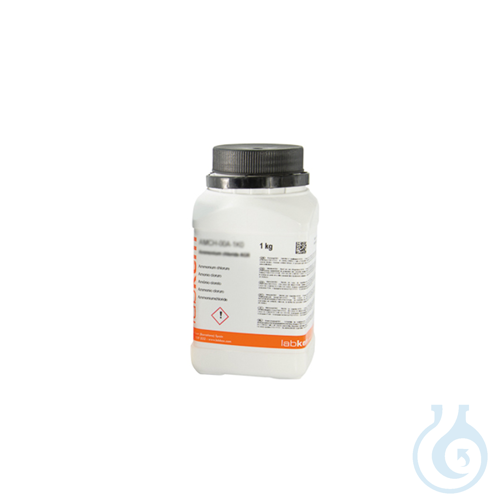
Cobalt(II) chloride hexahydrate EPR is an inorganic laboratory chemical provided for extended laboratory consumption where larger reagent quantities are preferred. It is the hexahydrate of cobalt(II) chloride, CAS number 7791-13-1, with the molecular formula CoCl2·6H2O, and is designated EPR grade in this listing. The material is packed as a 1 kg unit, convenient for stock solutions, teaching laboratories, and recurring analytical preparations that consume cobalt(II) salt. Hazard communication linked to the product includes GHS05, GHS07, GHS08 and GHS09 pictogram sets and UN number 3077, so users should apply standard controls for acute toxicity, sensitisation, CMR-related phrases, and aquatic hazards as indicated on the label. Package net weight is 1,640 kg. Sourced from manufacturer Labbox (LABKEM), this EPR cobalt(II) chloride hexahydrate offers a straightforward bulk option for laboratories specifying the hexahydrate form and a one-kilogram pack size.
This article is part of Metals, elements & oxides, in Inorganic chemicals.
Key features
- CAS number: 7791-13-1
- Pack size: 1 kg
- Chemical name: Cobalt(II) chloride hexahydrate
- Grade: EPR
- Molecular formula: CoCl2·6H2O
- EAN: 8434868014459
- Technical Information Sheet:

- Safety Data Sheet:
Compliance & Safety Information

Hazard Statements (H-Phrases)
Récemment consulté
Vous aimerez peut-être aussi
Browse related categories
Category
Sub-category
Catalogue
Produits chimiques de laboratoire et industriels
Brand
Questions about Cobalt (II) chloride hexahydrate EPR, 1 kg
What is this article?
Cobalt (II) chloride hexahydrate EPR, 1 kg is the article on this page. Luminix Health distributes Labbox for laboratory use. It sits in Metals, elements & oxides, inside Inorganic chemicals, in Produits chimiques de laboratoire et industriels.
Metals, elements and oxides are the element itself or its oxide, sold as powder, shot, foil or wire. Purity and particle size are both the specification. A 99 percent powder and a 99.999 percent shot of the same element are different articles. Many are reactive to air or to water.
An inorganic chemical is a salt, an acid or base in solid form, a metal, an oxide, or an element. The waters of hydration are part of the formula: a hydrate and an anhydrous salt are different masses for the same ion. Trace metals matter when the salt will be used in analysis. Nanomaterials add particle size to the specification. Look the substance up on PubChem. Hazard classes are on ECHA, under the CLP Regulation and REACH. Transport of the dangerous ones is explained by the UNECE.
Which category should I open next?
The category is Inorganic chemicals. The sub-category is Metals, elements & oxides. The catalogue is Produits chimiques de laboratoire et industriels.
Shelves beside this one are Inorganic salts and Nanomaterials & quantum dots.
What should I check before I order?
When this page shows a safety data sheet, use that manufacturer file. Hazard text does not belong in the sales description. For a pack size, a grade or a certificate that is not on the page, send a quote request or contact the team.
How does ordering and shipping work?
Luminix Health distributes this article from the heart of Europe. Articles in stock ship within 2–5 business days. Standard delivery is free from €250 excl. VAT. Cold-chain goods and dangerous goods under ADR are never included in that free delivery. The terms are in the Shipping Policy. The full brand index is on shop by brand. Who we are is on about us.
Which other categories should I open?
The seven catalogues are Labware, Lab chemicals, Lab instruments, Lab consumables, Chromatography equipment, Lab safety equipment and Life Science & Microbiology.