



Description
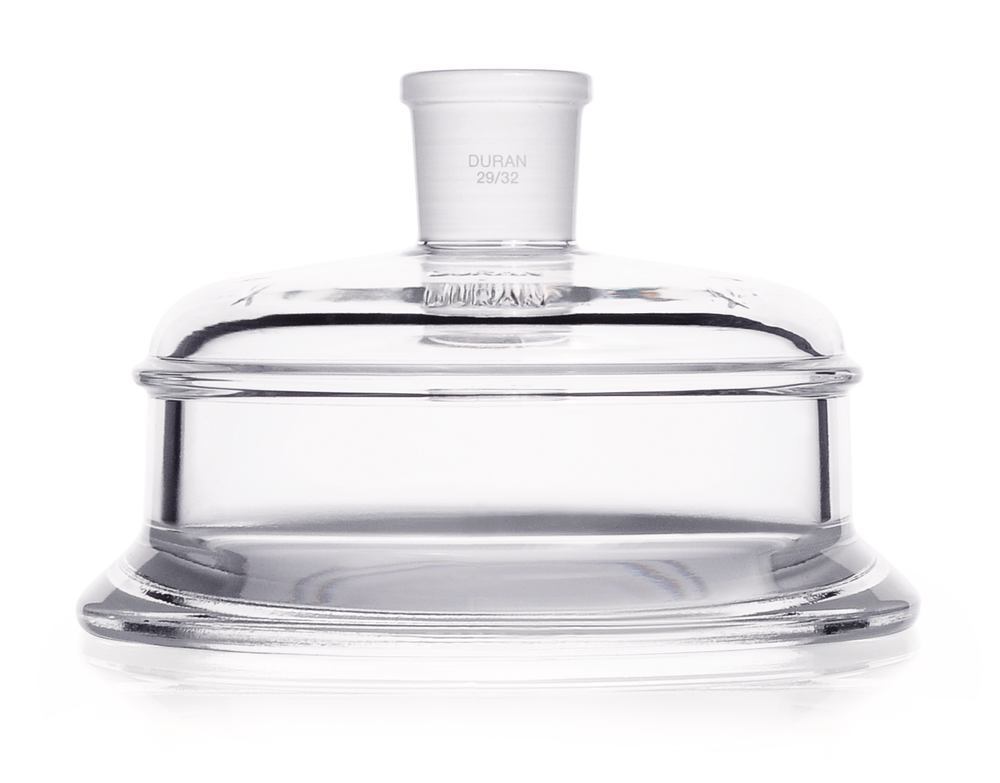
Le couvercle à bride plate Duran® DN 120 avec col central rodé NS 29/32 est un composant de verrerie de laboratoire destiné aux récipients à bride plate et aux systèmes d'aspiration compatibles. Le couvercle associe une interface à bride DN 120 à un col central rodé au format standard NS 29/32 très répandu, permettant une connexion sécurisée de condenseurs, d'ampoules à addition, d'adaptateurs ou d'autres accessoires à joint standard. Produit par DWK Life Sciences sous la marque Duran®, il prend en charge les assemblages de filtration, les montages réactionnels et les applications sous vide nécessitant une fermeture robuste à bride plate. Fourni en une seule pièce, il s'intègre aux configurations existantes de récipients à bride plate DURAN® utilisées dans les laboratoires de recherche chimique, pharmaceutique et universitaire. Le col central NS 29/32 permet d'accueillir les joints de laboratoire courants tout en aidant à maintenir un environnement de travail étanche. Adapté aux montages de verrerie courants, ce couvercle à bride plate complète les systèmes de récipients pour la distillation, l'extraction, la filtration par aspiration et les étapes de processus connexes. Le dimensionnement précis DN 120 garantit un appariement correct avec les corps de bride, les joints et les colliers correspondants pour une performance de laboratoire fiable dans les flux de travail standards sur paillasse.
Cet article fait partie de la catégorie Réacteurs et récipients à double enveloppe, dans Béchers et fioles.
Caractéristiques principales
- Conditionnement : 1 unité
- Marque : Duran®
- Type : couvercle à bride plate
- Taille de la bride : DN 120
- Col central : NS 29/32
- EAN : 4032051030220
Récemment consulté
Vous aimerez peut-être aussi
Questions about Couvercle à bride plate Duran® DN 120, col central NS 29/32, 1 unité(s)
What is this article?
Couvercle à bride plate Duran® DN 120, col central NS 29/32, 1 unité(s) is the article on this page. Luminix Health distributes DWK Life Sciences for laboratory use. It sits in Reaction vessels & jacketed vessels, inside Beakers & flasks, in Matériel de laboratoire.
A reaction vessel is the flask a synthesis actually runs in, sometimes jacketed so a fluid can heat or cool the wall. The joints, the working volume and the jacket connections are the specification. It is not a storage bottle.
A beaker is an open working vessel: easy to pour, poor as a measure. An Erlenmeyer flask has a flat base and a conical wall so a liquid can be swirled without climbing out. A round-bottom flask is for heating under a condenser, because the heat meets a curved wall and the joint at the neck connects to the rest of the glassware. Borosilicate is the glass that survives the temperature change. These forms are listed under ISO laboratory glassware.
Which category should I open next?
The category is Beakers & flasks. The sub-category is Reaction vessels & jacketed vessels. The catalogue is Matériel de laboratoire.
Shelves beside this one are Round-bottom flasks, Beakers, Erlenmeyer flasks, Flat-bottom flasks, Flasks (other) and Beaker & flask accessories.
What should I check before I order?
The technical information on this page is the manufacturer's sheet. Read that, not a rewritten specification.
When this page shows a safety data sheet, use that manufacturer file. Hazard text does not belong in the sales description. For a pack size, a grade or a certificate that is not on the page, send a quote request or contact the team.
How does ordering and shipping work?
Luminix Health distributes this article from the heart of Europe. Articles in stock ship within 2–5 business days. Standard delivery is free from €250 excl. VAT. Cold-chain goods and dangerous goods under ADR are never included in that free delivery. The terms are in the Shipping Policy. The full brand index is on shop by brand. Who we are is on about us.
Which other categories should I open?
The seven catalogues are Labware, Lab chemicals, Lab instruments, Lab consumables, Chromatography equipment, Lab safety equipment and Life Science & Microbiology.