



Description
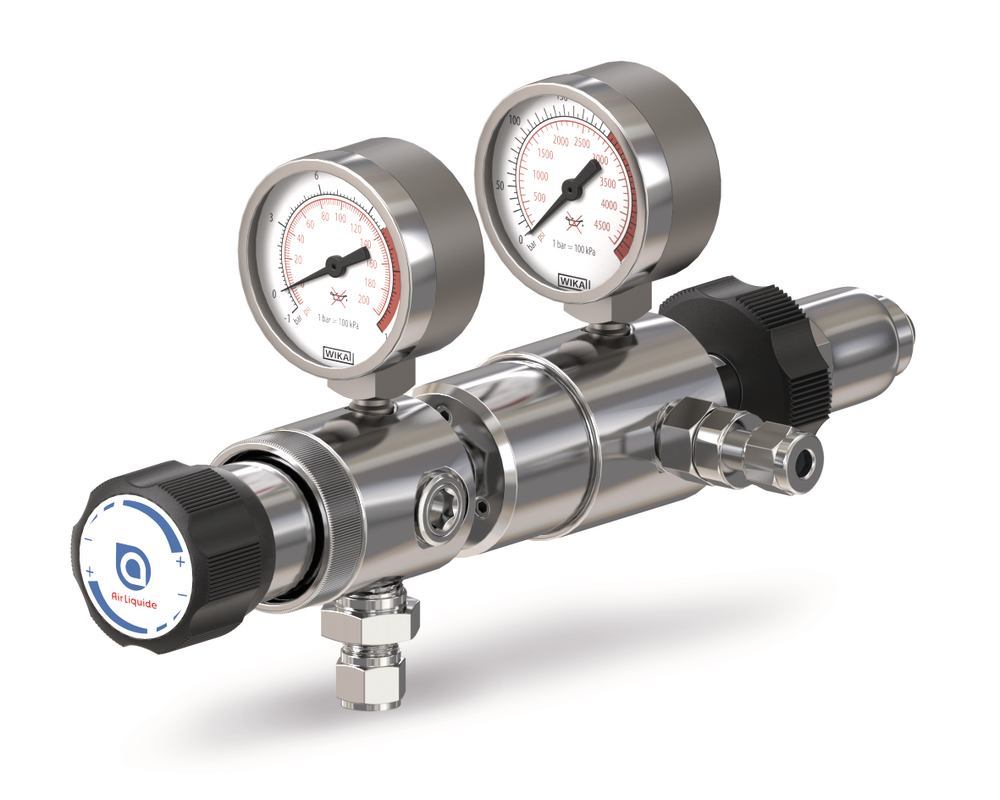
Le détendeur de pression de gaz, double étage, en laiton est un dispositif de manipulation de gaz en laboratoire configuré pour une utilisation avec de l'oxygène, avec une plage de pression de sortie réglable de 0,5 à 10 bars. Conçu comme un détendeur en laiton à deux étages, il réduit la pression de la bouteille en deux étapes pour assurer une pression de service plus constante au point d'utilisation. Sa conception est destinée à la distribution d'oxygène dans le cadre de la manipulation de gaz en laboratoire, de l'alimentation d'instruments et d'installations de paillasse connexes nécessitant de l'oxygène régulé dans la plage indiquée. Fourni par unité de 1 pièce avec un poids de 2,100 kg, l'appareil est adapté aux stations de bouteilles standard et aux infrastructures fixes de gaz en laboratoire. La régulation à double étage aide à limiter la dérive de la pression de sortie à mesure que la pression de la bouteille diminue lors d'un fonctionnement prolongé. Ce modèle provient du fabricant AirLiquide et répond aux besoins courants de contrôle de l'oxygène dans les environnements de recherche et de contrôle qualité. Spécifiez-le lorsque la construction en laiton, le contrôle à deux étages et la compatibilité avec l'oxygène à 0,5–10 bars sont les exigences déterminantes pour une alimentation en gaz de laboratoire sûre et ordonnée.
Cet article appartient aux catégories Robinets et vannes, dans Tubes, tuyaux et raccords.
Caractéristiques principales
- Conditionnement : 1 pièce
- Type de produit : Détendeur de pression de gaz à deux étages
- Matériau : Laiton
- Plage de pression de sortie : 0,5–10 bars
- Gaz : Oxygène
- Poids : 2,100 kg
- Fiche technique :

Récemment consulté
Vous aimerez peut-être aussi
Browse related categories
Category
Sub-category
Catalogue
Brand
Questions about Détendeur de pression de gaz, double étage, laiton, 0,5-10 bars, oxygène, 1 unité(s)
What is this article?
Détendeur de pression de gaz, double étage, laiton, 0,5-10 bars, oxygène, 1 unité(s) is the article on this page. Luminix Health distributes AirLiquide for laboratory use. It sits in Stopcocks & valves, inside Tubing, hoses & fittings, in Matériel de laboratoire.
A stopcock opens and closes a line, or directs it between ports. Glass stopcocks have a ground plug that needs grease or a PTFE key. The bore decides the flow. A two-way and a three-way key are different parts.
Tubing is how a liquid or a gas moves between two vessels without being poured. Silicone stays flexible and survives repeated autoclaving. PTFE resists almost every solvent and is stiff. PVC is the ordinary flexible line for water and for mild aqueous work. The fitting, not the tube, is what usually leaks: the barb, the thread and the stopcock have to match the tube bore. Glass and plastic apparatus around these lines is indexed under ISO laboratory ware.
Which category should I open next?
The category is Tubing, hoses & fittings. The sub-category is Stopcocks & valves. The catalogue is Matériel de laboratoire.
Shelves beside this one are Hose connectors, adapters & fittings, PVC, PTFE & other tubing, Silicone tubing and Tubing accessories.
What should I check before I order?
The technical information on this page is the manufacturer's sheet. Read that, not a rewritten specification.
When this page shows a safety data sheet, use that manufacturer file. Hazard text does not belong in the sales description. For a pack size, a grade or a certificate that is not on the page, send a quote request or contact the team.
How does ordering and shipping work?
Luminix Health distributes this article from the heart of Europe. Articles in stock ship within 2–5 business days. Standard delivery is free from €250 excl. VAT. Cold-chain goods and dangerous goods under ADR are never included in that free delivery. The terms are in the Shipping Policy. The full brand index is on shop by brand. Who we are is on about us.
Which other categories should I open?
The seven catalogues are Labware, Lab chemicals, Lab instruments, Lab consumables, Chromatography equipment, Lab safety equipment and Life Science & Microbiology.