


Description
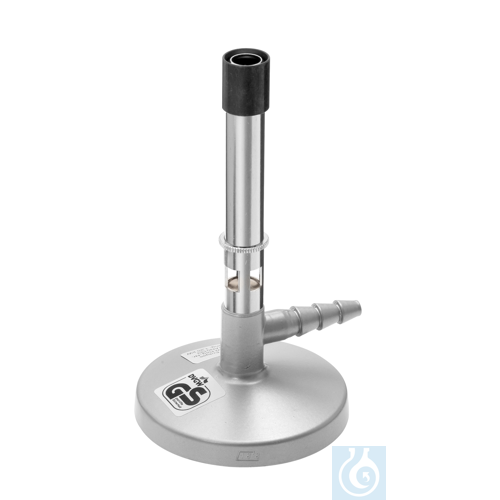
Bunsen burner for natural gas is a laboratory gas burner intended for controlled flame work wherever a natural-gas supply is available. It belongs to the gas-burner class of bench equipment used for everyday heating tasks in chemistry, biology, teaching and quality-control laboratories. Typical uses include gentle or vigorous heating of glassware, flame sterilisation of tools, evaporation steps and simple flame tests, always subject to local gas and safety regulations. The burner is offered as a single-piece unit, making it straightforward to equip individual workstations or to replace an existing natural-gas burner without changing the laboratory gas infrastructure. Produced by manufacturer RSG and originating from Germany, the design follows the familiar Bunsen principle of mixing fuel gas with air to produce a stable, adjustable flame suitable for routine scientific work. Its compact footprint fits standard laboratory benches and teaching stations. Laboratories choose this type of burner when a reliable natural-gas flame source is required for general thermal procedures. Pack size is one piece, supporting flexible ordering for single benches or multi-user facilities.
This article is part of Bunsen & gas burners, in Heating, drying & cooling. See also Hot plates & heating blocks.
Key features
- Pack size: 1 pc
- Product type: Bunsen burner
- Fuel gas: Natural gas
- Country of origin: Germany
- Technical Information Sheet:

Récemment consulté
Vous aimerez peut-être aussi
Browse related categories
Category
Sub-category
Catalogue
Brand
Questions about Gasburner, air regulation, natural gas
What is this article?
Gasburner, air regulation, natural gas is the article on this page. Luminix Health distributes RSG for laboratory use. It sits in Bunsen & gas burners, inside Heating, drying & cooling, in Instruments de précision.
A Bunsen or gas burner is an open flame for quick heating, for flaming a loop, or for bending glass. The gas, natural gas or cartridge, has to match the burner. It is the wrong heat for a flammable solvent.
Temperature equipment either holds a set point or drives a sample toward one. An oven dries. A furnace reaches the temperatures of ashing and melting. A bath surrounds a vessel with water or oil. A circulator moves that fluid. An incubator holds the mild warmth of a culture. An autoclave uses steam under pressure to sterilise. The number that matters is the temperature the article actually reaches, not the number painted on the dial. Temperature is part of the international system kept by the BIPM and compared by EURAMET.
Which category should I open next?
The category is Heating, drying & cooling. The sub-category is Bunsen & gas burners. The catalogue is Instruments de précision.
Shelves beside this one are Muffle & tube furnaces, Heating mantles, Circulators, chillers & thermostats, Drying ovens & climate chambers, Water & oil baths, Hot plates & heating blocks, Incubators, Heating & cooling (other), Temperature control accessories, Laboratory refrigerators & freezers, Autoclaves & sterilisers and Heating tapes, cables & plates.
What should I check before I order?
When this page shows a safety data sheet, use that manufacturer file. Hazard text does not belong in the sales description. For a pack size, a grade or a certificate that is not on the page, send a quote request or contact the team.
How does ordering and shipping work?
Luminix Health distributes this article from the heart of Europe. Articles in stock ship within 2–5 business days. Standard delivery is free from €250 excl. VAT. Cold-chain goods and dangerous goods under ADR are never included in that free delivery. The terms are in the Shipping Policy. The full brand index is on shop by brand. Who we are is on about us.
Which other categories should I open?
The seven catalogues are Labware, Lab chemicals, Lab instruments, Lab consumables, Chromatography equipment, Lab safety equipment and Life Science & Microbiology.