


Description
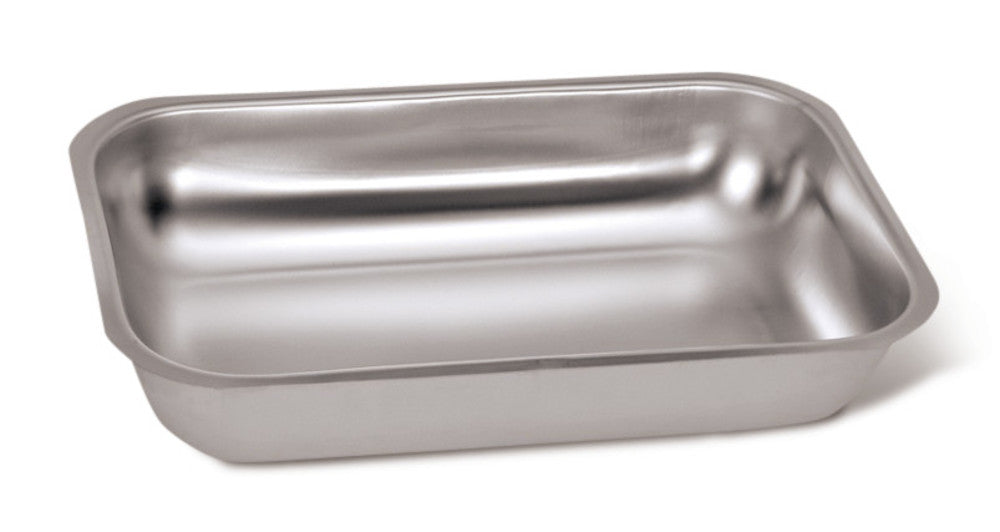
Rotilabo® dishes are stainless steel 18/10 laboratory dishes with external dimensions L 240 mm, W 170 mm and H 40 mm, intended for instrument staging and everyday vessel duties in the lab. The shallow rectangular profile belongs to the family of tubs, bowls, instrument dishes and tablets used to organise tools and materials on the bench. Stainless steel 18/10 construction delivers mechanical strength for reusable service through cleaning cycles common in scientific and medical environments. Unit weight is 0,340 kg, balancing portability with a steady base when loaded with instruments or small glassware. Supplied as 1 pc(s), the dish is straightforward to place at individual workstations or to add to an existing metal labware set. The larger floor area versus smaller Rotilabo® formats accommodates broader instrument layouts while the 40 mm height keeps contents accessible. From manufacturer ROTH SELECTION, this model supports laboratories that prefer durable stainless vessels over disposable plastics for routine handling, preparation and short-term holding tasks across multi-user facilities.
This article is part of Trays, bowls & tubs, in Dishes, crucibles & porcelain.
Key features
- Pack size: 1 pc(s)
- Product line: Rotilabo®
- Material: stainless steel 18/10
- Dimensions: L 240 × W 170 × H 40 mm
- Length: 240 mm
- Width: 170 mm
Récemment consulté
Vous aimerez peut-être aussi
Browse related categories
Category
Sub-category
Catalogue
Brand
Questions about Rotilabo®-dishes, stainl. st.18/10, L 240, W 170 H 40 mm, 1 unit(s)
What is this article?
Rotilabo®-dishes, stainl. st.18/10, L 240, W 170 H 40 mm, 1 unit(s) is the article on this page. Luminix Health distributes Carl Roth for laboratory use. It sits in Trays, bowls & tubs, inside Dishes, crucibles & porcelain, in Matériel de laboratoire.
A laboratory tray, bowl or tub is an open vessel for holding, staining, drying or carrying many small items at once. Polypropylene trays resist a knock and many aqueous liquids. Porcelain takes heat. The useful numbers are the bottom size and the depth, because that is the working area.
A dish is an open vessel for drying, evaporating or holding a solid. Porcelain and glazed ceramic take a higher temperature than borosilicate glass, which is why a crucible, not a beaker, goes into a furnace. A watch glass covers, or holds a small amount for drying. A mortar is for grinding. The temperature and the chemical, not the shape alone, choose the material. Laboratory ware of this family is listed under ISO laboratory ware.
Which category should I open next?
The category is Dishes, crucibles & porcelain. The sub-category is Trays, bowls & tubs. The catalogue is Matériel de laboratoire.
Shelves beside this one are Crucibles, Mortars & pestles, Watch glasses & crystallising dishes, Evaporating dishes and Dishes (other).
What should I check before I order?
The technical information on this page is the manufacturer's sheet. Read that, not a rewritten specification.
When this page shows a safety data sheet, use that manufacturer file. Hazard text does not belong in the sales description. For a pack size, a grade or a certificate that is not on the page, send a quote request or contact the team.
How does ordering and shipping work?
Luminix Health distributes this article from the heart of Europe. Articles in stock ship within 2–5 business days. Standard delivery is free from €250 excl. VAT. Cold-chain goods and dangerous goods under ADR are never included in that free delivery. The terms are in the Shipping Policy. The full brand index is on shop by brand. Who we are is on about us.
Which other categories should I open?
The seven catalogues are Labware, Lab chemicals, Lab instruments, Lab consumables, Chromatography equipment, Lab safety equipment and Life Science & Microbiology.