


Beschrijving
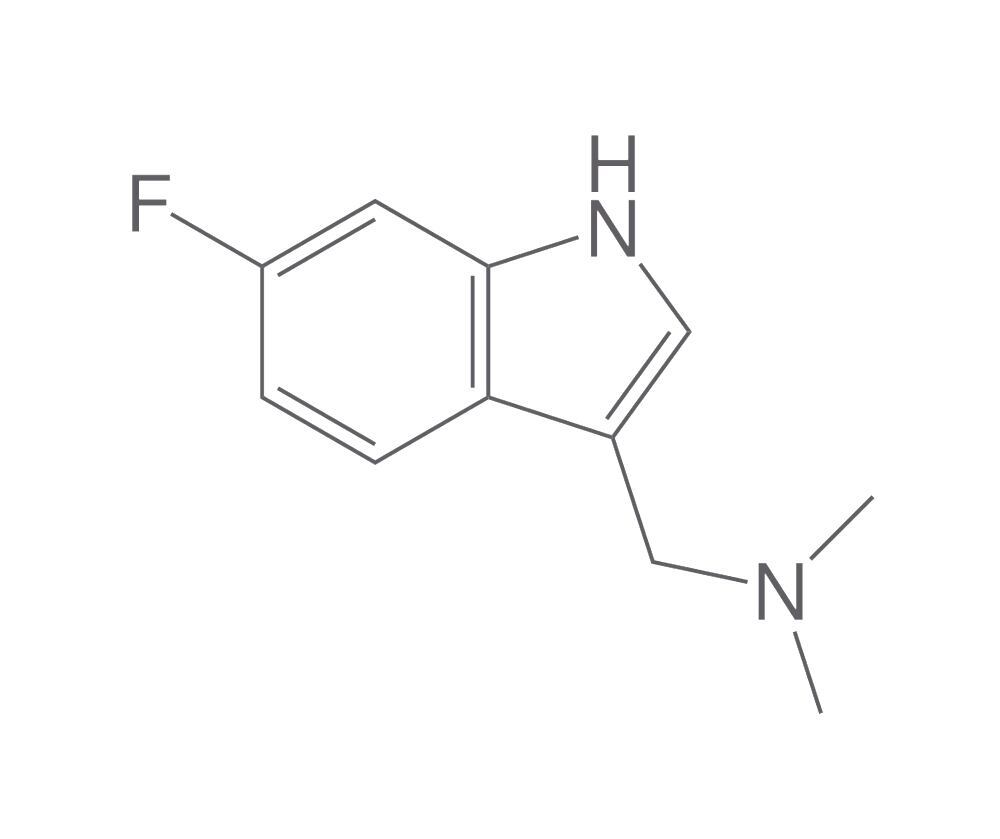
6-Fluorogramine is een gefluoreerd gramine-analoog dat wordt aangeboden met een minimale zuiverheid van 90 % voor laboratoriumsynthese en biochemisch onderzoek. Het wordt gekenmerkt door de brutoformule C₁₁H₁₃FN₂, een molaire massa van 192.23 g/mol en CAS-nummer 343-93-1. Het product is Gramines en hun gefluoreerde tegenhangers zijn nuttig wanneer laboratoria een dimethylaminomethyl-gesubstitueerde heterocyclische kern met gemoduleerde elektronische eigenschappen nodig hebben. Dit materiaal van fabrikant Carl ROTH combineert een vermeld minimaal gehalte met transparante moleculaire gegevens, ter ondersteuning van reproduceerbaar bestellen en experimenteel ontwerp. biedt een praktische hoeveelheid voor herhaald gebruik aan de werkbank en blijft hanteerbaar voor voorraden van gespecialiseerde gefluoreerde bouwstenen die volgens de standaard laboratoriumpraktijk worden behandeld.
Dit artikel maakt deel uit van Microscopiekleurstoffen & kleuroplossingen, in Kleurstoffen, kleuringen & indicatoren.
Kenmerken
- CAS-nummer: 343-93-1
- Pack sizes: 1 g, 5 g, 10 g, 25 g, 100 g
- Zuiverheid: min. 90 %
- Brutoformule: C₁₁H₁₃FN₂
- Molaire massa: 192.23 g/mol
- Bewaartemperatuur: +2 to +8 °C
Recent bekeken
Misschien vind je dit ook leuk
Browse related categories
Category
Kleurstoffen, kleuringen & indicatoren
Sub-category
Microscopiekleurstoffen & kleuroplossingen
Catalogue
Brand
Questions about 6-Fluorogramine, min. 90 %, 1 g
What is this article?
6-Fluorogramine, min. 90 %, 1 g is the article on this page. Luminix Health distributes Carl Roth for laboratory use. It sits in Microscopiekleurstoffen & kleuroplossingen, inside Kleurstoffen, kleuringen & indicatoren, in Chemicaliën.
A microscopy stain binds a structure so it can be seen: haematoxylin on nuclei, eosin on cytoplasm, Gram reagents on a bacterial wall. A ready solution and a dry dye to be dissolved are different articles. The method names the stain. A substitute dye is a different method.
A dye or a stain binds, or changes colour, so that something invisible becomes visible. An indicator changes at a pH or a redox point. A fluorescent dye absorbs one wavelength and emits another, which is how a microscope or a plate reader picks it out. The excitation and emission, or the transition interval, are the specification. The colour name on the label is not. Structures are on PubChem under IUPAC names. Methods are in the PubMed literature.
Which category should I open next?
The category is Kleurstoffen, kleuringen & indicatoren. The sub-category is Microscopiekleurstoffen & kleuroplossingen. The catalogue is Chemicaliën.
Shelves beside this one are Fluorescerende kleurstoffen & labels and Kleurstoffen & pigmenten.
What should I check before I order?
When this page shows a safety data sheet, use that manufacturer file. Hazard text does not belong in the sales description. For a pack size, a grade or a certificate that is not on the page, send a quote request or contact the team.
How does ordering and shipping work?
Luminix Health distributes this article from the heart of Europe. Articles in stock ship within 2–5 business days. Standard delivery is free from €250 excl. VAT. Cold-chain goods and dangerous goods under ADR are never included in that free delivery. The terms are in the Shipping Policy. The full brand index is on shop by brand. Who we are is on about us.
Which other categories should I open?
The seven catalogues are Labware, Lab chemicals, Lab instruments, Lab consumables, Chromatography equipment, Lab safety equipment and Life Science & Microbiology.