



Beschrijving
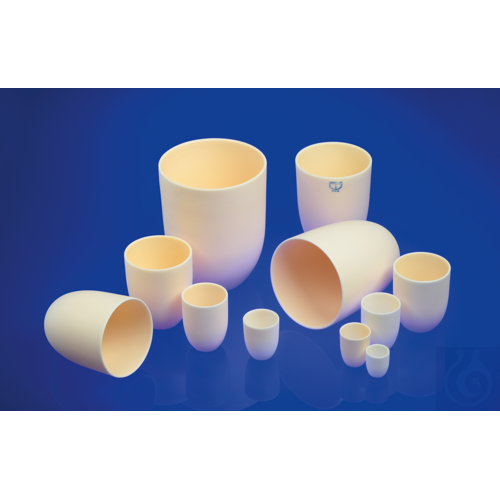
Smeltkroes Alsint 99.7 maat 4 C is een conische laboratoriumsmeltkroes in hoge vorm voor thermische monsterbehandeling die extra verticale diepte nodig heeft. De bovenste buitendiameter is 50 mm, de onderste buitendiameter 27 mm en de hoogte 65 mm, met een nominale inhoud van 80 ml (0.08 l). De aanduiding Alsint 99.7 identificeert dit smeltkroestype voor laboratoriumtoepassingen die een hoog conisch profiel specificeren. Aangeboden als 1 stuk van fabrikant Haldenwanger combineert het formaat maat 4 C een matige bovenste opening met een smallere basis en een grotere hoogte ten opzichte van brede lage vormen. De bovenste buitendiameter van 50 mm en de onderste buitendiameter van 27 mm bepalen de conische omhulling, terwijl de hoogte van 65 mm de geometrie in hoge vorm van deze maat vastlegt. Het nominale volume van 80 ml past bij laboratoriumtaken die capaciteit in evenwicht brengen met een hogere wand. Duidelijkheid van de afmetingen ondersteunt de selectie ten opzichte van houders, ovens en bestaande smeltkroessets. Laboratoria die conische Alsint 99.7-smeltkroezen in hoge vorm specificeren, kunnen deze eenheid maat 4 C gebruiken wanneer bovenste OD 50 mm, onderste OD 27 mm, hoogte 65 mm en een inhoud van 80 ml vereist zijn voor thermische laboratoriumprocedures.
Dit artikel maakt deel uit van Kroezen, in Schalen, smeltkroezen & porselein.
Kenmerken
- Verpakkingsgrootte: 1 stuk
- Producttype: Kroes Alsint 99.7
- Vorm: Conisch, hoge vorm
- Maat: 4 C
- Bovenste buitendiameter: 50 mm
- Onderste buitendiameter: 27 mm
- Technisch datablad:

Recent bekeken
Misschien vind je dit ook leuk
Questions about Smeltkroes, Alsint 99.7 conisch, hoge vorm Maat 4 C bovenste OD Ø 50 mm onderste OD Ø 27
What is this article?
Smeltkroes, Alsint 99.7 conisch, hoge vorm Maat 4 C bovenste OD Ø 50 mm onderste OD Ø 27 is the article on this page. Luminix Health distributes Haldenwanger for laboratory use. It sits in Kroezen, inside Schalen, smeltkroezen & porselein, in Labmateriaal.
A crucible holds a sample in a furnace or over a flame, at temperatures that would soften a borosilicate beaker. Porcelain, platinum and glazed ceramic are different articles. The form, tall or wide, decides how fast a sample dries or ashes.
A dish is an open vessel for drying, evaporating or holding a solid. Porcelain and glazed ceramic take a higher temperature than borosilicate glass, which is why a crucible, not a beaker, goes into a furnace. A watch glass covers, or holds a small amount for drying. A mortar is for grinding. The temperature and the chemical, not the shape alone, choose the material. Laboratory ware of this family is listed under ISO laboratory ware.
Which category should I open next?
The category is Schalen, smeltkroezen & porselein. The sub-category is Kroezen. The catalogue is Labmateriaal.
Shelves beside this one are Dienbladen, schalen & kuipen, Vijzels & stampers, Horlogeglazen & kristalliseerschalen, Indampschalen and Schalen (overig).
What should I check before I order?
When this page shows a safety data sheet, use that manufacturer file. Hazard text does not belong in the sales description. For a pack size, a grade or a certificate that is not on the page, send a quote request or contact the team.
How does ordering and shipping work?
Luminix Health distributes this article from the heart of Europe. Articles in stock ship within 2–5 business days. Standard delivery is free from €250 excl. VAT. Cold-chain goods and dangerous goods under ADR are never included in that free delivery. The terms are in the Shipping Policy. The full brand index is on shop by brand. Who we are is on about us.
Which other categories should I open?
The seven catalogues are Labware, Lab chemicals, Lab instruments, Lab consumables, Chromatography equipment, Lab safety equipment and Life Science & Microbiology.