


Beschrijving
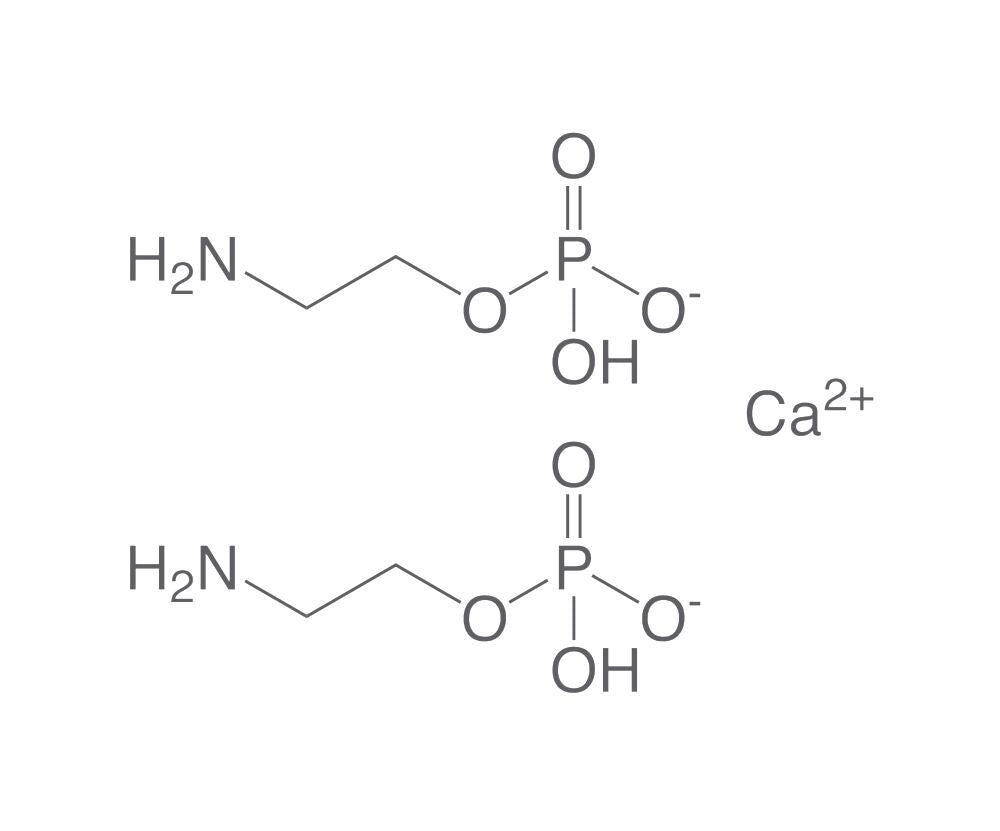
2-Aminoethyl diwaterstoffosfaat calciumzout (2:1) is een organofosfaatzout met CAS-nummer 18672-70-3 en de empirische formule C₂H₈NO₄P·½Ca. De molaire massa is 161,1 g/mol. De stoichiometrie van het calciumzout (2:1) koppelt het 2-aminoethyl diwaterstoffosfaat-gedeelte aan calcium, wat een vast reagens oplevert voor laboratoriumformulering en biochemisch onderzoek. Duidelijke CAS- en formulegegevens maken nauwkeurig wegen en de bereiding van oplossingen mogelijk. Dit materiaal van fabrikant Carl ROTH is gepositioneerd voor onderzoeksgroepen die een gedefinieerd calciumzout van 2-aminoethyl diwaterstoffosfaat nodig hebben in plaats van alleen het vrije zuur. Typische contexten zijn organische fosfaatchemie, de bereiding van gespecialiseerde tussenproducten en methodeontwikkeling waarbij een gecontroleerd kationgehalte van belang is. De compacte verpakkingsgrootte sluit aan bij verkennende en analytische workflows, terwijl de moleculaire identiteit volledig traceerbaar blijft via de vermelde specificaties.
Dit artikel hoort thuis in Anorganische zouten, in Anorganische chemicaliën.
Belangrijkste kenmerken
- CAS-nummer: 18672-70-3
- Verpakkingsgroottes: 10 g, 25 g, 50 g
- Empirische formule: C₂H₈NO₄P·½Ca
- Molaire massa: 161,1 g/mol
- Zoutvorm: calciumzout (2:1)
- Producttype: organofosfaatzout
- Technisch informatieblad:

Recent bekeken
Misschien vind je dit ook leuk
Browse related categories
Category
Sub-category
Catalogue
Brand
Questions about 2-Aminoethyl diwaterstoffosfaatcalciumzout (2:1), 10 g
What is this article?
2-Aminoethyl diwaterstoffosfaatcalciumzout (2:1), 10 g is the article on this page. Luminix Health distributes Carl Roth for laboratory use. It sits in Inorganic salts, inside Inorganic chemicals, in Chemicaliën.
An inorganic salt is an ionic solid, a chloride, a sulfate, a nitrate, a phosphate. The degree of hydration changes the mass that contains one mole of the ion. Analytical grade limits the foreign ions. A hydrate and the anhydrous salt are not interchangeable by weight.
An inorganic chemical is a salt, an acid or base in solid form, a metal, an oxide, or an element. The waters of hydration are part of the formula: a hydrate and an anhydrous salt are different masses for the same ion. Trace metals matter when the salt will be used in analysis. Nanomaterials add particle size to the specification. Look the substance up on PubChem. Hazard classes are on ECHA, under the CLP Regulation and REACH. Transport of the dangerous ones is explained by the UNECE.
Which category should I open next?
The category is Inorganic chemicals. The sub-category is Inorganic salts. The catalogue is Chemicaliën.
Shelves beside this one are Metals, elements & oxides and Nanomaterials & quantum dots.
What should I check before I order?
When this page shows a safety data sheet, use that manufacturer file. Hazard text does not belong in the sales description. For a pack size, a grade or a certificate that is not on the page, send a quote request or contact the team.
How does ordering and shipping work?
Luminix Health distributes this article from the heart of Europe. Articles in stock ship within 2–5 business days. Standard delivery is free from €250 excl. VAT. Cold-chain goods and dangerous goods under ADR are never included in that free delivery. The terms are in the Shipping Policy. The full brand index is on shop by brand. Who we are is on about us.
Which other categories should I open?
The seven catalogues are Labware, Lab chemicals, Lab instruments, Lab consumables, Chromatography equipment, Lab safety equipment and Life Science & Microbiology.