
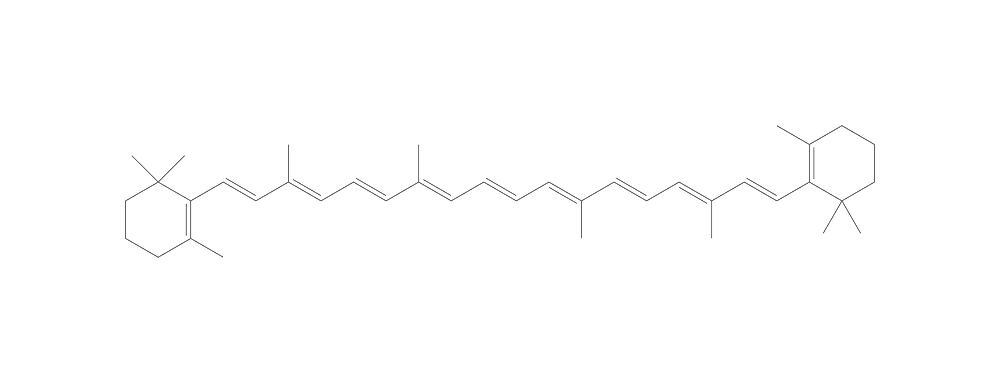


Beschrijving
beta-Carotene, ROTICHROM® HPLC, is een carotenoïdestandaard van chromatografische kwaliteit met CAS-nummer 7235-40-7 en empirische formule C₄₀H₅₆. De molaire massa is 536.89 g/mol, de dichtheid 1.001 g/cm³ en het vlampunt 103 °C; het EG-nummer is 230-636-6. Geleverd als 10 mg in glas, is de kwaliteit ROTICHROM® HPLC bedoeld voor analytische werkstromen zoals HPLC-methodeontwikkeling, kalibratie en fytochemische profilering. beta-Carotene is een goed gekarakteriseerd tetraterpeenpigment dat als referentie wordt gebruikt in analyse van levensmiddelen, natuurproducten en voeding. Materiaal van fabrikant Carl ROTH draagt de aanduiding ROTICHROM® HPLC, wat de geschiktheid voor chromatografische toepassingen aangeeft en niet voor bulksynthese. De kleine glazen verpakking ondersteunt nauwkeurig afwegen van de intens gekleurde vaste stof en beperkt onnodige voorraad. Identiteitsparameters waaronder CAS, formule en molaire massa maken duidelijke documentatie in analyserapporten mogelijk. Deze eenheid van 10 mg is praktisch voor laboratoria die referentiebibliotheken van carotenoïden en verwante fytochemicaliën aanhouden voor kwantitatief of kwalitatief HPLC-werk.
Dit artikel maakt deel uit van Chromatografiestandaarden (GC, HPLC, pesticiden), in Analytische standaarden & referentiematerialen.
Kenmerken
- CAS-nummer: 7235-40-7
- Verpakkingsgrootte: 10 mg glas
- EG-nr.: 230-636-6
- Molaire massa: 536.89 g/mol
- Bewaartemperatuur: -20 °C
- Technisch datablad:

- Veiligheidsinformatieblad:
Recent bekeken
Misschien vind je dit ook leuk
Browse related categories
Category
Analytische standaarden & referentiematerialen
Sub-category
Chromatografiestandaarden (GC, HPLC, pesticiden)
Catalogue
Brand
Questions about beta-Carotene, ROTICHROM® HPLC, 10 mg, glas
What is this article?
beta-Carotene, ROTICHROM® HPLC, 10 mg, glas is the article on this page. Luminix Health distributes Carl Roth for laboratory use. It sits in Chromatografiestandaarden (GC, HPLC, pesticiden), inside Analytische standaarden & referentiematerialen, in Chemicaliën.
A chromatography standard is the substance, or the mix, injected so a peak can be named and quantified. Pesticide mixes, residual-solvent mixes and single-compound standards are different articles. The concentration and the solvent are the specification. The solvent has to be one the method may contain.
A reference material is the article against which another result is compared. Its value is stated, and the uncertainty of that value is part of the product. An ICP or ion standard is a solution of known concentration. A volumetric standard is for titration. A chromatography standard is the peak you match. The grade names, including pharmacopoeia and ASTM, say which impurities were limited. Identity is checked on PubChem. Names follow IUPAC. Medicinal grades follow the European Pharmacopoeia and USP.
Which category should I open next?
The category is Analytische standaarden & referentiematerialen. The sub-category is Chromatografiestandaarden (GC, HPLC, pesticiden). The catalogue is Chemicaliën.
Shelves beside this one are ICP-, AAS- & ionstandaarden, Referentiestoffen & reagentia (overig), Volumetrische standaardoplossingen (titratie), Reagentia voor analyse (Ph. Eur., ASTM, DIN), Spectroscopie- & fysische-eigenschapsstandaarden and Indicatoren & indicatoroplossingen.
What should I check before I order?
When this page shows a safety data sheet, use that manufacturer file. Hazard text does not belong in the sales description. For a pack size, a grade or a certificate that is not on the page, send a quote request or contact the team.
How does ordering and shipping work?
Luminix Health distributes this article from the heart of Europe. Articles in stock ship within 2–5 business days. Standard delivery is free from €250 excl. VAT. Cold-chain goods and dangerous goods under ADR are never included in that free delivery. The terms are in the Shipping Policy. The full brand index is on shop by brand. Who we are is on about us.
Which other categories should I open?
The seven catalogues are Labware, Lab chemicals, Lab instruments, Lab consumables, Chromatography equipment, Lab safety equipment and Life Science & Microbiology.