
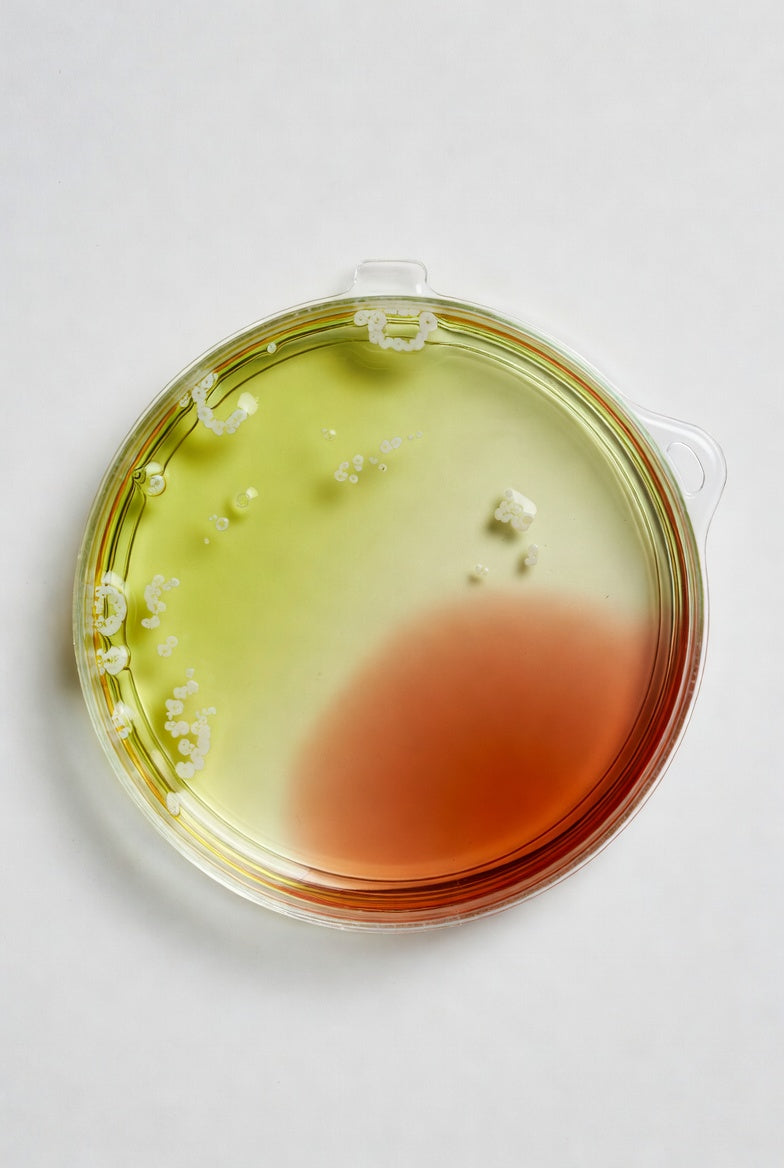


Beschrijving
Brilliant Green Lactose Sucrose Agar is een droog voedingsmedium bedoeld voor microbiologie, gepositioneerd voor hygiënebewaking en workflows met voedingsmedia die worden gebruikt bij de detectie van Salmonella. De kunststofverpakking van 500 g biedt een praktische laboratoriumhoeveelheid voor het bereiden van selectieve agarplaten volgens gevestigde microbiologische methoden. Als gedehydrateerde agarbasis ondersteunt het uitplaat- en differentiatiestappen die gewoonlijk worden toegepast na verrijking in Salmonella-testschema's. Dit product is vermeld onder droge voedingsmedia voor Salmonella-detectie en past bij levensmiddelenveiligheids-, milieu- en kwaliteitslaboratoria die standaardvoorraden kweekmedia aanhouden. Het is verkrijgbaar van fabrikant Carl ROTH voor routinematige bereiding aan de werkbank. Het verpakkingsgewicht is ongeveer 0.394 kg voor de eenheid van 500 g, wat opslag en voorraadbeheer ondersteunt. Gebruik Brilliant Green Lactose Sucrose Agar waar protocollen dit mediumtype specificeren voor microbiologisch onderzoek, uitsluitend op basis van de vermelde toepassing en verpakkingsgegevens zonder toegevoegde prestatie- of zuiverheidsbeweringen buiten de fabrikantbeschrijving.
Dit artikel maakt deel uit van Microscopiekleurstoffen & kleuroplossingen, in Kleurstoffen, kleuringen & indicatoren.
Kenmerken
- Meat and casein peptone: 10 g/l
- Gistextract: 3 g/l
- Sodium chloride (NaCl): 5 g/l
- Lactose monohydrate: 10 g/l
- Saccharose: 10 g/l
- Phenol red: 0.08 g/l
- Brilliant green: 0.0125 g/l
- Agar: 20 g/l
- pH-waarde: 6.9 ±0.2
- Verpakkingsgrootte: 500 g kunststof
- Producttype: Brilliant Green Lactose Sucrose Agar
- Toepassingsgebied: Hygiënebewaking
- Mediaklasse: Droge voedingsmedia
- Technisch datablad:

- Veiligheidsinformatieblad:
Recent bekeken
Misschien vind je dit ook leuk
Browse related categories
Category
Kleurstoffen, kleuringen & indicatoren
Sub-category
Microscopiekleurstoffen & kleuroplossingen
Catalogue
Brand
Questions about Brilliant Green Lactose Sucrose Agar, voor microbiologie, 500 g, kunststof
What is this article?
Brilliant Green Lactose Sucrose Agar, voor microbiologie, 500 g, kunststof is the article on this page. Luminix Health distributes Carl Roth for laboratory use. It sits in Microscopiekleurstoffen & kleuroplossingen, inside Kleurstoffen, kleuringen & indicatoren, in Chemicaliën.
A microscopy stain binds a structure so it can be seen: haematoxylin on nuclei, eosin on cytoplasm, Gram reagents on a bacterial wall. A ready solution and a dry dye to be dissolved are different articles. The method names the stain. A substitute dye is a different method.
A dye or a stain binds, or changes colour, so that something invisible becomes visible. An indicator changes at a pH or a redox point. A fluorescent dye absorbs one wavelength and emits another, which is how a microscope or a plate reader picks it out. The excitation and emission, or the transition interval, are the specification. The colour name on the label is not. Structures are on PubChem under IUPAC names. Methods are in the PubMed literature.
Which category should I open next?
The category is Kleurstoffen, kleuringen & indicatoren. The sub-category is Microscopiekleurstoffen & kleuroplossingen. The catalogue is Chemicaliën.
Shelves beside this one are Fluorescerende kleurstoffen & labels and Kleurstoffen & pigmenten.
What should I check before I order?
The technical information on this page is the manufacturer's sheet. Read that, not a rewritten specification.
When this page shows a safety data sheet, use that manufacturer file. Hazard text does not belong in the sales description. For a pack size, a grade or a certificate that is not on the page, send a quote request or contact the team.
How does ordering and shipping work?
Luminix Health distributes this article from the heart of Europe. Articles in stock ship within 2–5 business days. Standard delivery is free from €250 excl. VAT. Cold-chain goods and dangerous goods under ADR are never included in that free delivery. The terms are in the Shipping Policy. The full brand index is on shop by brand. Who we are is on about us.
Which other categories should I open?
The seven catalogues are Labware, Lab chemicals, Lab instruments, Lab consumables, Chromatography equipment, Lab safety equipment and Life Science & Microbiology.