


Beschrijving
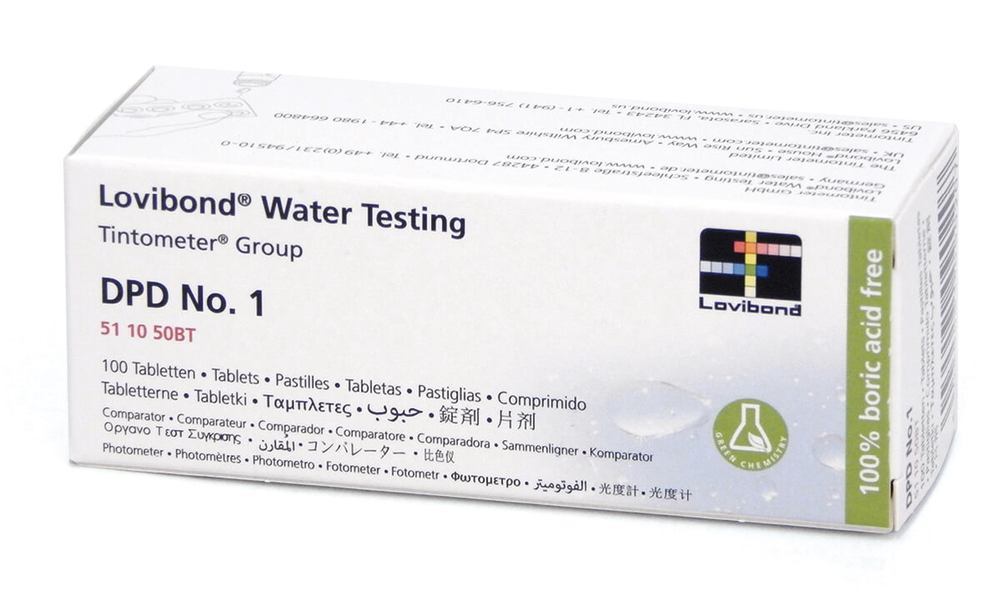
DPD No. 1-reagenstabletten voor vrij chloor zijn wateranalysereagentia, bedoeld voor metingen van het gehalte vrij chloor met Fotometer MD100. Elke verpakking bevat 100 stuks tabletten voor bepaling ter plaatse en in het laboratorium van vrij chloor als onderdeel van routinematige watertestprogramma's. De dichtheid is aangegeven als 2.16 g/cm³, en het eenheidsgewicht van de verpakking is 0.03 kg, wat compacte opslag bij fotometerverbruiksartikelen ondersteunt. Deze DPD No. 1-reagenstabletten van fabrikant Tintometer sluiten aan bij werkstromen voor chloorgehalte in wateranalysetoepassingen waarin vrij chloor fotometrisch wordt gekwantificeerd. Ze zijn gepositioneerd voor gebruik met het Fotometer MD100-platform waarnaar voor dit tabletformaat wordt verwezen, en helpen laboratoria en veldteams een consistente voorraad reagens voor vrij chloor te behouden. De categorieën omvatten toepassingen in wateranalyse en parameters ter plaatse, gericht op het chloorgehalte van water. De tabletpresentatie vereenvoudigt doseerstappen tijdens monstervoorbereiding vóór de fotometrische uitlezing. Geschikt voor faciliteiten die controles op vrij chloor op MD100-instrumenten standaardiseren en een speciale DPD No. 1-tabletverpakking van 100 eenheden nodig hebben voor continue bewakingsschema's.
Dit artikel maakt deel uit van Reagentia voor analyse (Ph. Eur., ASTM, DIN), in Analytische standaarden & referentiematerialen.
Kenmerken
- Verpakkingsgrootte: 100 stuks
- Dichtheid: 2.16 g/cm³
- Producttype: DPD No. 1-reagenstabletten
- Analyt: Vrij chlorine
- Compatibel instrument: Fotometer MD100
- Veiligheidsinformatieblad:

- Veiligheidsinformatieblad:
Recent bekeken
Misschien vind je dit ook leuk
Browse related categories
Category
Analytische standaarden & referentiematerialen
Sub-category
Reagentia voor analyse (Ph. Eur., ASTM, DIN)
Catalogue
Brand
Questions about DPD No. 1-reagenstabletten, vrij chloor, voor Fotometer MD100, 100 stuks
What is this article?
DPD No. 1-reagenstabletten, vrij chloor, voor Fotometer MD100, 100 stuks is the article on this page. Luminix Health distributes Tintometer for laboratory use. It sits in Reagentia voor analyse (Ph. Eur., ASTM, DIN), inside Analytische standaarden & referentiematerialen, in Chemicaliën.
A reagent for analysis is a chemical whose impurities are limited so they do not become a signal in a titration, a digestion or a photometric method. Pharmacopoeia, ASTM and DIN names point at different limit lists. The grade, not only the identity, is the purchase.
A reference material is the article against which another result is compared. Its value is stated, and the uncertainty of that value is part of the product. An ICP or ion standard is a solution of known concentration. A volumetric standard is for titration. A chromatography standard is the peak you match. The grade names, including pharmacopoeia and ASTM, say which impurities were limited. Identity is checked on PubChem. Names follow IUPAC. Medicinal grades follow the European Pharmacopoeia and USP.
Which category should I open next?
The category is Analytische standaarden & referentiematerialen. The sub-category is Reagentia voor analyse (Ph. Eur., ASTM, DIN). The catalogue is Chemicaliën.
Shelves beside this one are ICP-, AAS- & ionstandaarden, Chromatografiestandaarden (GC, HPLC, pesticiden), Referentiestoffen & reagentia (overig), Volumetrische standaardoplossingen (titratie), Spectroscopie- & fysische-eigenschapsstandaarden and Indicatoren & indicatoroplossingen.
What should I check before I order?
The technical information on this page is the manufacturer's sheet. Read that, not a rewritten specification.
When this page shows a safety data sheet, use that manufacturer file. Hazard text does not belong in the sales description. For a pack size, a grade or a certificate that is not on the page, send a quote request or contact the team.
How does ordering and shipping work?
Luminix Health distributes this article from the heart of Europe. Articles in stock ship within 2–5 business days. Standard delivery is free from €250 excl. VAT. Cold-chain goods and dangerous goods under ADR are never included in that free delivery. The terms are in the Shipping Policy. The full brand index is on shop by brand. Who we are is on about us.
Which other categories should I open?
The seven catalogues are Labware, Lab chemicals, Lab instruments, Lab consumables, Chromatography equipment, Lab safety equipment and Life Science & Microbiology.