


Beschrijving
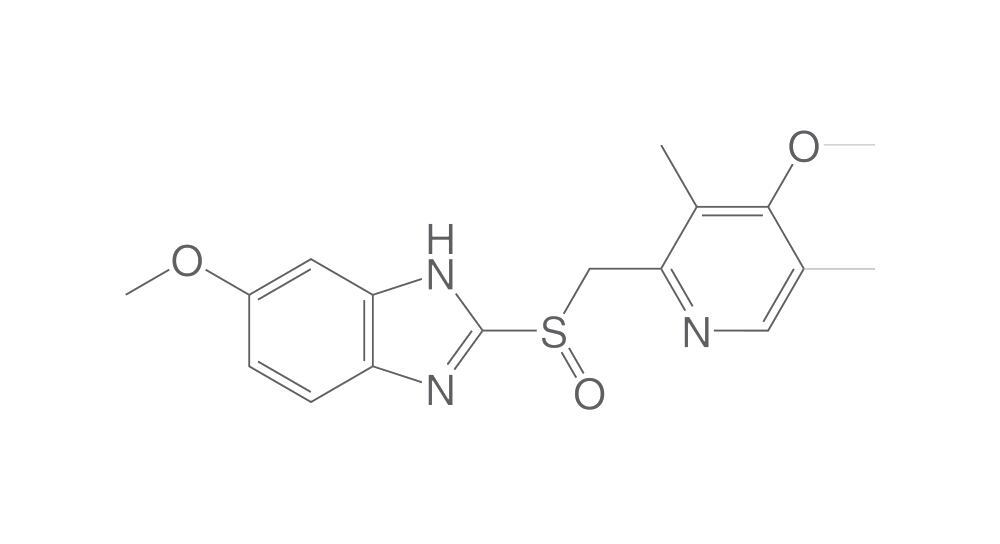
Omeprazole is een biochemische stof van BioScience Grade, aangeboden met een minimale zuiverheid van 95 %, met CAS-nummer 73590-58-6. De empirische formule is C₁₇H₁₉N₃O₃S en de molaire massa is 345.42 g/mol. De fysische gegevens omvatten een dichtheid van 1.332 g/cm³ en een vlampunt van 316.7 °C, zodat laboratoria duidelijke parameters hebben voor hantering en documentatie. Deze vermelding wordt geleverd als een verpakking van 50 mg, een praktische hoeveelheid voor methodeopzet, referentiecontroles en experimenteel werk op kleine schaal. Het materiaal is beschikbaar van fabrikant Carl ROTH en wordt aangeboden voor chemisch en biochemisch laboratoriumgebruik waar een gedefinieerde kwaliteit en zuiverheidsvermelding vereist zijn. De aanduiding BioScience Grade samen met de specificatie van minimale zuiverheid van 95 % ondersteunt een consistente selectie ten opzichte van interne kwaliteitscriteria. De vermelde molaire massa, dichtheid en vlampuntwaarden helpen bij het afstemmen van afwegen, oplosmiddelkeuze en veiligheidsplanning op het gepubliceerde profiel. De compacte eenheid van 50 mg houdt de voorraad beperkt en levert toch voldoende materiaal voor herhaalde proeven. De identiteit is volledig verankerd door CAS 73590-58-6 en formule C₁₇H₁₉N₃O₃S voor een eenvoudige kruisverwijzing met literatuur en catalogus.
Dit artikel maakt deel uit van Biochemicaliën (overig), in Biochemicaliën & reagentia.
Kenmerken
- Kleur: wit tot gebroken wit
- Vorm: poeder
- Zuiverheid: ≥98 %
- CAS-nummer: 73590-58-6
- Verpakkingsgrootte: 50 mg
- Brutoformule: C₁₇H₁₉N₃O₃S
- Molaire massa: 345.42 g/mol
- Technisch datablad:

- Veiligheidsinformatieblad:
Compliance & Safety Information
 Waarschuwing
Hazard Statements (H-Phrases)
Precautionary Statements (P-Phrases)
Recent bekeken
Misschien vind je dit ook leuk
Browse related categories
Category
Sub-category
Catalogue
Brand
Questions about Omeprazole, min. 95 %, BioScience Grade, 50 mg
What is this article?
Omeprazole, min. 95 %, BioScience Grade, 50 mg is the article on this page. Luminix Health distributes Carl Roth for laboratory use. It sits in Biochemicaliën (overig), inside Biochemicaliën & reagentia, in Microbiologische media.
These are the biochemical reagents that are not an amino acid, a sugar, a lipid, an enzyme or an antibiotic. Identity and purity still decide the bottle. If the compound is light-sensitive or hygroscopic, the handling on the label is part of the specification.
A biochemical is a molecule of life, sold as a reagent: an amino acid, a sugar, a nucleotide, a lipid, an enzyme, an antibiotic. The difference from a bulk chemical is that the use is a biological one, and the impurities that matter are the ones that change that use. An enzyme is specified by activity, not only by mass. An antibiotic is specified by potency. Papers are on PubMed. Structures are on PubChem. Strains and lines that consume these reagents are at ATCC.
Which category should I open next?
The category is Biochemicaliën & reagentia. The sub-category is Biochemicaliën (overig). The catalogue is Microbiologische media.
Shelves beside this one are Aminozuren & peptiden, Koolhydraten & suikers, Co-enzymen, nucleotiden & vitaminen, Enzymen & substraten, Antibiotica & antimycotica, Lipiden, steroïden & vetzuren and Detergenten & oppervlakteactieve stoffen.
What should I check before I order?
When this page shows a safety data sheet, use that manufacturer file. Hazard text does not belong in the sales description. For a pack size, a grade or a certificate that is not on the page, send a quote request or contact the team.
How does ordering and shipping work?
Luminix Health distributes this article from the heart of Europe. Articles in stock ship within 2–5 business days. Standard delivery is free from €250 excl. VAT. Cold-chain goods and dangerous goods under ADR are never included in that free delivery. The terms are in the Shipping Policy. The full brand index is on shop by brand. Who we are is on about us.
Which other categories should I open?
The seven catalogues are Labware, Lab chemicals, Lab instruments, Lab consumables, Chromatography equipment, Lab safety equipment and Life Science & Microbiology.