


Beschrijving
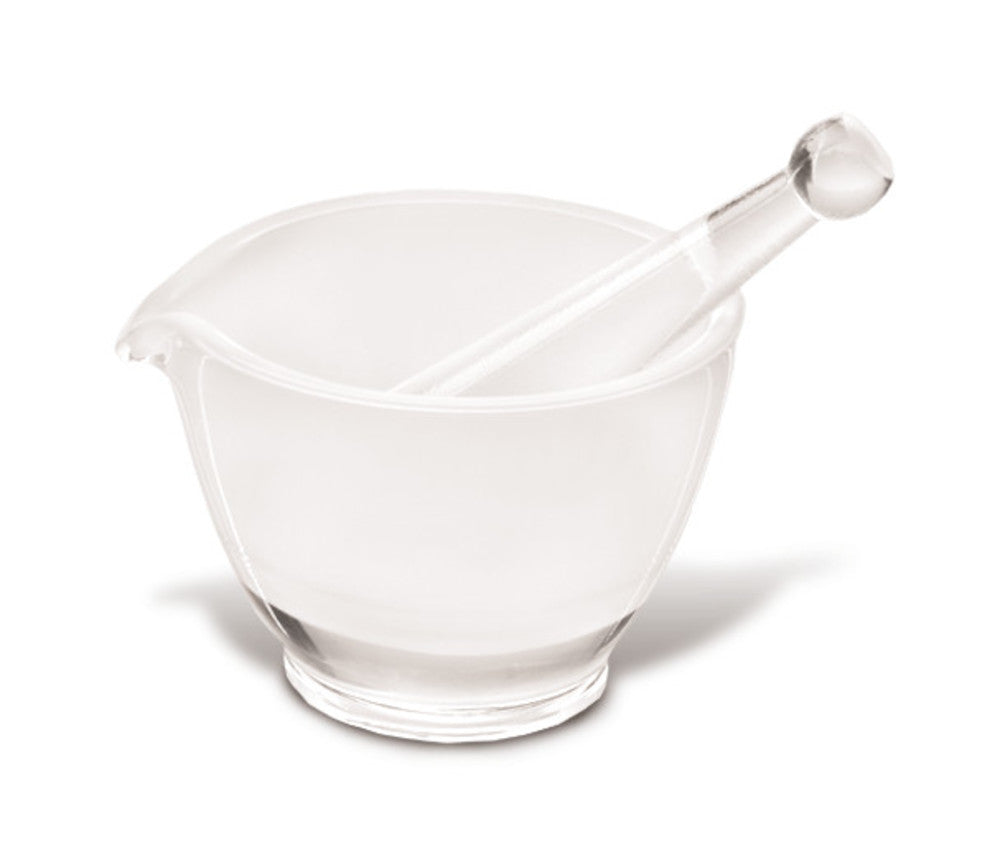
Rotilabo®-mortier met stamper is een laboratoriummaalset gemaakt van borosilicaatglas 3.3 met een capaciteit van ongeveer 800 ml. De mortier en bijpassende stamper zijn bedoeld voor het handmatig verbrijzelen, homogeniseren en mengen van vaste monsters vóór oplossen, extractie of verdere analyse. Geleverd als 1 stuk met een eenheidsgewicht van 1.8 kg, past de set bij routinematige monstervoorbereiding in chemie-, materiaal- en onderwijslaboratoria. Dit Rotilabo®-artikel wordt aangeboden door fabrikant ROTH SELECTION binnen het assortiment mortieren en maalschalen. Borosilicaatglas 3.3 is een vertrouwd laboratoriumglastype voor vaten die de typische thermische en chemische omstandigheden van bankwerk moeten doorstaan. Een werkvolume van ongeveer 800 ml ondersteunt maaltaken op middelgrote schaal zonder grotere mechanische molens. Het gecombineerde mortier-en-stamperformaat houdt het werkpaar bijeen voor consistent gebruik en opslag. Laboratoria gebruiken dergelijke glazen mortieren voor poeders, kristallen en andere vaste stoffen waarbij visuele controle van de deeltjesgrootte en contaminatiebewuste hantering belangrijk zijn in alledaagse workflows.
Dit artikel maakt deel uit van Vijzels & stampers, in Schalen, smeltkroezen & porselein.
Kenmerken
- Verpakkingsgrootte: 1 stuk
- Producttype: Vijzel met stamper
- Merk: Rotilabo®
- Materiaal: Borosilicate glass 3.3
- Inhoud: ca. 800 ml
- Gewicht: 1.8 kg
Recent bekeken
Misschien vind je dit ook leuk
Questions about Rotilabo®-mortier met stamper, borosilicaatglas 3.3, ca. 800 ml, 1 eenheid
What is this article?
Rotilabo®-mortier met stamper, borosilicaatglas 3.3, ca. 800 ml, 1 eenheid is the article on this page. Luminix Health distributes Carl Roth for laboratory use. It sits in Vijzels & stampers, inside Schalen, smeltkroezen & porselein, in Labmateriaal.
A mortar and pestle grind a solid by hand. Porcelain is the ordinary laboratory set. Agate and glass are chosen when the sample must not pick up porcelain dust. The unglazed grinding surface, not the glossy outside, does the work.
A dish is an open vessel for drying, evaporating or holding a solid. Porcelain and glazed ceramic take a higher temperature than borosilicate glass, which is why a crucible, not a beaker, goes into a furnace. A watch glass covers, or holds a small amount for drying. A mortar is for grinding. The temperature and the chemical, not the shape alone, choose the material. Laboratory ware of this family is listed under ISO laboratory ware.
Which category should I open next?
The category is Schalen, smeltkroezen & porselein. The sub-category is Vijzels & stampers. The catalogue is Labmateriaal.
Shelves beside this one are Kroezen, Dienbladen, schalen & kuipen, Horlogeglazen & kristalliseerschalen, Indampschalen and Schalen (overig).
What should I check before I order?
The technical information on this page is the manufacturer's sheet. Read that, not a rewritten specification.
When this page shows a safety data sheet, use that manufacturer file. Hazard text does not belong in the sales description. For a pack size, a grade or a certificate that is not on the page, send a quote request or contact the team.
How does ordering and shipping work?
Luminix Health distributes this article from the heart of Europe. Articles in stock ship within 2–5 business days. Standard delivery is free from €250 excl. VAT. Cold-chain goods and dangerous goods under ADR are never included in that free delivery. The terms are in the Shipping Policy. The full brand index is on shop by brand. Who we are is on about us.
Which other categories should I open?
The seven catalogues are Labware, Lab chemicals, Lab instruments, Lab consumables, Chromatography equipment, Lab safety equipment and Life Science & Microbiology.