


Beschrijving
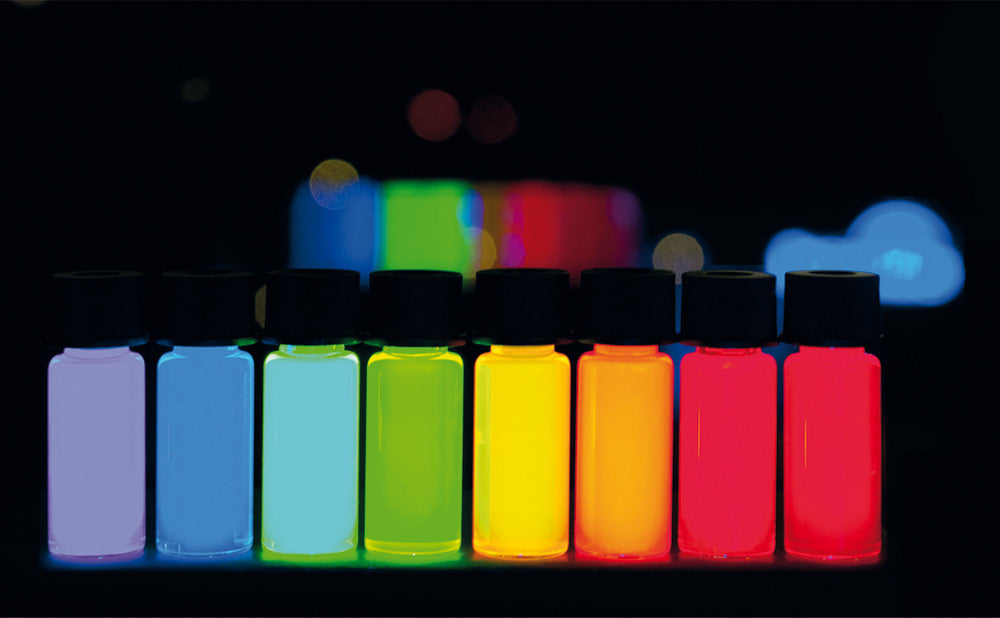
Zn-Cu-In-S/ZnS, ROTI®nanoMETIC is een cadmiumvrij nanokristalmateriaal bedoeld voor optische, fotonische en materiaalonderzoekstoepassingen. Het is gespecificeerd met een maximale emissiegolflengte van 650 ±15 nm, wat een gedefinieerd spectraal venster geeft voor fluorescentie, beeldvorming en vergelijkende optische metingen waar Cd-vrije systemen van het quantum-dot-type de voorkeur hebben. De samenstelling met kern Zn-Cu-In-S en schil ZnS ondersteunt laboratoriumevaluatie van emissiegedrag, sondeconcepten en workflows met halfgeleidernanomaterialen. Deze variant is Onderzoekers in bio-imaging, fotonica en analytische R&D kunnen het materiaal integreren in excitatie–detectieopstellingen die een duidelijk vermeld lambdamaximum vereisen. Het product maakt deel uit van het ROTI®nanoMETIC-assortiment van fabrikant Carl ROTH en is gericht op professioneel laboratoriumgebruik. Het cadmiumvrije profiel beantwoordt aan de vraag naar alternatieven voor klassieke zware-metaalnanokristallen en behoudt een praktische verpakkingsgrootte voor werk op laboratoriumschaal. De presentatie in glas vergemakkelijkt ordelijke opslag en dosering tijdens experimentele reeksen.
Dit artikel maakt deel uit van Nanomaterialen & kwantumdots, in Anorganische chemicaliën.
Kenmerken
- Fluorescentie λ max.: 635-665 nm
- Verpakkingsgroottes: 5 mg, 10 mg
- Productlijn: ROTI®nanoMETIC
- Samenstelling: Zn-Cu-In-S/ZnS
- Cadmiumvrij: ja
- Emissiemaximum: 650 ±15 nm
- Technisch datablad:

- Veiligheidsinformatieblad:
Compliance & Safety Information
 Waarschuwing
Hazard Statements (H-Phrases)
Precautionary Statements (P-Phrases)
Recent bekeken
Misschien vind je dit ook leuk
Browse related categories
Category
Sub-category
Catalogue
Brand
Questions about Zn-Cu-In-S/ZnS, ROTI®nanoMETIC, Cd-vrij, lambda max. 650 ±15 nm, 5 mg, glas
What is this article?
Zn-Cu-In-S/ZnS, ROTI®nanoMETIC, Cd-vrij, lambda max. 650 ±15 nm, 5 mg, glas is the article on this page. Luminix Health distributes Carl Roth for laboratory use. It sits in Nanomaterialen & kwantumdots, inside Anorganische chemicaliën, in Chemicaliën.
A nanomaterial is defined by a particle size that changes how it behaves. A quantum dot's optical emission depends on that size. The stated diameter, the surface coating and the concentration are the specification. The bulk powder of the same composition is not this product.
An inorganic chemical is a salt, an acid or base in solid form, a metal, an oxide, or an element. The waters of hydration are part of the formula: a hydrate and an anhydrous salt are different masses for the same ion. Trace metals matter when the salt will be used in analysis. Nanomaterials add particle size to the specification. Look the substance up on PubChem. Hazard classes are on ECHA, under the CLP Regulation and REACH. Transport of the dangerous ones is explained by the UNECE.
Which category should I open next?
The category is Anorganische chemicaliën. The sub-category is Nanomaterialen & kwantumdots. The catalogue is Chemicaliën.
Shelves beside this one are Anorganische zouten and Metalen, elementen & oxiden.
What should I check before I order?
The technical information on this page is the manufacturer's sheet. Read that, not a rewritten specification.
When this page shows a safety data sheet, use that manufacturer file. Hazard text does not belong in the sales description. For a pack size, a grade or a certificate that is not on the page, send a quote request or contact the team.
How does ordering and shipping work?
Luminix Health distributes this article from the heart of Europe. Articles in stock ship within 2–5 business days. Standard delivery is free from €250 excl. VAT. Cold-chain goods and dangerous goods under ADR are never included in that free delivery. The terms are in the Shipping Policy. The full brand index is on shop by brand. Who we are is on about us.
Which other categories should I open?
The seven catalogues are Labware, Lab chemicals, Lab instruments, Lab consumables, Chromatography equipment, Lab safety equipment and Life Science & Microbiology.