


Description
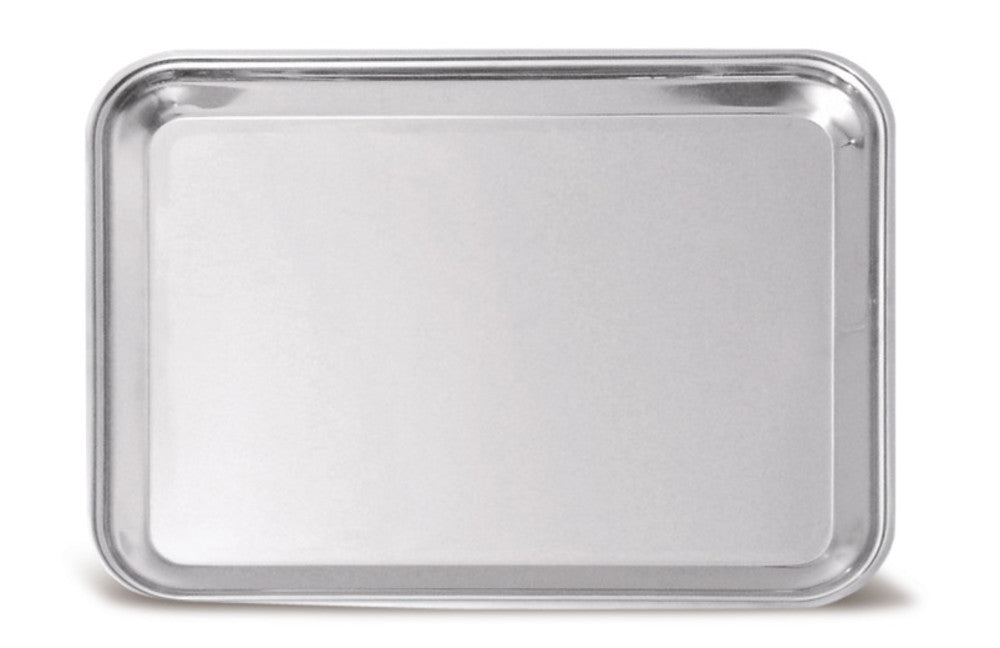
Les Rotilabo®-plateaux à instruments, carrés, sont des plateaux à instruments de laboratoire carrés fabriqués en acier inoxydable 18/10. Cette version mesure 310 x 240 mm et fonctionne comme plat à instruments pour les environnements de verrerie de laboratoire, récipients et consommables. L'acier inoxydable 18/10 offre une surface durable et nettoyable adaptée à l'agencement d'instruments et de petits articles de laboratoire. Le plateau est fourni en 1 pièce et a un poids de 0.37 kg. Les plateaux Rotilabo® du fabricant ROTH SELECTION relèvent des bacs, bols, seaux et égouttoirs ainsi que des plats à instruments, bacs et tablettes. La géométrie carrée et l'empreinte de 310 x 240 mm aident à garder les outils organisés pendant la préparation, la conservation à court terme ou le travail courant sur paillasse. Les laboratoires qui recherchent un plateau à instruments en acier inoxydable fiable peuvent choisir cette taille pour correspondre à l'espace disponible et aux besoins de manipulation. Proposé en une seule pièce, il se stocke facilement avec d'autre matériel de laboratoire. Les dimensions définies et la nuance d'acier inoxydable 18/10 sont les caractéristiques essentielles de ce plateau à instruments Rotilabo® pour la pratique quotidienne de laboratoire.
Cet article fait partie de Plateaux, bols & bacs, dans Coupelles, creusets & porcelaine.
Caractéristiques
- Conditionnement: 1 pièce
- Type de produit: Plateau à instruments
- Forme: Carré
- Matériau: Acier inoxydable 18/10
- Dimensions: 310 x 240 mm
- Poids: 0.37 kg
Récemment consulté
Vous aimerez peut-être aussi
Questions about Rotilabo®-plateaux à instruments, carrés, Acier inoxydable 18/10, 310 x 240 mm
What is this article?
Rotilabo®-plateaux à instruments, carrés, Acier inoxydable 18/10, 310 x 240 mm is the article on this page. Luminix Health distributes Carl Roth for laboratory use. It sits in Plateaux, bols & bacs, inside Coupelles, creusets & porcelaine, in Matériel de laboratoire.
A laboratory tray, bowl or tub is an open vessel for holding, staining, drying or carrying many small items at once. Polypropylene trays resist a knock and many aqueous liquids. Porcelain takes heat. The useful numbers are the bottom size and the depth, because that is the working area.
A dish is an open vessel for drying, evaporating or holding a solid. Porcelain and glazed ceramic take a higher temperature than borosilicate glass, which is why a crucible, not a beaker, goes into a furnace. A watch glass covers, or holds a small amount for drying. A mortar is for grinding. The temperature and the chemical, not the shape alone, choose the material. Laboratory ware of this family is listed under ISO laboratory ware.
Which category should I open next?
The category is Coupelles, creusets & porcelaine. The sub-category is Plateaux, bols & bacs. The catalogue is Matériel de laboratoire.
Shelves beside this one are Creusets, Mortiers & pilons, Verres de montre & coupelles de cristallisation, Capsules à évaporation and Coupelles (autres).
What should I check before I order?
The technical information on this page is the manufacturer's sheet. Read that, not a rewritten specification.
When this page shows a safety data sheet, use that manufacturer file. Hazard text does not belong in the sales description. For a pack size, a grade or a certificate that is not on the page, send a quote request or contact the team.
How does ordering and shipping work?
Luminix Health distributes this article from the heart of Europe. Articles in stock ship within 2–5 business days. Standard delivery is free from €250 excl. VAT. Cold-chain goods and dangerous goods under ADR are never included in that free delivery. The terms are in the Shipping Policy. The full brand index is on shop by brand. Who we are is on about us.
Which other categories should I open?
The seven catalogues are Labware, Lab chemicals, Lab instruments, Lab consumables, Chromatography equipment, Lab safety equipment and Life Science & Microbiology.