


Description
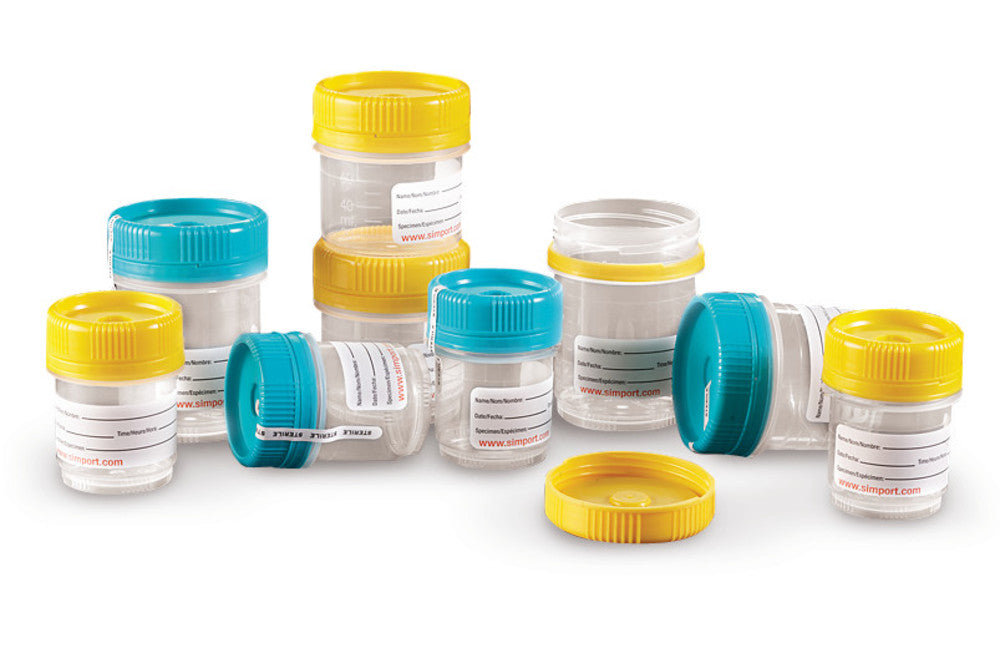
Sample tubs SpecTainer™ 120 ml are larger-capacity laboratory sample containers intended for collection, holding and internal transfer of specimens. Each unit features a polypropylene (PP) body closed by a polyethylene (PE) screw cap, combining a practical seal with everyday chemical resistance for general lab media. The 120 ml volume accommodates bigger aliquots or pooled samples while remaining manageable at the bench. These SpecTainer™ tubs from manufacturer SIMPORT fit sample-beaker and container workflows in research, quality-control and routine laboratory environments. Packaging of 300 pc(s) per unit supports organised replenishment without excessive overstock for many mid-sized facilities. The PP construction keeps the vessels light and robust for frequent handling, and the PE screw closure assists secure capping during movement between work areas. At a pack weight of 7,160 kg, the bulk presentation is convenient for store rooms and shared laboratory inventories. Select the 120 ml SpecTainer™ format when a higher-volume PP sample tub with PE screw cap is needed for consistent, day-to-day sample logistics.
This article is part of Trays, bowls & tubs, in Dishes, crucibles & porcelain.
Key features
- Pack size: 300 pc(s)
- Product type: Sample tubs
- Series: SpecTainer™
- Capacity: 120 ml
- Body material: PP
- Cap: Screw cap made of PE
Recently viewed
You may also like
Browse related categories
Category
Sub-category
Catalogue
Brand
Questions about Sample tubs SpecTainer(TM) 120 ml, PP, Screw cap made of PE, 300 unit(s)
What is this article?
Sample tubs SpecTainer(TM) 120 ml, PP, Screw cap made of PE, 300 unit(s) is the article on this page. Luminix Health distributes SIMPORT for laboratory use. It sits in Trays, bowls & tubs, inside Dishes, crucibles & porcelain, in Labware.
A laboratory tray, bowl or tub is an open vessel for holding, staining, drying or carrying many small items at once. Polypropylene trays resist a knock and many aqueous liquids. Porcelain takes heat. The useful numbers are the bottom size and the depth, because that is the working area.
A dish is an open vessel for drying, evaporating or holding a solid. Porcelain and glazed ceramic take a higher temperature than borosilicate glass, which is why a crucible, not a beaker, goes into a furnace. A watch glass covers, or holds a small amount for drying. A mortar is for grinding. The temperature and the chemical, not the shape alone, choose the material. Laboratory ware of this family is listed under ISO laboratory ware.
Which category should I open next?
The category is Dishes, crucibles & porcelain. The sub-category is Trays, bowls & tubs. The catalogue is Labware.
Shelves beside this one are Crucibles, Mortars & pestles, Watch glasses & crystallising dishes, Evaporating dishes and Dishes (other).
What should I check before I order?
The technical information on this page is the manufacturer's sheet. Read that, not a rewritten specification.
When this page shows a safety data sheet, use that manufacturer file. Hazard text does not belong in the sales description. For a pack size, a grade or a certificate that is not on the page, send a quote request or contact the team.
How does ordering and shipping work?
Luminix Health distributes this article from the heart of Europe. Articles in stock ship within 2–5 business days. Standard delivery is free from €250 excl. VAT. Cold-chain goods and dangerous goods under ADR are never included in that free delivery. The terms are in the Shipping Policy. The full brand index is on shop by brand. Who we are is on about us.
Which other categories should I open?
The seven catalogues are Labware, Lab chemicals, Lab instruments, Lab consumables, Chromatography equipment, Lab safety equipment and Life Science & Microbiology.