


Description
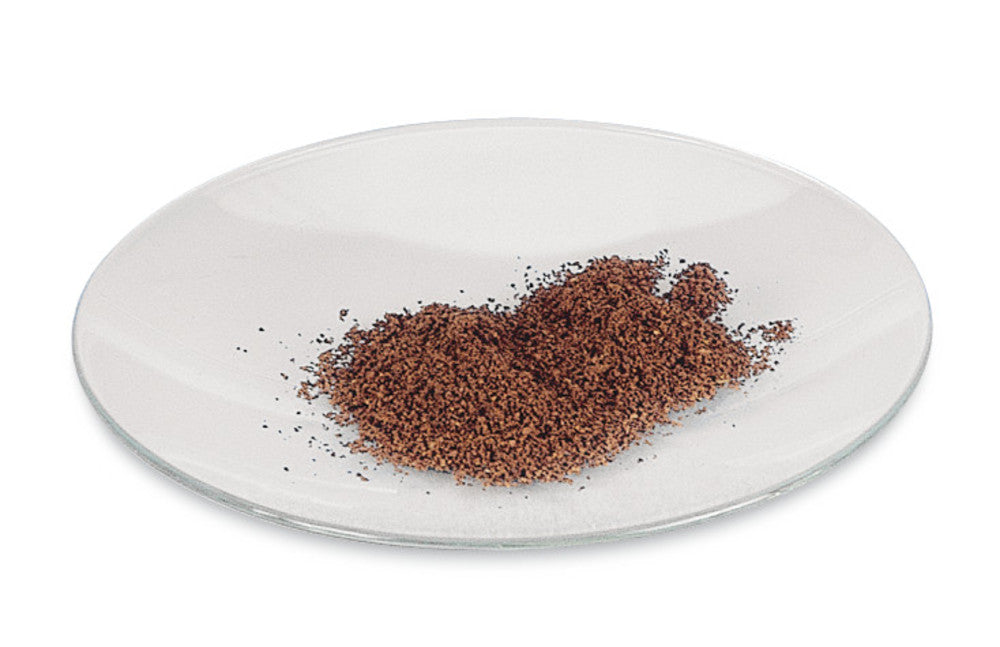
Watch glasses made from soda-lime glass with fused edges are standard laboratory covers for beakers, crystallising dishes and evaporating tasks. This model measures 125 mm in diameter and comes as a pack of 10 pieces, providing a matched set for frequent sample covering. Clear soda-lime glass maintains good visibility of the contents, and the fused rim improves grip and reduces chipping risk compared with unfinished edges. Common applications include limiting dust contact, slowing evaporation during preparation or drying steps, and supporting crystallisation on the open bench. The pack weight is 0,570 kg, making the set convenient to store among other laboratory glassware. These watch glasses from manufacturer ROTH SELECTION fit within the category of dishes, evaporating vessels and crystallisation accessories used in teaching and research laboratories. Their concave shape sits stably on vessel mouths and can be combined with mild heating when temporary covering is needed. A practical choice wherever reusable transparent covers of 125 mm diameter are required for routine wet-chemistry work.
This article is part of Watch glasses & crystallising dishes, in Dishes, crucibles & porcelain.
Key features
- Pack size: 10 pc(s)
- Product type: Watch glasses
- Material: Soda-lime glass
- Edge finish: Fused edges
- Diameter: Ø 125 mm
- Weight: 0,570 kg
Recently viewed
You may also like
Questions about Watch glasses, soda-lime glass, fused edges, Ø 125 mm, 10 unit(s)
What is this article?
Watch glasses, soda-lime glass, fused edges, Ø 125 mm, 10 unit(s) is the article on this page. Luminix Health distributes Carl Roth for laboratory use. It sits in Watch glasses & crystallising dishes, inside Dishes, crucibles & porcelain, in Labware.
A watch glass is a shallow curved cover or a dish for drying a few grams. A crystallising dish is the flatter, wider dish a solution is left in while a solid comes out. Neither is volumetric. Diameter is the specification.
A dish is an open vessel for drying, evaporating or holding a solid. Porcelain and glazed ceramic take a higher temperature than borosilicate glass, which is why a crucible, not a beaker, goes into a furnace. A watch glass covers, or holds a small amount for drying. A mortar is for grinding. The temperature and the chemical, not the shape alone, choose the material. Laboratory ware of this family is listed under ISO laboratory ware.
Which category should I open next?
The category is Dishes, crucibles & porcelain. The sub-category is Watch glasses & crystallising dishes. The catalogue is Labware.
Shelves beside this one are Crucibles, Trays, bowls & tubs, Mortars & pestles, Evaporating dishes and Dishes (other).
What should I check before I order?
The technical information on this page is the manufacturer's sheet. Read that, not a rewritten specification.
When this page shows a safety data sheet, use that manufacturer file. Hazard text does not belong in the sales description. For a pack size, a grade or a certificate that is not on the page, send a quote request or contact the team.
How does ordering and shipping work?
Luminix Health distributes this article from the heart of Europe. Articles in stock ship within 2–5 business days. Standard delivery is free from €250 excl. VAT. Cold-chain goods and dangerous goods under ADR are never included in that free delivery. The terms are in the Shipping Policy. The full brand index is on shop by brand. Who we are is on about us.
Which other categories should I open?
The seven catalogues are Labware, Lab chemicals, Lab instruments, Lab consumables, Chromatography equipment, Lab safety equipment and Life Science & Microbiology.